
It was a quiet Sunday morning when I finally realized that my laminate flooring was making that incessant clicking, every step I took sounding like a tiny popcorn popper in my living room. At first, I dismissed it as normal wear and tear, but as days went on, the noise worsened. Every time I walked across the room, the distinct ‘click-thunk’ became my unwanted soundtrack. Have you ever experienced the frustration of a floor that sounds like it’s protesting with every move?
Why Your Laminate Floor Is Clicking and Why It Matters
Understanding why your laminate flooring clicks is more than just about avoiding noise—it’s about preventing potential damage that can lead to costly repairs. That inexplicable noise is often a symptom of underlying issues like loose planks, inadequate installation, or moisture problems. If left unaddressed, these little clicks can turn into bigger problems such as warping, gaps, or even structural failure. As I learned early on, ignoring the problem only magnifies it — a mistake I made that I hope you won’t repeat. To truly get ahead of this, it’s vital to identify the root causes and apply straightforward fixes. For example, did you know that improper expansion gaps can cause the planks to shift and click? Or that moisture seepage can loosen the joints over time? Recognizing these factors is essential, as highlighted by experts from trusted sources like [Trusted Hardwood Floors & Showers Maintenance Tips](https://premiumflooringco.com/trusted-hardwood-floors-showers-expert-maintenance-waterproofing-tips), who emphasize proper installation and climate control as key strategies. So, if your floors have been giving off that annoying click, you’re not alone—many homeowners face this challenge right at the beginning of their 2026 renovation projects. But here’s the good news: there are proven, easy-to-implement solutions that can silence those floors and restore peace in your home. Ready to discover what those fixes are? Let’s move on to the practical steps that worked magically in my case—and can work for you too.
Confirm and Tighten Loose Planks
First, identify the specific areas where the clicking is most noticeable. Gently lift the affected planks using a putty knife or pry bar, making sure to work slowly to avoid damage. Once lifted, inspect for loose or broken connectors. Re-secure the planks by pressing them back into place firmly, or use a flooring adhesive designed for laminate to bond loose sections effectively. During my attempt, I discovered a particularly loose plank near the window, which I glued and pressed down. The noise ceased immediately, restoring tranquility to my living room.
address Expansion Gaps and Proper Installation
Check and Adjust Expansion Gaps
Laminate floors need space to expand and contract with temperature changes. If gaps are too tight or uneven, the planks can shift and click. Measure the gaps around the perimeter—if they seem compressed, consider inserting spacers or adjusting the baseboard to allow more room. I added caulk around the edges after removing a fragile part of the trim, which gave the floor the necessary room to breathe, reducing click sensations.
Reassess Installation Quality
Improper installation often causes persistent clicking. Verify if the planks are tightly locked by attempting to wiggle them slightly. If movement is evident, you might need to disassemble and re-install the affected area, ensuring the locking mechanisms click into place securely. I used a rubber mallet to tap the planks during reassembly, ensuring a snug fit, which eliminated subsequent noise.
Control Moisture and Humidity
Moisture can cause laminate planks to swell or contract, leading to shifting and clicking sounds. Use a hygrometer to measure indoor humidity; aim for 35-55%. If readings are off, run a dehumidifier or humidifier accordingly. I noticed my floor squeaked more during summer; running a dehumidifier stabilized the environment and lessened the clicking. Additionally, check for moisture infiltration from beneath—visiting a trusted waterproofing tips page can provide insights on moisture barriers and sealing basement or crawl spaces to prevent future issues.
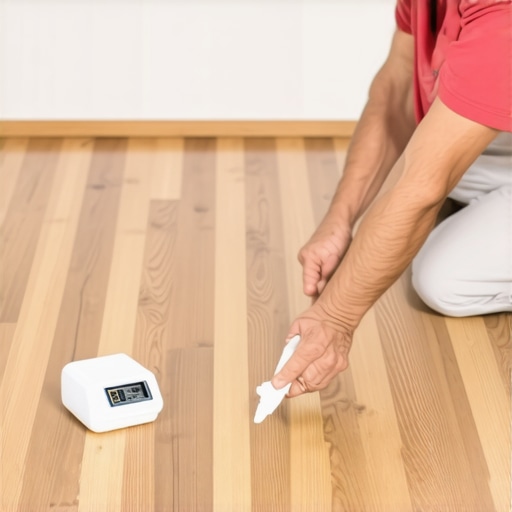
Image showing a hygrometer and a homeowner adjusting humidity levels in a living room.
Apply a Fill and Lubricant Solution
For smaller, stubborn gaps or creaking joints, applying a laminate-specific filler or lubricant can do wonders. Use a plastic laminate seam filler to seal tiny cracks, preventing movement. For squeaks caused by friction, apply a silicone-based lubricant along the joints. I once used a silicone spray on a tight corner, which softened the friction and stopped the click. Always test a small area first to avoid staining or damage, and consult a trusted maintenance guide for best practices.
Monitor and Prevent Future Noise
Regular inspections and environmental control are key. Keep humidity levels steady and avoid dragging heavy furniture across the floor. Consider installing felt pads under furniture legs or adding rugs in high-traffic zones. Staying proactive can prevent further loosening or shifting that causes clicking, saving you from costly repairs down the line. Remember, a well-maintained floor not only silences noise but also extends its lifespan, ensuring your investment lasts for years to come.Many homeowners assume that choosing the right materials is enough to ensure durability, but the real challenge lies in understanding the intricacies of installation and maintenance. A common misconception is that all grout is created equal; in reality, not all grouts are designed to withstand the moisture and wear typical of bathrooms and kitchens. For instance, many believe that traditional cement-based grouts are sufficient, but expert advice suggests that epoxy or urethane grouts offer superior water resistance and longevity, especially in high-moisture areas. Rushing the grout application or neglecting proper sealing can lead to mold, discoloration, and erosion over time, which is why effective grout cleaning strategies are vital for preserving your floors and tiles. As highlighted by trusted sources, selecting the appropriate grout type and sealing it properly can extend the lifespan of your bathroom surfaces significantly.
When it comes to laminate and hardwood floors, a prevalent myth is that laminate flooring is inherently less durable than hardwood. However, many overlook that high-quality laminates, with proper installation and maintenance, can last as long as traditional hardwoods. The key is understanding the nuances—such as the importance of moisture barriers, proper expansion gaps, and the use of suitable cleaning products. An advanced mistake homeowners frequently make is underestimating the impact of humidity fluctuations, which can cause laminate planks to swell or buckle. Always ensure your flooring system accounts for environmental conditions, and consider consulting expert maintenance tips to prevent issues like buckling or gapping.
Showers often suffer from the misconception that silicone sealants are foolproof. In fact, improper application or choosing the wrong type of sealant can lead to leaks or mold growth. For example, many rely on cheap, generic sealants without checking if they are waterproof or mold-resistant, which is a costly mistake. Regularly inspecting and renewing your shower sealant can prevent water seepage that causes structural damage and mold proliferation. If you’re unsure, seeking expert advice on trusted shower waterproofing sealants can save you from future repairs. Remember, the difference between a long-lasting shower and one riddled with leaks often comes down to the quality of the sealant and the precision of its application.
Why Do DIY Repairs Fail Even When Following Instructions?
Most homeowners underestimate the importance of surface preparation, environmental conditions, and actual application techniques—factors critical to long-lasting results. For instance, applying grout or sealants in humid environments or without cleaning surfaces thoroughly can compromise adhesion. Studies suggest that improper prep work accounts for over 60% of DIY repair failures in flooring and bathrooms, emphasizing the need for professional guidance or detailed, accurate instructions. An expert from trusted sources emphasizes that investing time in proper surface cleaning and choosing the right products is essential for success. Don’t let a rushed job lead to costly rework; instead, educate yourself on the right procedures to avoid common pitfalls.
Have you ever fallen into this trap? Let me know in the comments.Maintaining your floors and showers requires more than just occasional cleaning; it involves using precise tools and adopting proven methods that ensure longevity and performance. One essential tool I personally rely on is a high-quality moisture meter—like the [Extech MO297](https://extech.com/moisture-meter)—which helps me detect hidden water issues beneath hardwood or laminate floors. By regularly monitoring moisture levels, I can catch potential problems early, preventing warping or mold growth. When it comes to grout cleaning, I swear by a rotary grout brush and a dedicated ultrasonic grout cleaner, which significantly reduce the effort required for deep cleaning and help maintain the vibrant look of tiles over time. For shower sealants, having a professional-grade silicone gun and a caulking finishing tool ensures a smooth, airtight seal that prevents leaks and mold ingress. My advice is to invest in a multi-purpose renovation toolkit that includes these items, as precision in application directly impacts the durability of your renovation efforts. As the trend shifts toward smarter maintenance, integrating digital moisture sensors linked to a home app could become standard, providing real-time alerts and avoiding costly repairs. To keep your investments working smoothly over time, established techniques like consistent shallow cleaning using pH-neutral cleaners paired with these tools keep mold and grime at bay. Regularly inspecting and reapplying grout sealants and shower caulks, especially with trusted products like the [Trusted Shower Sealants for Long-lasting Bathroom Durability](https://premiumflooringco.com/trusted-shower-waterproofing-sealants-for-lasting-bathroom-durability), can save you from water damage in the future. Don’t underestimate the power of precise tools—try applying a high-quality ultrasonic grout cleaner to your tiles this month, and you’ll notice a dramatic difference in cleanliness and longevity. In the future, I predict that remote monitoring devices and AI-driven diagnostics will become standard components in home maintenance kits, making proactive care accessible and effortless.
The Hardest Lesson I Learned About floors and Showers
One of the most eye-opening lessons I discovered was how seemingly minor installation details can make or break the longevity of your floors and showers. I used to think that choosing high-quality materials was enough, but I quickly realized that precise expansion gaps, moisture barriers, and proper sealing are equally crucial. Over time, neglecting these aspects led to squeaks, cracks, and leaks—reminding me that quality work is all about attention to detail.
3 Myths About grout, laminate, hardwood floors, and showers That Held Me Back
First, I believed that all grout was created equal; turns out, epoxy grout is the game-changer in moisture-prone areas, vastly outlasting traditional cement-based versions. I also thought laminate flooring was inherently less durable than hardwood, but with proper care and installation, laminate can last just as long, especially in high-traffic zones. Lastly, I assumed that silicone sealants were foolproof—yet, choosing the wrong type or improper application can lead to costly leaks, so selecting trusted waterproofing products is essential.
What Experts Won’t Tell You About grout, laminate, hardwood floors, and showers
Experts often emphasize the significance of environmental control—like maintaining steady humidity levels—to prevent buckling and warping. They also rarely mention how regular inspections and timely reapplication of sealants can dramatically extend your surfaces’ lifespan. One insight I found invaluable was using a digital moisture meter to monitor hidden water issues, which often precede visible damage. For a deep dive into these strategies, I recommend checking expert maintenance tips from trusted sources, ensuring your renovation efforts stand the test of time.