
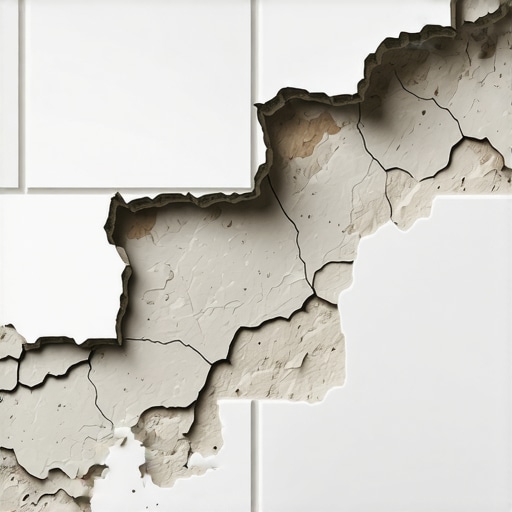
The structural lie of a flat wall
Shower tile failure usually begins at the substrate level where installers ignore the 1/8 inch deviation rule over a 10 foot span. When walls are not perfectly plumb or flat, the thinset mortar must vary in thickness to compensate, creating uneven tension during the curing process which eventually leads to bond failure and popping. I spent three days grinding concrete on a job last month just so the floor would not click like a castanet. The same principle applies to your shower walls. Most guys skip the leveling compound or the shimming process. They think the underlayment will hide the dip. It will not. If your wall has a belly in it, the tile is under constant stress. Tile is rigid. It does not like to bend. When the house shifts or the temperature changes, that stress finds the weakest point, which is usually the bond between the mortar and the tile backer. Unlike flexible materials like laminate or even certain hardwood floors, tile has zero tolerance for movement. If the substrate moves, the tile pops.
Chemistry in the mixing bucket
The chemical bond of modern thinset relies on polymer additives that must be mixed at precise speeds to avoid entraining air which weakens the structural matrix. If an installer uses a high speed drill, they create microscopic bubbles in the mortar that reduce the surface area of the bond by up to thirty percent. You have to understand the molecular reality of what is happening behind that porcelain. Thinset is not glue. It is a hydraulic cement. When you add water, you trigger a chemical reaction called hydration. Crystals grow and lock into the pores of the tile. If you use cheap, unmodified thinset on a large format porcelain tile, those crystals have nothing to grab onto. Porcelain is dense. It has a water absorption rate of less than 0.5 percent. You need those polymers to create a mechanical bridge. I have seen countless showers where the tile literally fell off the wall clean, leaving the ridges of the mortar behind. This is a classic sign of using the wrong chemistry for the material. It is the same reason you cannot just throw hardwood floors over a damp concrete slab without a vapor barrier. The chemistry of the bond is everything.
“A floor is only as good as the subfloor beneath it; deflection is the enemy of every joint.” – Master Flooring Axiom
The physics of deflection and movement
Deflection is the measurement of how much a floor or wall bends under a load, and for tile, the industry standard is L over 360 which means the span divided by 360. If your wall studs are spaced too far apart or are made of low grade timber that warps, the resulting deflection will snap the grout lines and pop the tiles. Think about a diving board. That is deflection. Now imagine gluing glass to that diving board. The first time someone jumps, the glass shatters. Your shower wall is a slow motion diving board. Moisture makes wood swell. Dry air makes it shrink. This cycle is why expansion joints are mandatory. The TCNA requires a movement joint every 8 to 12 feet in interior installations. Most residential installers ignore this. They grout the corners solid. When the house breathes, the corners compress. Since the grout is harder than the tile, the tile loses. It pops off the wall because it has nowhere else to go. You must use 100 percent silicone in those change of plane joints. Silicone is an elastomer. It can compress and return to its original shape. Grout cannot.
| Substrate Type | Deflection Limit | Bond Strength Requirement |
|---|---|---|
| Cement Backer Board | L/360 | High Polymer |
| Gypsum Wallboard | L/720 (Not recommended) | High Polymer |
| Extruded Polystyrene | L/360 | Specific Manufacturer Mortar |
| Concrete Masonry | N/A | Standard ANSI 118.4 |
Why your grout is not a raincoat
Grout is a porous material that allows water to pass through it via capillary action, meaning the layers behind the tile must be perfectly waterproofed to prevent the substrate from swelling and pushing the tile off. Many homeowners mistakenly believe that grout and tile are the primary water barriers in a shower. This is a dangerous assumption. Water goes through grout. It goes through the microscopic cracks in the glaze. Once that water hits a standard piece of greenboard or improperly sealed cement board, the material absorbs the moisture. It expands. This expansion happens at a different rate than the tile. This differential movement is a leading cause of delamination. In some cases, the water sits in the mortar bed and creates hydrostatic pressure. As the shower dries out, that moisture wants to escape. If it cannot get out through the grout, it pushes against the tile. It is a slow, wet crowbar. This is why liquid applied membranes or sheet membranes like Kerdi are vital. They keep the moisture in the top 1/8 inch of the assembly. If the moisture gets deeper, the system fails.
The specific gravity of a failed installation
Coverage is the final boss of tile installation where the TCNA requires at least 95 percent mortar contact in wet areas to ensure there are no voids where water can collect or where the tile is unsupported. Most DIYers and low bid contractors only get about 60 to 70 percent coverage. When you have air pockets behind your tile, you have weak spots. If you lean against the wall or if the house settles, those voids provide zero resistance. The tile cracks or the bond breaks. You have to ‘back-butter’ your tiles. This means applying a thin layer of mortar to the back of the tile before setting it into the notched trowel bed on the wall. This ensures a full chemical and mechanical bond. It is a lot of work. Your arms will burn. Your knees will ache. But it is the only way to ensure that showers stay intact for thirty years instead of three. I have seen tiles pop because the installer ‘spot bonded’ them, putting five dabs of mortar on the back like they were hanging a picture. That is a crime in the tile world. It creates a drum effect. If you tap the tile and it sounds hollow, it is going to pop.
- Verify the wall is flat within 1/8 inch over 10 feet before starting
- Use a waterproofing membrane that meets ANSI A118.10 standards
- Ensure thinset is mixed to a peanut butter consistency with no lumps
- Back-butter every tile to achieve 95 percent coverage
- Install silicone in all vertical and horizontal corners
“Coverage must be 95 percent in wet areas to prevent water accumulation and mold growth.” – TCNA Handbook Summary
The impact of environmental curing
Curing is a time dependent process that cannot be rushed, as the evaporation of water must happen at a controlled rate to allow the cement crystals to reach their maximum strength. If you turn on the shower too soon, the introduction of moisture interrupts the hydration cycle and weakens the bond. People are always in a hurry. They want to use the new bathroom forty eight hours after the last tile is set. That is a mistake. Most mortars need at least 72 hours to reach full initial strength, and even longer if the temperature is low or the humidity is high. If you are in a humid climate like New Orleans, that curing takes even longer. It is the same logic used for hardwood floors acclimation. You cannot rush the material into a new environment. If the mortar is still ‘green,’ the bond is fragile. Any vibration from the plumbing or movement in the house will shear those young crystals. Once they are sheared, they do not grow back. The bond is gone. You have to wait. Patience is a tool just like a trowel. If you lack it, you will be doing the job twice. The cost of failure is much higher than the cost of waiting another two days for the shower to be ready. In the end, the physics of the installation do not care about your schedule.