
Most guys skip the leveling compound. They think the underlayment will hide the dip. It will not. I spent three days grinding concrete on a job last month just so the floor would not click like a castanet. That experience taught me everything about the relationship between structural integrity and the final finish. When you choose a matte laminate, you are buying a floor that demands a specific maintenance protocol. Matte finishes are not like their high gloss cousins. They feature a microscopic topography designed to scatter light rather than reflect it. This texture is the primary reason your floor looks streaky or dull after a standard cleaning. The best mop for matte laminate floors must account for this physical reality without introducing excess moisture that compromises the HDF core. Most homeowners treat their floors like a bathroom shower where they can just spray water and walk away. That is a mistake that leads to peaked edges and ruined warranties. You need a tool that controls the volume of liquid while effectively lifting the oils that settle into the valleys of the matte texture.
The mistake that kills a matte finish
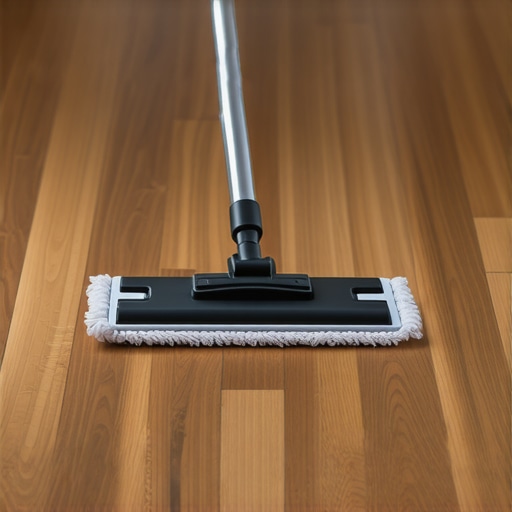
The best mop for matte laminate floors is a high quality microfiber spray mop used with a pH neutral cleaner. Avoid steam mops and cotton string mops. These tools either introduce excessive heat that can delaminate the wear layer or leave behind puddles that seep into the tongue and groove joints. Matte laminate requires a dry damp approach to prevent streaks. If you see standing water, you are doing it wrong. The texture of matte laminate traps soap residue far more aggressively than gloss finishes. This creates a hazy film that makes the floor look dirty even when it is technically sanitized. You are fighting a battle against surface tension and the chemical bonding of household oils to the melamine resin. I have seen thousand dollar installations ruined in six months because the owner used a wax based cleaner on a matte surface. You cannot polish a floor that is designed to be dull. You can only keep it clean.
“A floor is only as good as the subfloor beneath it; deflection is the enemy of every joint.” – Master Flooring Axiom
The physics of micro textured laminate surfaces
Laminate flooring is a composite product. It consists of a wear layer of aluminum oxide, a decorative paper layer, a high density fiberboard core, and a balancing backing. The matte finish is achieved by altering the surface of the aluminum oxide layer. This creates tiny pits and ridges. These ridges are great for hiding scratches, but they are magnets for skin oils and pet dander. When you use a traditional mop, the fibers are too large to reach into these micro valleys. You end up pushing the dirt around rather than lifting it. This is why a microfiber head is non negotiable. Microfiber filaments are split into tiny hooks that physically grab the debris. When you combine this with a professional grade surfactant, you break the surface tension of the oils. This allows the mop to pull the soil away from the floor. I often tell my clients that cleaning a matte floor is more like cleaning a precision lens than scrubbing a garage floor. You need finesse, not force. The structural health of the floor depends on the moisture barrier being maintained at every seam. If your mop is dripping, you are inviting the core board to swell. Once that HDF starts to expand, the edges will lift. This is known as peaking. No mop can fix a peaked seam. You will be looking at a full replacement if that happens.
Why your subfloor determines your mop strategy
A floor that is not level will have high spots and low spots. This impacts how the mop makes contact with the surface. On a perfectly flat subfloor, the mop head distributes pressure evenly. If your subfloor has a dip of more than 3/16 of an inch over a 10 foot radius, your mop will skip over the low spots. Dirt will accumulate in those depressions. This is why I spend so much time with a straight edge and a grinder before a single plank goes down. If the floor clicks when you walk on it, it means there is an air pocket underneath. That air pocket acts like a bellows when you mop. It can actually suck moisture down through the joints. This is a common failure point in DIY installations. People think the underlayment is a magic carpet that hides sins. It is not. The underlayment is there for sound dampening and moisture protection, not for structural leveling. If your subfloor is concrete, you also have to worry about vapor emission. Even if the floor looks dry, moisture could be migrating up from the slab. This increases the internal humidity of the laminate, making it even more sensitive to the water you use during cleaning. You have to understand the chemistry of your specific slab before you decide how to maintain the surface.
| Mop Type | Pros | Cons | Matte Suitability |
|---|---|---|---|
| Microfiber Spray | Controlled moisture, lightweight | Frequent pad changes | Excellent |
| Steam Mop | Sanitizes without chemicals | Heat can melt glues | Dangerous |
| Spin Mop | Reaches corners easily | Often too much water | Moderate |
| String Mop | Inexpensive | Leaves streaks, heavy water | Poor |
Chemical warfare on your wear layer
The cleaning solution you put in your mop is just as important as the mop itself. Most grocery store cleaners contain surfactants that leave a residue. This residue is what causes the dreaded footprints on matte floors. You step on the floor, the oils from your feet react with the dried soap, and you leave a visible mark. You want a cleaner that flashes off quickly. This means it evaporates before it can leave a streak. Look for products that are recommended by the NWFA or specifically formulated for laminate. Avoid anything with vinegar. While people love the idea of natural cleaning, vinegar is an acid. Over time, it can etch the aluminum oxide wear layer. Once that layer is etched, the floor will lose its stain resistance. It becomes porous. A porous laminate floor is a dead floor. You also want to stay away from ammonia and bleach. These chemicals are too harsh for the melamine resins. They can cause the decorative paper to fade or yellow. Stick to the basics. A high quality microfiber pad and a neutral cleaner will do more for your floor than any fancy chemical cocktail. I have seen guys try to use grout cleaners or shower sprays on laminate. That is a recipe for disaster. Those products are designed for ceramic and stone, which can handle higher pH levels. Laminate cannot.
- Use only distilled water in your spray mop to prevent mineral buildup.
- Change the microfiber pad as soon as it looks gray.
- Always sweep or vacuum with a hard floor attachment before mopping.
- Never leave a wet mop sitting on the floor surface.
- Check your expansion gaps at the baseboards for dust accumulation.
The ghost in the expansion gap
Laminate floors are floating floors. They are not nailed or glued to the subfloor. This means the entire floor system moves as a single unit based on the humidity and temperature of the room. We call this expansion and contraction. Every installation requires an expansion gap of at least 1/4 inch to 1/2 inch around the perimeter. If you clog this gap with debris or if you mop with too much water and cause the floor to swell, the floor will hit the wall. When it has nowhere to go, it will buckle in the center of the room. This is why maintenance is a structural concern. If you keep your floor dry and clean, the joints stay tight. Tight joints prevent moisture from reaching the core. If the joints open up because of poor installation or environmental shifts, your mop water becomes a weapon. It will enter the tongue and groove and start the rot from the inside out. In regions like Houston where the humidity is high, this is a constant battle. In dry climates like Phoenix, the concern is the floor shrinking so much that the gaps become visible. In both cases, the goal of mopping is to clean the surface without affecting the moisture content of the core board.
The invisible residue of grocery store cleaners
I have spent years explaining to homeowners why their floors look foggy. They usually point to a bottle of a famous brand name cleaner and say they use it every day. That is the problem. Cleaning too often with the wrong product builds up a layer of acrylic or wax. This layer traps dirt underneath it. Eventually, the floor looks like it has a skin on it. To fix this, you often have to use a specialty stripper, which is a risky move on laminate. It is better to start with a clean slate. A matte floor should look like wood or stone, not like a piece of plastic. The best mop for matte laminate floors helps you maintain that natural look. It should be an extension of your arm, allowing you to feel the texture of the floor as you work. If the mop feels like it is dragging, there is a buildup of sticky residue. If it glides too easily, you might have a wax buildup. Pay attention to the tactile feedback of the tool. Professionals don’t just look at the floor; they feel it through their equipment. This is the difference between a janitor and a floor architect. You are managing a performance surface that needs to last twenty years, not just until next Tuesday.
“Modern laminates are engineering marvels, but they are still susceptible to the laws of thermodynamics and moisture migration.” – Structural Flooring Journal
The 1/8 inch that ruins everything
Precision is the hallmark of a master installer. If your floor is off by even 1/8 of an inch, the locking mechanism is under constant stress. When you walk across that area, the joint flexes. Over time, this flexing creates a micro gap. This is where your cleaning routine becomes critical. If you are using a soaking wet mop, that 1/8 inch gap becomes a funnel for water. It travels straight to the HDF. The fiberboard absorbs the water like a sponge. It expands. The expansion puts even more pressure on the locking system until it eventually snaps. Once the lock is broken, there is no way to close the gap. You are left with a permanent hole in your floor that will collect dirt and moisture. This is why I am so adamant about the microfiber spray mop. It delivers the absolute minimum amount of liquid required to suspend the dirt. It protects the structural integrity of the joints. You should be able to walk on the floor within sixty seconds of mopping. If it takes five minutes to dry, you have used too much water. You are essentially gambling with the life of your floor. A matte finish will show the damage of a swollen core board much faster than a gloss finish because the light will catch the raised edges and create shadows.