
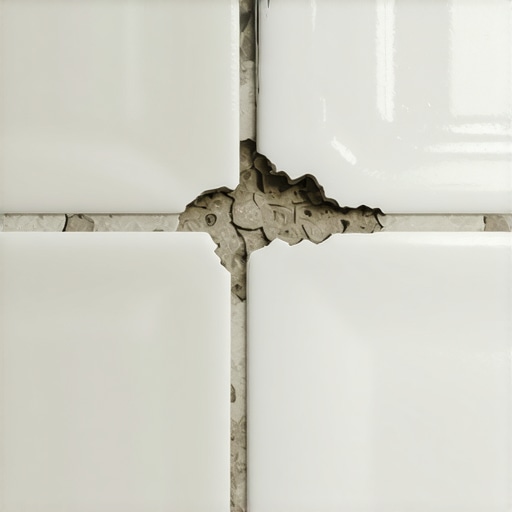
Why Your New Grout is Already Cracking in the Corners
Most guys skip the leveling compound. They think the underlayment will hide the dip. It won’t. I spent three days grinding concrete on a job last month just so the floor wouldn’t click like a castanet. I have seen it a thousand times. A homeowner spends ten grand on beautiful Italian porcelain only to have the corners look like a spiderweb after six months. It is not bad luck. It is bad physics. I smell like thin-set and bad coffee most days because I am the guy who has to come in and fix the mess left by installers who treat a floor like a sticker rather than a structural component. When you see grout cracking, you are looking at the visible evidence of a hidden war between your house and your flooring materials.
The structural lie of a perfectly still home
Grout cracks in corners because houses are dynamic structures that expand and contract due to thermal changes and moisture fluctuations. This movement occurs at the change of plane where two different surfaces meet. When installers use rigid portland cement grout in these corners instead of flexible 100% silicone sealant, the stress causes immediate fracturing. The house moves, the grout stays brittle, and the bond fails. It is a simple matter of physics. If you do not provide a movement joint, the material will create its own by cracking. I have seen hardwood floors pull baseboards off the wall because the installer did not leave an expansion gap, and the same principle applies to your tile. Your house is breathing. If you choke it with rigid grout in the corners, it will fight back.
Why your subfloor is lying to you
Subfloor deflection refers to the amount of vertical movement a floor system undergoes when under a load. If your subfloor has too much flex or bounce, it will cause the brittle grout joints to fail almost instantly. This is usually measured by the L/360 standard for ceramic tile or L/720 for natural stone. Most installers assume that because a floor feels solid to their feet, it is ready for tile. They are wrong. A subfloor that is perfectly fine for laminate or carpet might be a disaster for 12 by 24 inch porcelain. I spent hours on my last job checking the joist span and the thickness of the plywood underlayment. If that wood moves even a fraction of a millimeter, the grout in the corners is the first thing to go. It is the weakest point in the system.
“A floor is only as good as the subfloor beneath it; deflection is the enemy of every joint.” – Master Flooring Axiom
The chemical betrayal of improper mixing
Grout strength depends on the precise ratio of water to cement during the hydration process. If an installer adds too much water to make the grout easier to spread, they are effectively diluting the polymer chains and creating a porous, weak structure. As the excess water evaporates, it leaves behind microscopic voids in the grout line. These voids are structural vulnerabilities. In a corner, where stress is concentrated, these weak points fail first. Many people want a creamy consistency, but what they actually need is a stiff, carefully measured mix. I always tell my apprentices that the bucket is where the floor is won or lost. If you are eyeball-measuring your water, you are setting the homeowner up for a cracked grout nightmare within the first year of service.
Where the planes meet to die
A change of plane occurs anywhere a floor meets a wall or two walls meet in a corner. These are the most active areas of a room. In a shower, the floor is subjected to different thermal expansion rates than the walls. When the hot water hits the floor, it expands. The walls, which might be on an exterior part of the house, are at a different temperature. This differential movement is a grout killer. This is why the Tile Council of North America (TCNA) requires that all changes of plane be filled with a flexible sealant. If you see grout in the corner of a shower, you are looking at a code violation that will eventually lead to water intrusion. It is not just an aesthetic issue, it is a waterproofing failure waiting to happen.
Comparing the materials that hold your tile together
| Material Type | Flexibility Rating | Best Use Case | Shrinkage Risk |
|---|---|---|---|
| Sanded Grout | Very Low | Floors with wide joints | High |
| Unsanded Grout | Low | Wall tile with narrow joints | Medium |
| Epoxy Grout | Medium | Industrial or high-stain areas | Low |
| 100% Silicone | Very High | Corners and changes of plane | None |
While most people want the thickest underlayment for comfort, too much cushion actually causes the locking mechanisms on LVP or laminate to snap under pressure, and in tile, a soft underlayment is the primary cause of grout tenting and corner cracks. You need a rigid bond to the subfloor but flexible joints at the perimeter. It sounds like a contradiction, but it is the only way to build a floor that lasts fifty years instead of five. I have ripped out more floors due to excessive padding than I have due to actual wear and tear on the surface material.
The 1/8 inch that ruins everything
Expansion gaps are the most neglected part of a flooring installation. Every hardwood floor and every tile assembly requires a gap at the perimeter to allow for the natural movement of the building. When an installer butts the tile or the laminate tight against the drywall, the floor has nowhere to go when it expands. This pressure builds up until it finds the weakest point. Usually, that is the grout in the corners or the T-molding in the doorway. I have seen entire floors buckle and heave because someone forgot to leave a 1/4 inch gap behind the baseboard. It is a rookie mistake that costs thousands. You have to give the materials room to live, or they will destroy themselves trying to find it.
“Movement joints are not an option in tile installations; they are a structural necessity to manage expansion and contraction.” – TCNA Handbook Principles
The chemistry of the shower floor battlefield
In a shower, the grout is not just fighting movement; it is fighting hydrostatic pressure and alkali leaching. If the pre-slope under the liner was not done correctly, water sits in the mud bed. This constant moisture weakens the bond strength of the grout from the bottom up. By the time you see the crack in the corner, the thin-set underneath might already be turning back into mush. I tell people all the time that a shower is a managed leak. If you do not manage the water, the water will manage your grout joints. This is why I prefer epoxy grouts or high-performance cement for wet areas, even though they are a nightmare to clean up during the install. They provide the chemical resistance needed to survive the acidic soaps and mineral deposits found in modern bathrooms.
Checklist for a crack-free installation
- Verify the subfloor meets L/360 deflection standards before laying the first tile.
- Ensure all changes of plane are treated with 100% silicone rather than cementitious grout.
- Use a digital scale or precise measuring cup for all grout and thin-set mixing.
- Leave a minimum 1/4 inch expansion gap around the entire perimeter of the room.
- Check the moisture content of the concrete slab or plywood before thin-set application.
- Allow the tile to acclimate to the room temperature for at least 48 hours.
The ghost in the expansion gap
The ghost is the sound of a floor that was not installed with movement in mind. It is that cracking sound you hear at night when the temperature drops. That is the friction of materials rubbing against each other because they were locked in too tight. If your grout is cracking, your floor is screaming for help. You can try to re-grout the corner, but if you use the same rigid material, the crack will return in weeks. The only solution is to scrape out the old grout and replace it with a color-matched caulk or silicone. This allows the wall and floor to move independently without stressing the bond. It is the professional way to do it, and it is the only way that lasts. I do not care how good the grout color looks if the structural integrity is zero. You have to respect the materials, or they will fail you every single time.