
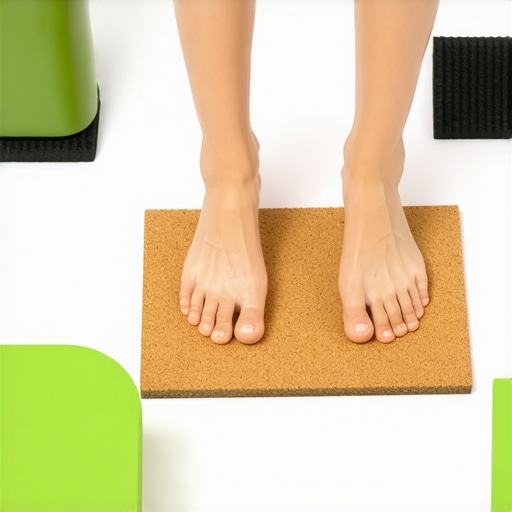
Why Your Bathroom Floor Is Always Cold and the Cork Fix
Most guys skip the leveling compound. They think the underlayment will hide the dip. It won’t. I spent three days grinding concrete on a job last month just so the floor wouldn’t click like a castanet. That job was in a master bathroom where the homeowner was tired of wearing wool socks just to brush their teeth. The culprit was a concrete slab that was sucking the heat out of the house like a thermal sponge. When you walk onto a cold tile floor, you are not just feeling the cold. You are experiencing the laws of thermodynamics in real time as your body heat is violently conducted away from your feet. My hands still vibrate from the grinder, but that floor is now flat, warm, and silent. Most flooring choices in bathrooms are made based on how they look in a showroom, but if you do not understand the physics of the subfloor, you are building a beautiful ice box.
The thermodynamics of the bathroom slab
A bathroom floor feels cold because of thermal conductivity and the high specific heat capacity of materials like ceramic or stone. These materials are incredibly efficient at moving heat away from a warmer object, such as your foot, and transferring it into the dense subfloor or the crawlspace below. This process is known as thermal bridging. If your bathroom sits on a concrete slab, that slab acts as a massive thermal battery that remains at the temperature of the earth, which is usually around fifty five degrees. Without a thermal break, your luxury tile will never feel warm regardless of how high you turn up the central heating. You are fighting a losing battle against the mass of the earth itself. The energy required to heat a solid concrete slab is enormous. Most residential HVAC systems simply cannot overcome the rate of heat loss through the floor. This is why the structural composition of the floor matters more than the finish. You need a material that stops the flow of energy. You need a barrier that understands the molecular reality of heat transfer.
Why ceramic tile and grout feel like ice
Ceramic tile and cementitious grout have high density and low R-values, making them the most aggressive conductors of cold in the home. When you install tile, you are essentially laying down a layer of stone. Stone is a natural conductor. It is why we use it for heat sinks in electronics. In a bathroom, the tile is bonded to the subfloor with thin-set, which is a cement-based adhesive. This creates a continuous physical bond that allows heat to travel freely from the surface into the structure. Showers exacerbate this. The wet environment requires materials that can handle water, but the industry standard of porcelain and grout is a recipe for cold feet. Grout is porous at a microscopic level. It absorbs moisture and facilitates thermal transfer. Hardwood floors are rarely used in bathrooms because the humidity causes them to cup and crown. Laminate is equally risky as the core often swells when exposed to the high moisture levels found near a vanity or tub. This leaves the homeowner with few choices that provide warmth while surviving the wet environment. You need a material that can handle the moisture of a shower while providing the insulation of a forest floor.
“A floor is only as good as the subfloor beneath it; deflection is the enemy of every joint.” – Master Flooring Axiom
The cellular secret of cork insulation
Cork is a unique flooring material because it contains millions of microscopic air-filled cells that act as a natural thermal barrier. Each cubic centimeter of cork contains approximately forty million cells. These cells are shaped like 14-sided polyhedrons. They are filled with a gas similar to air. This structure makes cork incredibly light and a poor conductor of heat. When you step on cork, the air inside the cells compresses. It does not allow your body heat to escape into the subfloor. Instead, it reflects the heat back toward your foot. This is why cork feels warm to the touch even in a basement. The chemistry of cork is also fascinating. It contains a fatty acid called suberin. This substance is naturally resistant to moisture and rot. In a bathroom, this is critical. While solid wood or standard laminate would fail, cork can be sealed to withstand the occasional spill or steam from a shower. It is the ultimate architectural solution for a cold room. It provides the thermal break that ceramic tile lacks. It also provides sound dampening. It reduces the echo that is so common in tiled bathrooms.
Thermal performance metrics for flooring materials
The R-value of a material measures its resistance to heat flow, and cork significantly outperforms tile and laminate in this category. To understand why your floor is cold, you have to look at the numbers. Most ceramic tiles have an R-value of less than 0.5. Cork can have an R-value between 1.1 and 1.5 per inch of thickness. This might seem like a small difference, but in the world of flooring physics, it is a massive gap. It is the difference between a floor that feels like a block of ice and a floor that feels like a comfortable rug. When you are architecting a bathroom, you have to consider the thermal mass. A dense material like stone will stay cold for hours. A low-density material like cork will adjust to the ambient air temperature much faster. This means your bathroom will feel warmer more quickly when the heat is turned on. It also means you save money on energy bills because you are not trying to heat a concrete slab every morning.
| Material Type | Thermal Conductivity (W/mK) | R-Value (Approx) | Moisture Resistance |
|---|---|---|---|
| Ceramic Tile | 1.30 | 0.05 | High |
| Hardwood | 0.12 | 0.75 | Low |
| Laminate | 0.15 | 0.50 | Medium |
| Natural Cork | 0.04 | 1.15 | High (if sealed) |
| Concrete Slab | 1.50 | 0.10 | Variable |
How to prepare the subfloor for a cork installation
Installing cork in a bathroom requires a perfectly level subfloor and a rigorous moisture mitigation strategy to prevent long-term failure. You cannot just slap cork down and hope for the best. You have to treat the subfloor like a surgical site. The following checklist ensures a professional result. If you ignore these steps, your floor will fail. It will buckle. It will gap. It will ruin your investment. I have seen it a hundred times.
- Check the subfloor for levelness using a 10-foot straightedge; no dip can exceed 1/8 inch.
- Perform a calcium chloride test to measure the moisture vapor emission rate of the concrete.
- Grind down high spots and fill low spots with a high-strength portland cement-based leveler.
- Acclimate the cork planks in the bathroom for at least 72 hours to match the local humidity.
- Apply a high-quality moisture barrier if the slab is on-grade or below-grade.
- Ensure a 1/4 inch expansion gap is maintained at the perimeter to allow for seasonal shifts.
- Seal the seams with a waterproof polyurethane specifically designed for cork flooring.
The problem with typical waterproof laminates
Many homeowners choose waterproof laminate or LVP, but these materials often lack the thermal insulation properties of cork. While luxury vinyl plank is popular, it is often very thin. A 5mm plank of vinyl provides almost zero thermal resistance. It is also a very dense plastic. Plastic is a better conductor than air-filled cork. If you put LVP directly over concrete, it will still feel cold. Many manufacturers try to solve this with a thin foam backing. This is often not enough. Furthermore, the locking mechanisms on thin laminates are fragile. If the subfloor has any deflection, the joints will snap over time. Cork is more forgiving. It has natural elasticity. It can compress and recover. This is the memory of the cellular structure. In a bathroom environment, this flexibility is a major advantage. It handles the weight of heavy vanities and the vibration of plumbing without cracking the way tile grout does.
“Thermal comfort is not a luxury; it is a fundamental requirement of interior architecture.” – Sustainable Building Journal
Regional climate considerations for bathroom surfaces
The effectiveness of your flooring choice depends heavily on the local climate and the humidity levels of your region. If you live in the Pacific Northwest, moisture is your primary enemy. The constant humidity can seep into subfloors and cause mold. Cork is naturally antimicrobial, which is a huge benefit in damp climates. In the Northeast, the extreme cold of winter makes thermal bridging a massive issue. A tile floor in Maine is a different beast than a tile floor in Florida. In cold climates, you need the highest R-value possible. The physics of the building envelope dictate that your bathroom floor is a major point of energy loss. By choosing a cork fix, you are essentially insulating the bottom of the room. You are preventing the heat from migrating toward the frost line in the soil outside. It is a structural engineering solution for a comfort problem.
The 1/8 inch that ruins everything
Precision in subfloor preparation is the difference between a silent, warm floor and one that clicks and fails within a year. I have seen guys think they can use thick underlayment to hide a bad subfloor. It is a lie. Too much cushion under a floor is just as bad as no cushion. If the underlayment is too soft, the floor will flex too much. This puts stress on the tongues and grooves. Eventually, they will shear off. You need a subfloor that is flat within 1/8 inch over a 10-foot radius. This is the NWFA standard for a reason. When I was grinding that concrete last month, I was aiming for that exact tolerance. It is hard work. It is dusty. It is loud. But it is the only way to ensure the cork performs its thermal duties. A flat floor allows for a tight seal. A tight seal keeps the water out. If you have gaps in your bathroom floor, water will find them. It will sit under the planks and rot the subfloor. You have to be a stickler for the details.
Final architectural considerations for a warm footfall
Choosing cork for your bathroom is an investment in the structural integrity and thermal efficiency of your home. It is about more than just aesthetics. It is about how the room feels at 6:00 AM on a Tuesday in January. You are looking for a surface that respects the laws of physics. Cork provides the thermal break, the moisture resistance, and the comfort that traditional materials like tile or hardwood cannot offer in a bathroom setting. While the initial cost may be higher than builder-grade laminate, the long-term benefits are clear. You save on energy. You save on repairs. You save your feet from the bite of a cold slab. Do not settle for a floor that only looks good. Build a floor that performs. Check your moisture meters. Level your slabs. Use cork. It is the only way to win the war against the cold bathroom floor.