
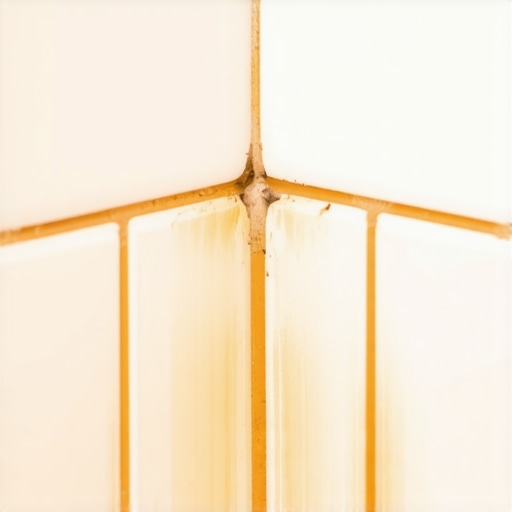
The orange grout mystery and the science of shower floor failure
I once walked into a luxury bathroom where a twenty thousand dollar marble installation looked like a rusty junkyard because the installer ignored the mineral content of the local water table. It was a tragedy written in stone. The homeowner was scrubbing with bleach every morning. She was making it worse. Most people think orange grout is just a sign of a lazy householder. It is not. It is a chemical and biological event happening at the molecular level inside your grout joints. As a master installer with twenty five years of sawdust under my nails and thin-set on my boots, I can tell you that your cleaning routine is likely the secondary problem. The primary problem is the physics of your subfloor and the chemistry of your water. When you see that neon pink or rusty orange hue, you are looking at an intersection of bacterial colonization and mineral oxidation. It is not a stain that you can simply wipe away. It is an inhabitant of the porous matrix of your floor assembly. We are going to look at the microscopic reality of why this happens and why your scrub brush is failing you.
The iron oxide conspiracy in your plumbing
Orange grout usually stems from high iron concentrations in your water supply that oxidize upon contact with air and alkaline grout surfaces. This chemical reaction creates ferric oxide, which bonds to the porous cementitious structure of the grout, making it nearly impossible to remove with standard household detergents. When water sits in your pipes, it carries dissolved minerals. Once that water hits the air and the high pH environment of a cement-based grout, the iron precipitates out. This is not dirt. It is rust. If you have well water, this problem is amplified ten fold. Manganese and iron are common bedfellows in deep wells. They travel through your shower head and find a home in the microscopic voids of your grout. Your grout is essentially a hard sponge. If you did not seal it with a high quality penetrating sealer, you have left the door wide open for these minerals to set up shop. I have seen guys spend days grinding out grout because the iron had penetrated so deep that no chemical cleaner could reach it. It is a structural contamination of the floor system.
“A floor is only as good as the subfloor beneath it; deflection is the enemy of every joint.” – Master Flooring Axiom
The biological reality of Serratia marcescens
The pinkish orange film often found in damp showers is actually a bacterium called Serratia marcescens which thrives on fatty phosphorus substances like soap scum and shampoo residue. This airborne organism finds a moist environment and colonizes the grout joints where it produces a red pigment called prodigiosin. This is the gritty reality of shower microbiology. This bacteria loves a damp environment. If your shower floor does not have a proper pre-slope, water sits in the mortar bed. This creates a perpetual damp zone. The bacteria do not just sit on top. They move into the pores. If you are using bar soaps, you are feeding them. Bar soap contains animal fats and minerals that create a buffet for Serratia marcescens. Your cleaning efforts are likely failing because you are only attacking the surface. The colony is living deep within the grout. To kill it, you need to change the environment. You need to eliminate the moisture and the food source. This means improving ventilation and switching to a synthetic liquid body wash that does not leave a fatty film behind.
The physics of the porous grout matrix
Cementitious grout is a porous material composed of Portland cement and sand which naturally contains thousands of microscopic capillaries capable of wicking moisture and minerals deep into the floor assembly. This capillary action allows orange minerals and pink bacteria to bypass surface cleaners and settle within the internal structure of the joint. Think about the last time you saw a piece of sidewalk after it rained. It stays dark for hours. That is because the water is inside the stone. Your grout is no different. Unless you used an epoxy grout, which is a non-porous plastic-like resin, you are dealing with a material that wants to absorb everything it touches. The sand particles in the grout create a skeletal structure, and the cement paste fills the gaps. But at a molecular level, there are still voids. These voids are the highway for staining agents. When you use a heavy acid cleaner to try and remove the orange, you are actually eating away the cement paste. This opens up even more pores. It is a cycle of destruction that leads to the eventual crumbling of the joint. You are literally scrubbing the life out of your floor.
| Grout Type | Porosity Level | Stain Resistance | Chemical Composition |
|---|---|---|---|
| Sanded Cement | High | Low | Portland Cement and Silica Sand |
| Unsanded Cement | Very High | Very Low | Portland Cement and Pigments |
| Epoxy Grout | Zero | Extreme | Two-part Epoxy Resin and Hardener |
| Urethane Grout | Low | High | Pre-mixed Polymer Resin |
The failure of the waterproofing membrane
If your shower floor remains orange despite constant cleaning it may indicate a failure in the sub-liner or the pre-slope which causes the mortar bed to stay saturated for weeks at a time. This constant moisture promotes the perpetual growth of orange bacteria and prevents the grout from ever fully drying out. In the old days, we did a