
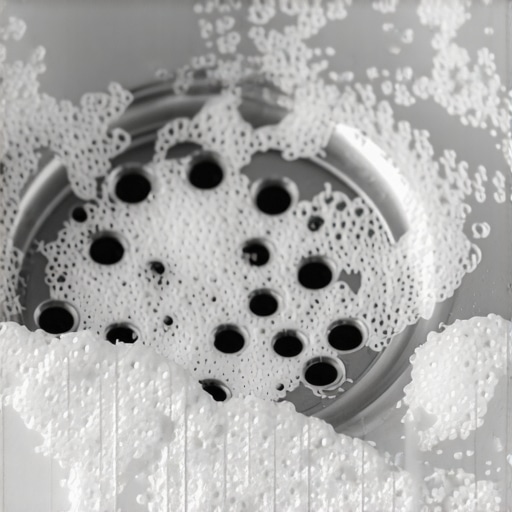
Why Your Shower Weep Holes Are Clogged with Calcium
I have spent thirty years fixing other people’s mistakes. Most guys skip the leveling compound. They think the underlayment will hide the dip. It won’t. I spent three days grinding concrete on a job last month just so the floor wouldn’t click like a castanet. That same laziness carries over to the shower pan. When I walk into a bathroom where the grout is crumbling and the bottom of the wall smells like a damp basement, I already know what I will find. The installer ignored the physics of water movement. They ignored the weep holes. Now the homeowner has a five hundred pound block of wet sand under their feet that is slowly turning into a mineral deposit. You do not just have a clog. You have a structural failure of the drainage system caused by the chemical precipitation of calcium carbonate.
The invisible killer behind your shower tile
Shower weep holes become clogged with calcium when hard water minerals accumulate in the drainage channels of a clamping ring drain. This happens because evaporative mineral precipitation occurs within the mortar bed, turning dissolved calcium into solid calcite that blocks secondary drainage paths and causes water saturation.
A shower floor is not just the tile you see on the surface. If you are a professional, you know it is a multi-layered system designed to manage moisture both above and below the decorative layer. The tile and grout are the first defense, but they are not waterproof. They are water resistant. Water eventually migrates through the grout lines and into the thick mortar bed underneath. This is by design. The water is supposed to hit the waterproof liner and then travel down the slope to the drain. At the base of the drain, there are small notches known as weep holes. These holes allow that subsurface water to exit into the plumbing. When these holes fail, the water sits. It stagnates. It begins to cook in the heat of your bathroom, and as it evaporates, it leaves behind everything it was carrying. In regions like Phoenix or Las Vegas, that means a heavy load of calcium and magnesium.
The chemistry of crust and mineral buildup
Calcium deposits in shower drains are the result of alkaline water reacting with the Portland cement in the mortar bed or grout. This chemical reaction creates efflorescence and calcium carbonate crystals that bridge the weep hole gaps, leading to a percolation failure and standing water inside the subfloor assembly.
When water sits in a pre-slope, it does not just stay pure. It leaches minerals out of the thin-set and the sand bed. This is a molecular process. The calcium hydroxide in the cement moves to the surface. When it meets the carbon dioxide in the air or the minerals in your tap water, it hardens. It becomes stone. This is the same process that forms stalactites in caves, but it is happening under your expensive marble tile. I have seen weep holes that were completely fused shut by a substance as hard as concrete. You cannot just poke a wire down there and hope for the best. Once the crystallization reaches a certain density, the drainage capacity drops to zero. This is why your shower stays wet for three days after you use it.
“A floor is only as good as the subfloor beneath it; deflection is the enemy of every joint.” – Master Flooring Axiom
The 1/8 inch that ruins everything
Improper slope to the drain prevents gravity-fed drainage from clearing the weep holes, which allows mineral-rich water to pool and calcify. A quarter-inch per foot slope is the TCNA standard required to ensure that capillary action and gravity move moisture toward the drainage flange before calcium deposits can form.
If your installer was lazy and did not provide enough pitch, the water just sits there. Imagine a flat plate of glass with a few drops of water on it. Those drops will stay there until they evaporate. When they evaporate, they leave a white ring. Now imagine that happening inside a dark, warm sand bed every single day for five years. The buildup is inevitable. Professionals use crushed stone or specialized weep hole protectors around the drain to keep the mortar from plugging the holes during the install. If your guy just dumped a bucket of