
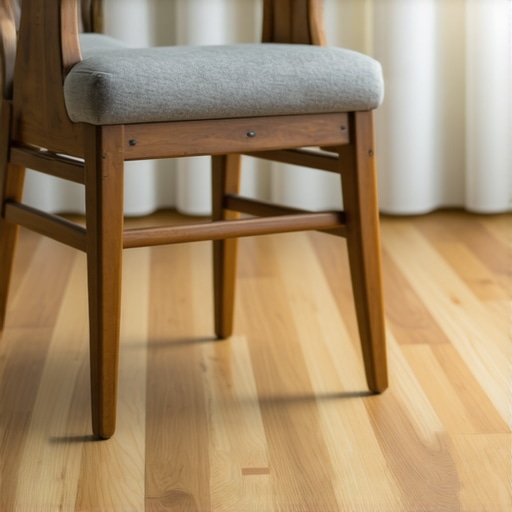
I once walked into a house where a $15,000 wide-plank walnut floor was cupping so bad it looked like a potato chip because the installer didn’t check the crawlspace humidity. But that was not the worst part. The homeowners had dragged a heavy mahogany dining set across the soft wood without a single ounce of protection. It looked like a grizzly bear had been ice skating in the dining room. That walnut was ruined before the first mortgage payment was even due. It was a failure of common sense and a lack of respect for the material. Most people think flooring is a set-it-and-forget-it purchase. They are wrong. It is a structural engineering challenge that requires constant vigilance against the laws of physics. Friction is the enemy. Gravity is the accomplice. If you do not understand the relationship between the psi of a chair leg and the Janka hardness of your timber, you are just waiting for a disaster to happen.
The physics of point loading on finished surfaces
Gravity does not care about your interior design choices. When a 200-pound person sits on a chair with four narrow legs, the pressure exerted on the hardwood floors is concentrated into four tiny areas. This is known as point loading. If the contact point of that chair leg is only half an inch wide, the pressure can exceed hundreds of pounds per square inch. This pressure is enough to exceed the compressive strength of the wood fibers. When you pull that chair back, you are not just sliding furniture. You are engaging in a mechanical abrasion process. The finish, whether it is a site-finished polyurethane or a factory-applied aluminum oxide coating, is forced to bear the brunt of this movement. Without a buffer, the finish will eventually crack or wear down to the bare wood. This is how grey spots start. Once the finish is gone, moisture from your mop or even the humidity in the air gets into the wood and turns it dark. It is a slow death for a floor.
“A floor is only as good as the subfloor beneath it; deflection is the enemy of every joint.” – Master Flooring Axiom
The chemical reality of pressure sensitive adhesives
Felt pads are the standard solution, but not all pads are created equal. You have the cheap, thin stickers from the dollar store and then you have heavy-duty, dense wool felt. The adhesive is the part that fails most often. Most pads use a pressure-sensitive adhesive that is designed to stay tacky. However, the heat generated by the friction of moving a chair can cause the adhesive to migrate. This results in a sticky residue on your hardwood floors that actually attracts more dirt and grit. Once grit is trapped in that adhesive, you have effectively created a piece of 80-grit sandpaper that is permanently attached to your furniture. You must inspect these pads every month. If they look flat or feel crusty, they are no longer protecting anything. They are actively destroying your investment. I recommend using pads that are at least 1/8 inch thick and made of high-density synthetic or wool fibers.
Hardwood versus laminate in the friction test
Many people ask me if laminate is better for chairs than hardwood floors. The answer is complicated. Laminate has a wear layer made of melamine resin and aluminum oxide. It is incredibly hard. On the Janka scale, it would outperform most natural woods. However, laminate is brittle. While it resists scratches better than a soft cherry or walnut, it can chip if a heavy chair is dropped on it. Hardwood is more resilient in that regard. It can dent without the surface shattering. If you have a high-traffic dining room, laminate might seem like the smart play, but you still need those felt pads. Even the hardest laminate wear layer will eventually succumb to the repetitive grinding of a plastic chair glide. Plastic glides are a lie. They are often harder than the floor itself and will leave tracks that look like rail lines in your living room.
| Material Type | Janka Rating (Approx) | Scuff Resistance | Recommended Protection |
|---|---|---|---|
| Red Oak | 1290 | Moderate | Heavy Duty Felt |
| Brazilian Cherry | 2350 | High | Density Wool |
| Black Walnut | 1010 | Low | Thick Felt Only |
| Laminate Wear Layer | High (N/A) | Very High | Felt or Rubber |
Grout grit and the shower moisture factor
One of the biggest mistakes I see is in houses with open floor plans where the hardwood floors meet the tile in the kitchen or near the showers. The grout between those tiles is essentially a reservoir for sand and minerals. When you walk from the tiled bathroom or kitchen onto the wood, your shoes carry those abrasive particles. If your chairs are near these transitions, the felt pads will pick up the grout dust. This creates an abrasive slurry. You need to ensure that your tile transitions are clean and that your grout is sealed. If you have a walk-in shower nearby, the localized humidity can also soften the wood fibers in the adjacent room. Soft wood fibers are much easier to scuff than dry, cured ones. It is a chain reaction of structural failures that starts with a simple lack of maintenance.
“Wood flooring will perform best when the interior environment is controlled to stay within a relative humidity range of 30 to 50 percent.” – NWFA Technical Manual
The ten point protocol for floor preservation
If you want to keep your floors looking like they were just installed, you have to follow a strict protocol. It is not a suggestion. It is a requirement.
- Remove all factory plastic glides from furniture legs immediately.
- Select felt pads that are slightly smaller than the chair leg to prevent dust collection.
- Clean the bottom of the chair leg with denatured alcohol before applying the adhesive.
- Replace felt pads every six months regardless of their appearance.
- Use area rugs with non-reactive pads in high-traffic zones.
- Keep pet nails trimmed to prevent secondary scratching.
- Maintain a consistent indoor humidity to keep the wood stable.
- Vacuum frequently to remove the grit that acts as sandpaper.
- Never use steam mops on hardwood as they soften the finish.
- Check for missing pads every time you clean the house.
The ghost in the expansion gap
A floor needs to breathe. When you place heavy furniture like a piano or a massive dining table on hardwood, you are pinning the floor down. If you do not have the proper expansion gaps at the perimeter, the floor will buckle because it cannot move under the weight. This is why the felt pad rule is so important. It allows the furniture to move slightly across the surface without dragging the wood with it. I have seen entire floors lift off the subfloor because a heavy island was installed directly on top of a floating floor without any room for movement. The friction of the chair legs only adds to this stress. Every time you push back from the table, you are applying lateral force to the planks. If those planks are pinned, the tongue and groove joints will eventually snap. It is a mechanical failure that starts with a simple chair.