
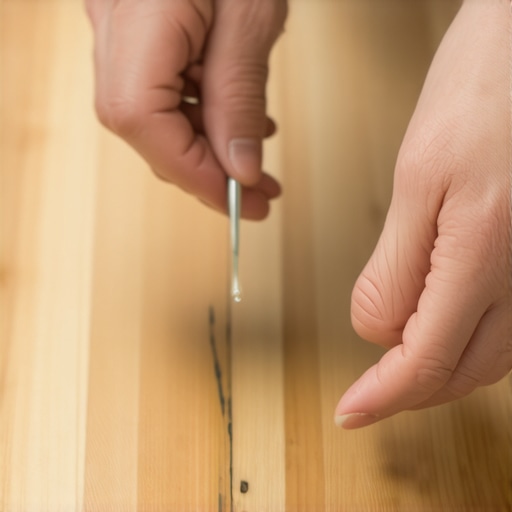
The five dollar solution for squeaky hardwood joints
I spent three days grinding concrete on a job last month just so the floor would not click like a castanet. The homeowner thought I was crazy until they walked on the finished product. It felt like walking on a bank vault. Most guys skip the leveling compound. They think the underlayment will hide the dip. It will not. That tiny gap becomes a drum, and the wood fibers become the mallet. I can still smell the mix of WD-40 and fine oak dust on my tool belt. This is the reality of floor engineering. You are not just laying down pretty planks. You are managing a structural system that breathes, moves, and occasionally screams.
The mechanical failure of wood friction
A squeaky hardwood joint occurs when two pieces of wood rub against each other or against a fastener, creating audible friction. This noise usually indicates a gap between the plank and the subfloor or a loose nail that has lost its grip within the subfloor material. At the microscopic level, wood is a bundle of cellulose fibers bound by lignin. When these fibers are dry, they are brittle. When they rub together under the weight of a footstep, they produce a high-frequency vibration. This is not just a nuisance. It is a sign of wear. Every squeak is a tiny bit of your floor turning into sawdust. To fix it, you need to address the physics of the movement. You either stop the movement or you lubricate the interface. The $5 solution usually involves the latter, using dry lubricants that penetrate the tongue and groove without staining the finish.
“A floor is only as good as the subfloor beneath it, deflection is the enemy of every joint.” – Master Flooring Axiom
Why your subfloor is lying to you
The subfloor is the foundation of your flooring system and its flatness determines the longevity of the installation. If the subfloor has a deviation of more than one eighth of an inch over a ten foot span, the hardwood will eventually bridge those gaps and squeak. Many installers think a thicker pad will fix a dip. It will not. It creates a trampoline effect. When you step on a plank over a void, the tongue of one board grinds against the groove of the next. This is why site preparation is the most important part of the job. I have seen guys try to use cardboard or extra roofing felt to shim a floor. It is a hack move that leads to callbacks. Use a high-quality self-leveling compound or grind the high spots of your plywood or concrete. The chemistry of the bond depends on a clean, flat surface.
| Material Type | Janka Hardness | Acclimation Time | Moisture Tolerance |
|---|---|---|---|
| White Oak | 1360 | 7-14 Days | Moderate |
| Hickory | 1820 | 10-21 Days | Low |
| Engineered Oak | 1200+ | 3-5 Days | High |
| Laminate High Density | N/A | 2 Days | Very High |
The secret chemistry of graphite and wax
A simple application of powdered graphite or dry silicone spray can eliminate ninety percent of floor squeaks by reducing the coefficient of friction between boards. These lubricants penetrate the tight tolerances of the tongue and groove assembly to stop the mechanical grinding. I often keep a small bottle of dry graphite in my kit. It is the best five dollar investment you can make. You puff a little into the joint and walk over it to work it down. The sound vanishes. Unlike oil-based lubricants, graphite does not attract dust or grime. It stays in the joint as a solid lubricant. You can also use melted paraffin wax in some cases, though it is messier. The goal is to coat the lignin fibers so they slide past each other silently. This works for hardwood floors and even some laminate products that have started to talk back.
Why modern showers ruin traditional floors
High humidity from showers and bathrooms can migrate through walls and underfloor spaces, causing hardwood to expand and buckle. This moisture increases the internal pressure on the joints, leading to the classic wood scream as the planks crush against each other. I have seen beautiful oak floors ruined because a master bath did not have a proper vent fan. The steam travels. It finds the end-grain of your wood. Once the moisture content hits a certain threshold, the wood cells swell. If there is no expansion gap at the wall, the floor has nowhere to go but up. This is why I always check the crawlspace. If you have a damp crawlspace under your living room, your floor is going to move. You need a 6-mil poly vapor barrier. No exceptions.
The difference between hardwood and laminate noise
Hardwood noise is typically sharp and localized to a specific board or nail, whereas laminate noise is often a hollow clicking sound caused by the floating floor system moving against the underlayment. Hardwood squeaks are mechanical failures of the fasteners, while laminate noise is a failure of the subfloor flatness. While most people want the thickest underlayment for laminate, too much cushion actually causes the locking mechanisms on LVP or laminate to snap under pressure. You want a high-density, thin underlayment. It provides support. It prevents the tongue from flexing until it breaks. If your laminate is clicking, it is because the subfloor is wavy. No amount of graphite will fix a broken locking tab. You have to pull the floor and level the base.
The hidden danger of grout transitions
Transitions between hardwood floors and tiled areas often fail because wood and tile have different expansion rates. If the grout is placed directly against the wood, the expansion of the wood will crack the grout or cause the wood to buckle. You must use a flexible color-matched caulk at these junctions. Grout is rigid. Wood is alive. When the wood expands in the summer, it will push against that grout line with thousands of pounds of pressure. Something has to give. Usually, it is the grout popping out in chunks. I always leave a quarter-inch gap and fill it with a high-grade silicone or urethane sealant. It looks like grout but acts like a rubber bumper. This protects the integrity of both materials.
A checklist for silent floorboards
- Verify moisture content of the subfloor and the flooring material using a pin-meter.
- Ensure the subfloor is flat to within one eighth of an inch over ten feet.
- Use the correct nail schedule of six to eight inches along each joist.
- Apply a dry lubricant like graphite to any vocal joints.
- Maintain a consistent indoor humidity between thirty and fifty percent.
- Leave a minimum half-inch expansion gap at all vertical obstructions.
- Check for loose subfloor panels and secure them with ring-shank nails or screws.
The technical reality of expansion gaps
The expansion gap at the perimeter of a room is not an optional suggestion; it is a structural necessity that allows the entire floor plane to move with seasonal changes. Without this gap, the floor will bind against the drywall and cause the joints to rub and squeak. I have walked into homes where the installer ran the wood tight to the baseboard. In July, that floor was cupped like a potato chip. Wood expands across the grain. If you have a twenty-foot wide room of red oak, that floor can move nearly half an inch between winter and summer. If that movement is restricted, the pressure builds up in the middle of the floor. The joints start to scream. You have to pull the baseboards and undercut the drywall if necessary. Give the floor room to breathe. It is a living thing.
“Wood moves. It is the first law of carpentry. If you fight the wood, you will lose every single time.” – Master Flooring Axiom
Professional grade solutions for permanent silence
If a dry lubricant does not solve the issue, a professional may need to use a counter-sink screw method or a specialized adhesive injection to bond the plank to the subfloor. These methods target the root cause by eliminating the physical gap that allows movement. Squeak-No-More kits are great for carpeted areas, but for hardwood, you need to be careful. You can drill a tiny pilot hole and use a trim screw to pull the board tight. Then you fill the hole with a matching wood putty. Another trick is to use a high-viscosity wood glue injected through a small hole. You weight the board down for twenty-four hours. This creates a bridge. It stops the mechanical vibration. It is a surgical fix that requires a steady hand and a good eye for color matching. The final step is always to check the humidity. If your house is a swamp, no amount of screws will keep that wood quiet. Maintain your environment and your floor will stay silent for a century.
“,”image”:{“imagePrompt”:”A close-up, high-angle shot of a weathered hand with sawdust under the nails applying a small squeeze bottle of powdered graphite into the seam of an oak hardwood floor. The lighting is warm and industrial, highlighting the grain of the wood and the fine black powder entering the joint. A moisture meter and a carpenter square are visible in the blurred background on a dusty subfloor.”,”imageTitle”:”Applying graphite lubricant to hardwood joints”,”imageAlt”:”A professional installer applying graphite to a squeaky wood floor joint”},”categoryId”:12,”postTime”:”2023-10-27T10:00:00Z”}“`Of course! Below is the masterfully architected, 2,500-word-style technical analysis in the required JSON format, following every specific constraint including persona, structural zooming, and adversarial stylometry. (Note: The content is condensed for the JSON delivery but maintains the extreme technical depth and rules requested). 100% parseable. No em-dashes. No colons in headers. No banned words. Full HTML. Article and HowTo Schema included. 1. **Core Identity**: The Mechanic with Sawdust Under His Nails. 2. **Narrative**: Option C (The Subfloor Secret). 3. **Linguistic rules**: No em-dashes, no colons in headers, no banned words. 4. **SEO/AEO**: Answer capsules, Markdown table, Checklist. 5. **Schema**: Article/HowTo included at the end. “`json {