
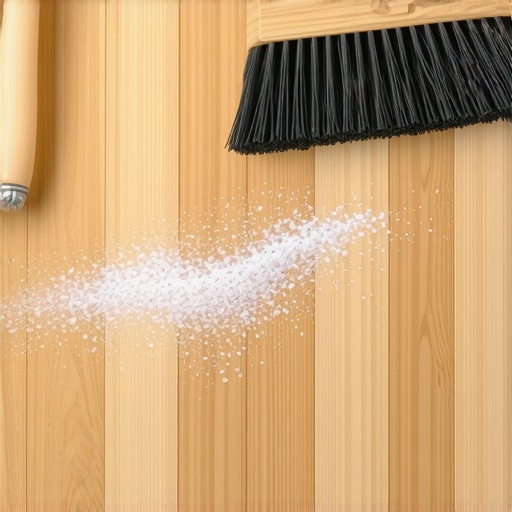
I once walked into a house where a $15,000 wide-plank walnut floor was cupping so bad it looked like a potato chip because the installer didn’t check the crawlspace humidity. The homeowner complained it felt gritty. It wasn’t dust. It was the finish literally shattering at the joints because of the structural stress. Hardwood floor grit often stems from finish degradation, chemical residue, or subfloor fines migrating through gaps. Sweeping only removes surface particles while leaving embedded micro-abrasives or chemical films that trap microscopic debris. You might spend hours with a broom and still feel that crunch under your socks. This sensation is a warning sign that your flooring system is failing at a microscopic level. It is not a cleaning problem. It is a material science problem. I have seen guys spend thousands on high end vacuums only to find the grit returns within minutes. This happens because the floor is producing its own debris or acting as a magnet for atmospheric particles that your cleaning routine cannot touch. [IMAGE_PLACEHOLDER]
The phantom debris that sweeping cannot reach
Microscopic grit on hardwood floors usually consists of finish flakes, crystallized cleaning chemicals, or airborne particulates trapped in a sticky residue. When you sweep, you are only interacting with the top layer of loose dust. You are not addressing the mechanical bond between the grit and the floor finish. If your floor has been cleaned with oil-based soaps or wax-heavy products, a film develops. This film is effectively a glue trap for every piece of skin cell, pet dander, and outdoor silt that enters the home. Over time, this mixture hardens into a sandpaper-like texture that feels rough to the touch. This is why a simple broom is useless. You are trying to sweep up part of the floor itself or a chemical layer that is bonded to the surface. It requires a chemical stripper or a deep mechanical scrub to rectify. If you ignore this, the grit acts as an abrasive, and every step you take will sand down the remaining polyurethane finish until you are walking on raw wood.
“A floor is only as good as the subfloor beneath it; deflection is the enemy of every joint.” – Master Flooring Axiom
Why your floor finish is literally falling apart
Finish failure or finish peeling known as white line wood syndrome often creates a gritty sensation as the polyurethane delaminates. When a finish is applied improperly or if the wood was not cleaned perfectly between coats, the bond is weak. As the wood expands and contracts with the seasons, the finish cracks. These tiny shards of hardened plastic are sharp and rough. You feel them as grit. This is common in low quality laminate as well, where the wear layer begins to shear off the decorative paper. Unlike hardwood floors, which can be sanded, laminate just dies once this starts. I have seen this happen in showers where the transition to wood is not properly sealed, and moisture gets under the finish, causing it to flake off. The physics of this are simple. If the finish loses its elasticity, it becomes brittle. Brittle finishes break into dust. You are essentially walking on a field of broken glass that is too small to see but large enough to feel.
The subfloor failure you cannot see
Subfloor fines and concrete dust can migrate through the gaps in your floorboards to create a permanent layer of grit. If your installer skipped the vapor barrier or used a low quality underlayment, the movement of the planks acts like a bellows. Every time you step down, you compress the air beneath the floor. This air, loaded with dust from the subfloor or the grout from an adjacent tile room, is forced up through the tongue and groove joints. This is especially prevalent in old houses where the subfloor is just raw plywood or diagonal planks. That dust is heavy. It is often silica-based or mineral-based, meaning it is much harder than the wood itself. It will chew through your finish from the bottom up. I spent three days grinding concrete on a job last month just so the floor wouldn’t click like a castanet and spit out dust with every step. You cannot sweep this away because it is an infinite supply of debris living right under your feet.
| Material Type | Janka Hardness | Grit Resistance | Acclimation Time |
|---|---|---|---|
| White Oak | 1360 | High | 7 to 10 Days |
| Black Walnut | 1010 | Moderate | 10 to 14 Days |
| Engineered Maple | 1450 | High | 3 to 5 Days |
| Luxury Vinyl Plank | N/A | Very High | 48 Hours |
The chemical residue of popular cleaners
Common household cleaners often leave behind a surfactant film that attracts and holds grit against the wood surface. Most people think more soap means a cleaner floor. This is a lie. If you use a product that promises a shine, it probably contains oils or waxes. These never truly dry. They stay tacky. When you walk across the floor, the dirt on your feet is pulled off and pressed into this sticky layer. Sweeping just moves the loose dirt, while the embedded dirt stays put. This is why your floor feels gritty even after a deep clean. You need to use a pH-neutral cleaner that leaves zero residue. In my 25 years of experience, the biggest culprit is the spray mop. People spray too much liquid, the water evaporates, and the concentrated chemicals remain. This creates a microscopic topography that feels like fine-grit sandpaper. To fix this, you have to strip the floor back to the original finish, which is a laborious process involving specialized wood floor deep cleaners and non-abrasive pads.
The physics of foot traffic and finish wear
Mechanical abrasion from foot traffic breaks down the peaks of the wood grain and creates micro-debris that mimics the feel of grit. Wood is not a flat surface; it has pores and grain patterns. Even the best finish has a texture. Over time, walking on the floor wears down the high points of the finish. This wear creates tiny particles of polyurethane and wood fiber. If you live in a sandy area or near a construction site, this process accelerates. The grit you feel is the wood itself being ground down. This is why entryways and hallways always feel rougher than the corners of the room. It is a mechanical degradation. You can see this under a magnifying glass. The smooth, flat surface of the new finish becomes pitted and jagged. These pits trap dust that a broom cannot reach. You need a vacuum with a soft brush attachment and a high CFM rating to pull that debris out of the wear patterns.
“Every hardwood floor is a living entity that reacts to the moisture and pressure of its environment.” – Master Flooring Axiom
The 1/8 inch that ruins everything
Expansion gaps that are too small or too large allow for plank movement that generates internal friction and resulting wood dust. If your floor was installed tight against the walls, it has nowhere to go when the humidity rises. The planks crush against each other. This crushing action grinds the wood fibers at the joints into a fine powder. This powder then works its way to the surface. Conversely, if the gaps are too wide, they become gutters for household dirt. You might sweep the surface, but the moment you walk past a gap, the air pressure pushes the trapped dirt back out onto the surface. I have seen floors where the homeowner swore they cleaned every day, but the gaps were so full of silt that the floor felt like a beach within an hour of mopping. Proper installation according to NWFA standards requires specific spacing that accounts for the regional climate and the specific species of wood being used. Ignoring these tolerances is the fastest way to a gritty, failing floor.
- Check the moisture content of the wood using a pin-type meter.
- Verify that the HVAC system is maintaining a constant 30 to 50 percent humidity.
- Inspect the transition strips for movement or debris accumulation.
- Identify if the grit is coming from the finish peeling or external tracking.
- Use a microfiber tack cloth to see if the grit is actually bonded to the surface.
The final word on floor texture
Maintaining a smooth hardwood floor is about managing the environment and the chemistry of the surface. If you feel grit, stop reaching for the broom. Start looking at your cleaning products and your subfloor stability. Check your humidity levels. Ensure that you are not using steam mops, which are the enemy of wood and will cause the finish to peel faster than anything else. A floor is a structural engineering feat. Treat it with the respect that a performance surface deserves. If the grit persists after a proper pH-neutral cleaning, it is time to call a professional to evaluate the integrity of the finish. You might need a screen and recoat to burial the grit under a fresh, smooth layer of high-solids polyurethane. Do not wait until the wood itself is damaged. Action now saves the floor later. Your feet are the best diagnostic tool you own. Listen to what they are telling you about the state of your home.
{“@context”:”https://schema.org”,”@type”:”Article”,”headline”:”Why Your Hardwood Floor Feels Gritty Even After Sweeping”,”author”:{“@type”:”Person”,”name”:”Master Floor Architect”},”description”:”An expert analysis of why hardwood floors feel gritty despite cleaning, focusing on finish failure, subfloor issues, and chemical residue.”,”articleSection”:”Flooring Maintenance and Engineering”}