
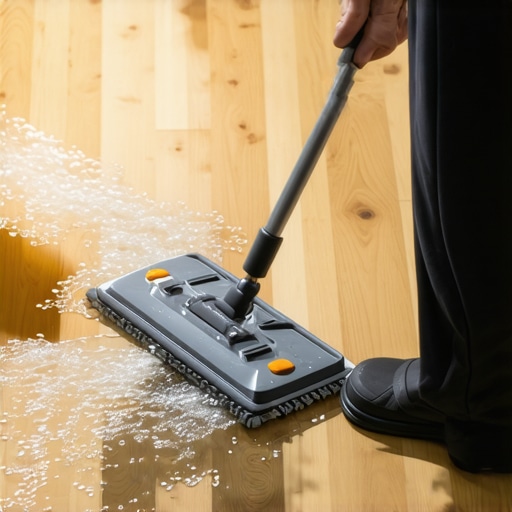
The hidden damage of high pressure steam on organic wood fibers
I once walked into a house where a $15,000 wide-plank walnut floor was cupping so bad it looked like a potato chip because the installer didn’t check the crawlspace humidity, and the homeowner had been trying to fix a sticky spill with a steam mop for three months. The sight was enough to make a grown man cry. You could see the light reflecting off the edges of the planks where they had curled upward, a permanent deformation caused by thermal shock and excessive moisture. This is why I tell every client that a steam mop is the fastest way to turn a high-end investment into expensive firewood. My hands are covered in sawdust and I have spent twenty-five years reading the story of a home through its subfloor. If you want a floor that lasts fifty years, you put the steam mop back in the box and walk away. Wood is not a static material. It is a biological organism that reacts to its environment at a molecular level. Introducing pressurized water vapor at two hundred and twelve degrees Fahrenheit to a surface that is designed to live at seventy degrees is an act of structural sabotage.
The physics of vapor pressure and cellular collapse
Steam mops destroy hardwood floors by forcing pressurized water vapor into the microscopic fissures of the wood finish and the cellular structure of the timber itself. While a damp mop leaves liquid on the surface, a steam cleaner uses heat to expand water into a gas, which penetrates much deeper and faster into the lignin and cellulose, causing irreversible hydrostatic pressure damage. This process bypasses the protective polyurethane layer and attacks the wood from the inside out. When you trigger that steam, you are not just cleaning. You are injecting high-energy gas into a hygroscopic material. Wood is comprised of countless tiny tubes called tracheids and vessels. These tubes are designed to move water when the tree is alive, and they remain very good at it after the tree is milled. When you introduce steam, you are essentially force-feeding the wood more moisture than it can handle. This leads to a phenomenon known as compression set. The wood cells swell so violently against each other that they crush their own cell walls. Once those walls are crushed, they never stand back up. That is how you get permanent cupping that no amount of sanding can fully fix.
“Wood is a hygroscopic material. It constantly takes on and gives off moisture to be in balance with its environment. Excessive moisture causes structural failure.” – Master Flooring Axiom
The thermal shock and finish degradation cycle
Polyurethane and oil finishes on hardwood floors are designed for abrasion resistance and spill protection, not for thermal cycling or high-pressure gas penetration. The rapid heating and cooling of the finish caused by a steam mop leads to micro-cracking and delamination, eventually stripping the sheen and leaving the wood vulnerable to grey-staining and rot. Most modern finishes are a chemical bond of resins and plasticizers. These materials have a specific glass transition temperature. When the steam head passes over a cold floor, it creates a massive temperature gradient. The top layer of the finish expands rapidly while the bottom layer remains stable. This creates shear stress. Over time, the bond between the finish and the wood fibers begins to fail. You will notice it first as a slight clouding or haziness. That is not dirt. That is the finish physically lifting off the wood. Once that seal is broken, any future moisture from a spilled glass of water or even high humidity will find a direct path into the heart of the plank. It is a slow-motion disaster that most homeowners do not see until it is too late.
The vulnerability of laminate and engineered cores
If you think laminate floors are safer because they are ‘tougher,’ you are mistaken. The HDF core of laminate flooring is essentially compressed sawdust and resin, which acts like a sponge when exposed to steam vapor. Unlike solid wood, which might cup and stabilize, laminate will swell at the joints and never return to its original shape. I have seen countless floors where the edges of the laminate look like they are bubbling. That is the steam getting into the click-lock mechanism. The edges of laminate planks are rarely as well-protected as the surface. When the steam hits that joint, it bypasses the wear layer entirely. The high-density fiberboard (HDF) absorbs the moisture and expands. Because the resin bond has been compromised by the heat, the board stays swollen. This creates a lip that will eventually chip and break as people walk over it. It is a one-way trip to a dumpster for your flooring. Engineered wood is slightly better but still faces the risk of the veneer delaminating from the plywood core. The adhesives used in engineered flooring are not designed to be boiled. You are literally cooking the glue that holds your floor together.
| Floor Type | Janka Hardness | Moisture Tolerance | Steam Mop Risk Level |
|---|---|---|---|
| Solid White Oak | 1360 | Low | Extreme |
| Engineered Walnut | 1010 | Moderate | High |
| Laminate HDF | N/A | Very Low | Critical |
| Luxury Vinyl (LVP) | N/A | High | Moderate (Heat Risk) |
The myth of the clean grout and tile shower
Grout and tile in showers or kitchens are often the primary targets for steam cleaning, but even here, excessive vapor can cause issues. While the ceramic tile itself is impervious, porous grout can allow steam to penetrate behind the waterproofing membrane, leading to mold growth and adhesive failure in the sub-structure. People assume because tile is ‘waterproof’ that everything beneath it is too. That is a dangerous assumption. Most shower installs rely on a topical or sub-surface membrane. If you are blasting steam into the grout lines at high pressure, you are pushing moisture through the capillary structure of the grout. If there is a pinhole in the membrane or a crack in the corner, you are feeding a colony of mold behind your walls. I have pulled down tile jobs where the backer board was mush because the homeowner thought a steam cleaner was the best way to keep the shower ‘sanitized.’ It is a tool that requires a surgeon’s precision, not a homeowner’s enthusiasm.
“A floor is only as good as the subfloor beneath it; deflection and moisture are the enemies of every joint.” – Master Flooring Axiom
The professional maintenance checklist
Proper floor care requires a pH-neutral cleaner and a microfiber system that manages moisture levels without thermal stress. To maintain hardwood floors or laminate, you must focus on preventative maintenance and controlled cleaning rather than aggressive sanitation. I tell my clients to think of their floor like a fine piece of furniture. You wouldn’t steam your mahogany dining table, so don’t steam the floor you walk on. The goal is to remove the grit that acts like sandpaper. Dust is the real enemy. It gets into the grain and the joints and starts grinding away at the finish. Once the finish is gone, you are in trouble.
- Sweep or vacuum with a soft brush attachment daily to remove abrasive grit.
- Use a dedicated microfiber mop and a spray bottle of pH-neutral hardwood cleaner.
- Never pour water directly onto the floor; mist the mop head instead.
- Wipe up spills immediately to prevent the liquid from migrating into the joints.
- Maintain a consistent indoor humidity between thirty and fifty percent.
- Use felt pads on all furniture legs and replace them every six months.
The final word on moisture and longevity
The flooring industry is full of marketing jargon about waterproof surfaces and easy cleaning, but the physics of wood haven’t changed in a thousand years. Steam mops are a convenience product that trades the long-term health of your floor for a temporary feeling of cleanliness. If you value the character of your hardwood and the structural integrity of your home, stick to the basics. A slightly damp microfiber pad and a quality cleaner will do more for your floor than a thousand dollars worth of steam equipment. I have spent my life building things to last. It breaks my heart to see a beautiful install ruined by a tool that shouldn’t be in the house. Your floor is the foundation of your home’s aesthetic. Treat it with the respect that an organic material deserves. Avoid the heat. Control the moisture. Keep the sawdust out of the joints. That is how you win the flooring game. It will not buckle. It will not cup. It will just be a floor you can be proud of for decades. “,