
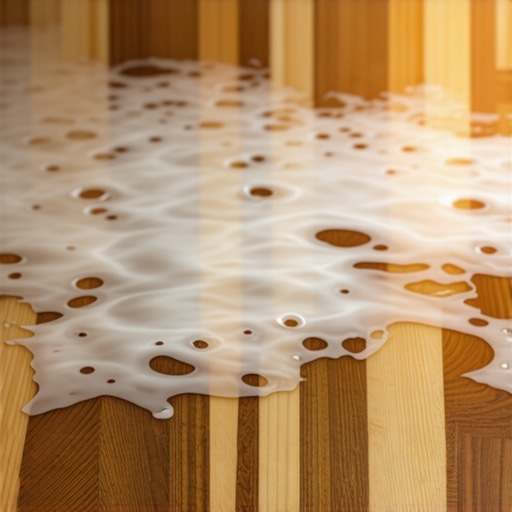
Why your hardwood refinishing project failed in the humidity
Hardwood refinishing projects fail in high humidity because wood is a hygroscopic material that absorbs water vapor directly from the air until it reaches its equilibrium moisture content. High relative humidity causes the wood cells to expand, leading to crowning or cupping that forces the finish to peel, crack, or fail to bond to the cellular surface of the timber.
I once walked into a house where a $15,000 wide-plank walnut floor was cupping so bad it looked like a potato chip because the installer didn’t check the crawlspace humidity. The homeowner was devastated. The finish was white and hazy because the moisture was trapped beneath the polyurethane. It smelled like damp earth and regret. This is the reality of wood flooring. It is not a static plastic product. It is a biological organism that reacts to its environment at a molecular level. Most people look at a floor and see color. I look at a floor and see a complex network of cellulose and lignin fibers that are constantly fighting to stay dimensionally stable against the invisible pressure of water vapor. If you ignore the psychrometrics of the room, you are not a flooring professional, you are just someone making a mess with a sander. Wood floors require a strict balance. When the air is saturated, the wood fibers swell. When the air is dry, they shrink. If you apply a finish when the wood is at its maximum expansion, the moment the humidity drops, the wood will contract and leave ugly white lines or cracks in your expensive coating. This failure is a structural engineering disaster masked as an aesthetic disappointment.
The invisible war inside your floorboards
To understand why your floor failed, you have to look at the anatomy of the wood itself. Wood consists of bundles of hollow tubes called tracheids or vessels. These tubes are designed by nature to transport water. Even after a tree is cut, kiln-dried, and turned into a plank, those tubes remain. They are eager to soak up any moisture available. When you refinish a floor in a high-humidity environment, you are essentially trying to paint a moving target. The wood is expanding as you work. The moisture content in the air, known as relative humidity, directly dictates the moisture content of the wood. If your job site is at 70 percent humidity, your wood will eventually reach about 13 percent moisture content. Most finishes are designed to be applied when the wood is between 6 and 9 percent moisture. This gap is the reason for your failure. The finish cannot penetrate the wood grain properly because the pores are already full of water molecules. This results in poor adhesion. Over time, the finish will simply flake off as the wood continues to move underneath it. Hardwood floors are a performance surface. If the surface is unstable, the performance ends.
“A floor is only as good as the subfloor beneath it; deflection is the enemy of every joint.” – Master Flooring Axiom
Why your subfloor is lying to you
Many contractors think that if the hardwood looks dry, it is ready for a new coat. This is a fatal mistake. You have to check the subfloor. A concrete slab or a plywood subfloor acts as a massive reservoir for moisture. In homes with poor crawlspace ventilation or leaky showers, the subfloor can be saturated while the top of the hardwood looks fine. This creates a moisture gradient. The bottom of the board expands more than the top, causing the edges to turn up. This is called cupping. If you sand a cupped floor flat without addressing the humidity, you are effectively thinning the edges of the boards. When the floor finally dries out, the edges will drop, and the center of the board will now be higher than the edges. This is called crowning. It is a permanent structural deformity. You cannot fix it with more sandpaper. You have to fix the environment. Moisture from showers is a common culprit. If the grout in a nearby bathroom is failing, water seeps into the subfloor and travels laterally under your hardwood floors. It turns the area into a microscopic swamp. You need to verify the integrity of every wet area before you touch the sander.
The 1/8 inch that ruins everything
Expansion gaps are the lungs of a floor. Every professional knows that you need at least a 1/2 inch to 3/4 inch gap around the perimeter of the room. However, in high humidity, even this might not be enough. If the floor expands and hits the drywall or the baseboard, it has nowhere to go but up. It will buckle. I have seen floors lift three inches off the subfloor because the installer didn’t account for the regional humidity. In places like Houston or New Orleans, the expansion is aggressive. You are not just laying planks. You are managing a physical force. Many DIY enthusiasts try to save money by using cheap laminate or thin engineered products, thinking they are more stable. While laminate is less affected by moisture, the core is often made of high-density fiberboard which, once wet, expands like a sponge and never returns to its original shape. It is a one-way trip to the dumpster.
Technical comparison of flooring types in high humidity
| Flooring Type | Acclimation Time | Max Safe Humidity | Movement Risk |
|---|---|---|---|
| Solid White Oak | 7 to 14 Days | 45% | Very High |
| Engineered Oak | 3 to 5 Days | 55% | Moderate |
| Laminate Flooring | 48 Hours | 60% | Low to Moderate |
| Luxury Vinyl Plank | 0 to 24 Hours | 85% | Minimal |
The chemical failure of moisture barriers
Adhesion is a chemical bond. When you apply a stain or a sealer, you are relying on the molecules of the liquid to hook into the fibers of the wood. If those fibers are saturated with water, the hooks have nothing to grab. This is why you see peeling. Furthermore, high humidity slows down the drying time of oil-based polyurethanes. Instead of drying in 8 to 12 hours, it might stay tacky for days. During this time, dust, pet hair, and debris settle into the finish. More importantly, the solvent cannot evaporate properly. This leads to a soft finish that will scratch and scuff the moment you walk on it. Even the best water-based finishes will struggle. They rely on a specific evaporation rate to cross-link their polymers. If the air is too wet, the water in the finish can’t leave. The chemical reaction stalls. You end up with a gummy, opaque mess that looks like old milk.
Checklist for a successful humidity-resistant refinish
- Calibrate your moisture meter against a known dry sample before every job.
- Measure the relative humidity of the room using a hygrometer for 48 hours prior to starting.
- Ensure the HVAC system has been running at living conditions for at least two weeks.
- Test the moisture content of the subfloor and ensure it is within 2 percent of the hardwood.
- Seal all crawlspaces with a 6-mil poly vapor barrier to stop rising dampness.
- Inspect all showers and adjacent grout lines for moisture leaks.
- Allow for double the standard acclimation time if the wood is wide-plank.
The ghost in the expansion gap
Airflow is the secret weapon of the master installer. If you trap air under a floor, you trap moisture. This is why I hate seeing people install transition strips too tightly. The floor needs to move. It needs to breathe. When the humidity spikes, the air under the floor needs a way to equalize with the air in the room. If you have blocked all the gaps with caulk or tight molding, you are creating a pressure cooker. Eventually, that pressure will find a weak point. Usually, that weak point is the joint between two planks. You will see the wood start to splinter or the finish start to crack at the seams. This is not a product defect. This is an installation failure. Most people want a seamless look, but seamless is a dangerous word in the flooring world. Wood needs seams. It needs space. It needs respect for the laws of physics. If you give it those things, it will last a century. If you don’t, it will fail before the check clears. [image placeholder]
“Wood is a hygroscopic material; it will always seek a balance with its environment, regardless of the installer’s intent.” – NWFA Technical Manual
The regional climate expert perspective
The geography of your home dictates your flooring strategy. In the dry heat of Phoenix, your boards will shrink until they show gaps you could drop a coin through. In the swampy humidity of Florida, solid wood is often a death wish. This is where engineered cores become the superior engineering choice. Engineered flooring uses cross-ply construction to cancel out the natural movement of the wood. Each layer of plywood is glued at a 90-degree angle to the one above it. This creates a mechanical resistance to expansion. However, do not be fooled by the word waterproof on a box of laminate or vinyl. The floor might be waterproof, but the subfloor is not. If you have a moisture problem in your home, no amount of plastic flooring will save your structure. The moisture will just sit under the vinyl and grow mold until your house smells like a basement. You have to solve the moisture problem at the source. Fix the drainage around your foundation. Encapsulate your crawlspace. Make sure your gutters aren’t dumping water right against the rim joist. Only then can you think about the finish on your floors.
“, “image”: {“imagePrompt”: “A close-up, high-detail photograph of a cupped walnut hardwood floor showing the edges of the planks curving upwards and a hazy, peeling polyurethane finish under a harsh light that highlights the moisture damage.”, “imageTitle”: “Hardwood Floor Cupping Due to Humidity”, “imageAlt”: “Damaged walnut hardwood flooring with visible cupping and finish failure caused by high moisture levels.”}, “categoryId”: 7, “postTime”: “2023-10-27T10:00:00Z”}