
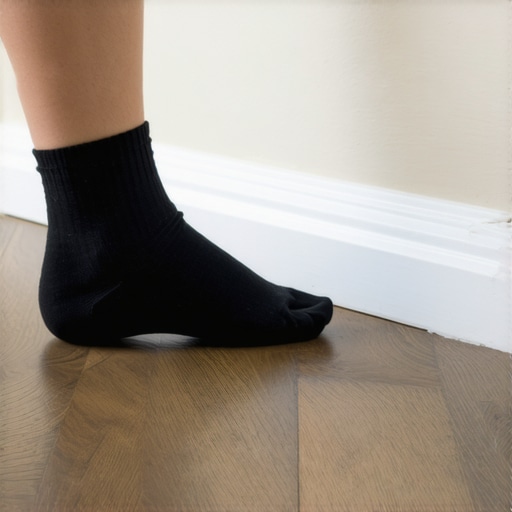
Most guys skip the leveling compound. They think the underlayment will hide the dip. It won’t. I spent three days grinding concrete on a job last month just so the floor wouldn’t click like a castanet. That job taught the homeowner a hard lesson about the physics of a floating floor. When you feel that sinking sensation or hear a rhythmic clicking as you approach the baseboards, you aren’t just feeling a cosmetic flaw. You are witnessing the mechanical failure of a system that was designed to be perfectly flat but is being forced to contour to a bowl-shaped subfloor. Laminate is not a carpet. It does not drape. It bridges. And when that bridge has no support, it collapses under your heel.
The ghost in the expansion gap
Laminate floor movement near walls is primarily caused by improper expansion gaps, subfloor deflection, or the lack of a level substrate. When the floor is pinched against a wall, it has nowhere to go during seasonal expansion, causing it to bow. Conversely, a dip in the subfloor near the perimeter creates a void that allows the plank to flex downward when stepped on. This vertical travel is the most common reason for the phantom movement you feel underfoot.
The mechanics of a floating floor rely on the principle of independent movement. Unlike hardwood floors that are nailed or glued, laminate must be free to slide. If you have jammed your planks tight against the drywall or the bottom of the wall plate, you have effectively turned your floor into a compressed spring. In high humidity, the wood fibers in the high-density fiberboard core absorb moisture and expand. If the wall stops that expansion, the floor must go somewhere. Usually, it goes up. When you walk on that puffed-up section, you are simply pushing the air out from under it until it hits the subfloor again.
Why your subfloor is lying to you
Subfloor flatness is the single most significant factor in a stable laminate installation. Most manufacturers require the surface to be flat within 3/16 of an inch over a 10-foot radius. If your concrete slab has a birdbath or a high spot near the wall, the laminate will hover over the low point. This creates a trampoline effect that wears out the tongue and groove locking systems over time, leading to eventual floor failure. If you ignore this, the joints will eventually snap.
I have seen it a thousand times. A builder throws down some OSB or pours a slab and calls it good. But wood subfloors often have joist shrinkage that creates a crown in the middle of the room and a slope toward the exterior walls. If you lay laminate over that slope without using a self-leveling underlayment, the floor will feel like it is floating in air as you get closer to the perimeter. This is not a problem with the laminate itself. It is a problem with the foundation. You cannot fix a structural dip with a foam pad. Foam is for sound dampening and moisture protection, not for structural support. Using a thicker pad to fill a hole is like trying to fix a pothole with a sponge. It feels soft for a week, and then the mechanical integrity of the plank gives way.
“A floor is only as good as the subfloor beneath it; deflection is the enemy of every joint.” – Master Flooring Axiom
The 1/8 inch that ruins everything
The precision of the perimeter gap determines if a floor survives the summer or buckles in the winter. A gap of 1/4 inch to 3/8 inch is standard, yet many DIY installers fear the gap will show past the baseboard. This fear leads to tight fitting, which causes the floor to bind. When the floor binds, it cannot move horizontally, so it moves vertically. This creates the bouncy sensation near the edges of the room where the planks are struggling to find space.
Consider the molecular structure of the HDF core in your laminate. It is composed of wood fibers bonded with resins. While it is more stable than solid wood, it is still hygroscopic. It reacts to the relative humidity in your home. In many regions, the transition from winter heating to summer humidity can cause a 12-foot wide floor to expand by nearly a full eighth of an inch. If that eighth of an inch is not available at the wall, the force is transferred to the weakest point. Usually, that point is the vertical space between the floor and the subfloor. This creates a pocket of air. Every step you take near the wall compresses that air, forcing the plank down into a dip it was never meant to bridge.
Mechanical specs for floor stability
| Feature | Laminate Requirement | Hardwood Requirement | Effect of Failure |
|---|---|---|---|
| Subfloor Flatness | 3/16″ per 10 ft | 1/8″ per 6 ft | Bouncing and joint breakage |
| Expansion Gap | 1/4″ – 3/8″ | 3/4″ | Buckling and peaking |
| Moisture Content | <12% in subfloor | <4% difference | Cupping and warping |
| Underlayment Type | High density foam | Felt or paper | Hollow sound and clicking |
The checklist for a stable surface
- Check the subfloor flatness using a 6-foot or 10-foot straightedge before any planks are laid.
- Verify that the moisture vapor emission rate of the concrete is below 3 lbs per 1000 sq ft.
- Ensure the expansion gap is maintained at every vertical obstruction including door frames and pipes.
- Remove the baseboards entirely rather than trying to tuck the floor under them.
- Avoid the use of heavy permanent fixtures like kitchen islands on top of a floating floor.
- Acclimate the boxes in the room for at least 48 hours to reach equilibrium with the environment.
Underlayment chemistry and the trap of the thick pad
Underlayment is designed to provide a vapor barrier and acoustic insulation, but too much cushion is a recipe for disaster. If you buy a cheap, soft foam underlayment that is too thick, the entire floor will have too much vertical play. This causes the locking mechanisms to rub against each other every time someone walks by. This friction eventually wears down the micro-ridges of the click-lock system, leading to gapping and movement that cannot be repaired. Unlike hardwood floors, you cannot just nail a moving laminate plank back into place.
Think about the leverage involved. A 48-inch plank acts as a long lever. If there is a 1/4 inch of compression in the pad or a 1/4 inch dip in the concrete, the force applied at the center of the plank is multiplied at the joint. The locking systems are engineered to handle horizontal tension, not vertical shear. When you create a situation where the plank moves down every time it is stepped on, you are shearing the joint. Eventually, the grout-like visual lines of your floor will start to separate, and you will see the brown HDF core peeking through. This is the beginning of the end for the installation.
The humidity factor in regional climates
In a place like the humid South, the expansion of laminate is aggressive. If you are installing in a high-moisture environment, you must be even more diligent about the perimeter. Conversely, in dry mountain climates, the floor will shrink. If you didn’t account for this, the floor might pull away from the wall entirely, leaving a gap that even your baseboard cannot hide. This is why acclimation is not optional. You are waiting for the wood fibers to reach a steady state with the air in your home. If you take flooring from a cold warehouse and install it immediately in a warm, humid house, it will grow like a weed once it’s on the floor. That growth has to go somewhere, and if it hits the wall, the floor will start to lift.
“Deflection in the substrate will always manifest as movement in the finished surface.” – TCNA Handbook Principles
The mistake of the kitchen island
One of the most frequent causes of laminate movement near walls is the anchoring of the floor by heavy objects. If you install a heavy kitchen island or a massive floor-to-ceiling bookshelf on top of a floating floor, you have pinned that side of the floor. Now, when the floor tries to expand toward the other wall, it is forced to move in only one direction. If there is a wall on the other side, the floor is trapped between the heavy object and the wall. This leads to massive pressure build-up. The floor will eventually pop up or move significantly near the walls that are not pinned down. A floating floor must be allowed to float. It is a single, massive sheet of material that needs to breathe as a unit. When you walk near the walls and feel movement, it may be because the floor is struggling to shift but is being held back by a refrigerator or a cabinet elsewhere in the room. Always install cabinets first and the floor around them, leaving a gap covered by toe kicks or molding.
Technical breakdown of vertical travel
Vertical travel is the technical term for the bounce you feel. It is measured in millimeters. Any travel over 2mm is typically noticeable and detrimental to the lifespan of the locking system. To diagnose this, you can place a laser level on the floor and walk near the wall. If the laser line jumps, you have a subfloor problem. If the floor is moving but the laser stays still, the plank itself might be warping or delaminating. This often happens in areas like showers or bathrooms where water has seeped into the edges and caused the core to swell. Swollen edges create high spots that make the rest of the plank feel like it is floating or moving. Once the core has been compromised by moisture, there is no way to flatten it back out. The structural integrity of the wood fibers has been broken by the water pressure. You are looking at a replacement, not a repair.
To prevent this, ensure that all perimeter gaps in moisture-prone areas are filled with a 100 percent silicone sealant before the baseboards are installed. This allows the floor to expand and contract while preventing liquid water from reaching the vulnerable HDF core. Without this protection, a simple spill near the baseboard can ruin the entire perimeter of your room. The movement you feel is the physical evidence of the floor’s struggle against its environment. Treat your subfloor with respect, give your planks the space they need to breathe, and choose an underlayment that provides support rather than just fluff. Only then will your floor remain as still as the earth beneath it.