
The Denatured Alcohol Hack for Removing Old Floor Wax
Most guys skip the leveling compound. They think the underlayment will hide the dip. It won’t. I spent three days grinding concrete on a job last month just so the floor wouldn’t click like a castanet. That experience taught me that the surface you see is only a fraction of the story. When a homeowner calls me complaining that their hardwood floors look dull or feel sticky, I don’t reach for a sander first. I reach for a moisture meter and a can of denatured alcohol. Most people think they need to sand their life savings away to get rid of that cloudy, orange-peel texture. Usually, it is just decades of built up wax and the wrong cleaning products. This is the mechanical reality of flooring. If you do not understand the chemistry of what is sitting on top of your oak or maple, you are going to ruin the installation before you even start.
The truth about built up floor wax
Denatured alcohol dissolves floor wax by breaking down the long-chain hydrocarbons found in carnauba and paraffin coatings. This chemical solvent penetrates the waxy matrix and liquefies the buildup so it can be wiped away. It is a targeted approach that avoids the structural damage of heavy sanding or caustic strippers. You must confirm the finish type before proceeding to ensure the solvent is compatible with the underlying seal. This process requires precision, ventilation, and a mechanical understanding of wood porosity. Many homeowners confuse a worn out polyurethane finish with wax, but the two require entirely different restoration paths. Using alcohol on the wrong surface can lead to clouding or permanent damage if the finish is shellac based.
I have spent twenty five years on my knees looking at wood grain. I smell the WD-40 on my hands and the oak dust in the air. When I see a floor that has lost its soul, it is usually because someone treated it like a piece of plastic. Floor wax was the standard for a century. It is a sacrificial layer designed to take the beating so the wood doesn’t have to. But wax is a magnet for dirt. Every time you mop with a generic cleaner, you are just moving a slurry of gray filth into the microscopic pits of the wax. Over time, this creates a crust that no vacuum can touch. It is a structural engineering failure on a microscopic scale. You are walking on a layer of compressed debris held together by old paraffin. To fix it, you have to go back to the molecular basics. Denatured alcohol is the primary tool for this because it evaporates quickly and does not raise the wood grain like water based strippers do.
The chemistry of the solvent and the wood grain
Alcohol acts as a solvent that reduces the viscosity of solid wax until it becomes a wipeable liquid. It targets the aliphatic compounds in the wax without reacting with most modern polyurethane finishes. This selective solubility allows for the removal of the gunk while leaving the protective clear coat intact. You must use high grade denatured alcohol which is ethanol blended with methanol or acetone to prevent consumption. The fast evaporation rate is the key benefit here. It means the liquid does not stay on the wood long enough to soak into the fibers and cause the dreaded cupping or crowning that ruins a expensive wide plank installation. If you use water, you risk changing the moisture content of the boards, which leads to structural instability.
“A floor is only as good as the subfloor beneath it; deflection is the enemy of every joint.” – Master Flooring Axiom
When you are working near showers or bathrooms, the stakes are higher. Moisture from those areas can migrate into the wood via grout lines or transitions. If you have wax buildup near a damp area, that wax can trap moisture against the wood, leading to rot. I have seen hardwood floors turn black because the wax sealed in the humidity from a leaky shower pan. This is why you never wax a floor in a high moisture zone. If you are dealing with laminate, you should stay away from alcohol altogether. Laminate is basically a picture of wood glued to sawdust and resin. The solvents can melt the wear layer or delaminate the edges. But for real, solid, site finished oak, the alcohol hack is the gold standard. It is about restoring the friction coefficient of the surface. A waxed floor is a slippery floor. A clean floor is a safe floor.
Testing the surface before you start
The cotton ball test determines if your floor has a wax coating or a modern surface seal. Dampen a white cloth or cotton ball with denatured alcohol and rub it in an inconspicuous corner. If the cloth comes up yellow or brown and the surface feels soft, you are looking at wax. If the area turns white or the finish dissolves completely, you might be dealing with an old shellac finish, which means you need to stop immediately. Shellac is alcohol soluble, while polyurethane is not. This distinction is the difference between a simple cleaning job and a total floor failure. Understanding the history of the home helps. Houses built before 1970 are much more likely to have wax or shellac than those built in the era of high VOC polyurethanes.
| Feature | Solid Hardwood | Engineered Wood | Laminate |
|---|---|---|---|
| Wax Compatibility | High | Moderate | Never |
| Alcohol Resistance | High | High | Low |
| Moisture Sensitivity | Extreme | Moderate | High |
| Life Expectancy | 100 Years | 30 Years | 15 Years |
Once you have confirmed that you are indeed dealing with wax, you need to prepare the site. This is not a job where you can take shortcuts. You need a respirator and plenty of fresh air. The fumes from denatured alcohol are not just strong, they are flammable. You are essentially working with fuel. I have seen guys try to do this while smoking or near a pilot light. That is a quick way to turn a flooring job into a fire department call. You need to work in small sections, no bigger than three feet by three feet. If you try to do the whole room at once, the alcohol will evaporate before you can wipe the wax away. It is a game of timing and mechanical force. You are not just pouring liquid, you are scrubbing with intention.
The professional removal protocol
- Clear the room entirely of all furniture and rugs to ensure total access to the perimeter.
- Vacuum the floor three times with a HEPA filter to remove every speck of abrasive grit.
- Apply denatured alcohol to a grade 0000 steel wool pad or a stiff microfiber cloth.
- Scrub the section using a circular motion to break the surface tension of the wax.
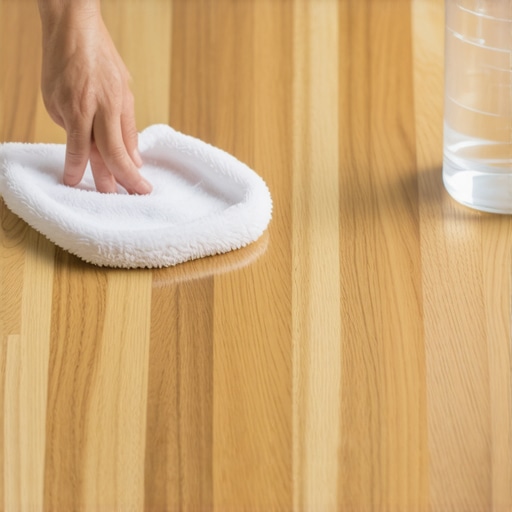
- Immediately wipe the liquefied wax with a clean, dry white towel before it re-hardens.
- Check the towel constantly. Once it is saturated with wax, discard it and use a fresh one.
- Clean the baseboards where wax often splashes and collects over years of poor maintenance.
The 1/8 inch that ruins everything is often the thickness of the wax in the corners. People get lazy. They leave the edges alone, and you end up with a beautiful floor with a dark, greasy frame around it. That is the mark of an amateur. A master floor installer knows that the corners tell the true story of the job. You might need a small nylon brush to get into the grain if it is deep. Open grain woods like oak are notorious for holding wax deep in the pores. You have to pull that wax out or your new finish will never bond. This brings us to the physics of adhesion. Nothing sticks to wax. Not paint, not poly, not even tape. If you leave even a microscopic film of wax behind, your new topcoat will peel off in sheets like a bad sunburn. This is why the alcohol hack is so vital. It is the only way to ensure a chemically clean surface.
“Failure to remove all contaminants from the wood surface will result in poly-beading and rejection of the topcoat.” – NWFA Technical Guidelines
The ghost in the expansion gap is another thing to watch for. As wood breathes, it expands and contracts. Wax often gets squeezed into the gaps between the boards. When you apply the alcohol, it can melt that wax down into the tongue and groove. If you are not careful, that wax will migrate back up later and ruin your finish. I always use a vacuum to pull the liquid out of the cracks as I work. It is a slow, methodical process. It is the opposite of the fast, cheap fixes you see on television. But it works. It respects the material. It treats the floor as a structural asset that needs to last for generations, not just until the next tenant moves in. This is the difference between being a laborer and being a floor architect.
The regional climate factor in floor maintenance
The swampy humidity of Houston or the coastal dampness of Florida means solid wood is a constant battle. In those regions, wax is actually a liability because it can trap moisture within the wood cells. The dry heat of Phoenix will shrink your boards until they show a gap, and wax will fill those gaps and then crack as the wood moves again. No matter where you live, the mechanical principles remain the same. Wood is a living, breathing material. It reacts to the environment. The denatured alcohol hack works regardless of the climate because it addresses the surface chemistry without affecting the internal moisture balance of the plank. It is a stable solution for an unstable material.
After you have stripped the floor, the wood will look thirsty. It will be pale and dull. This is good. It means you have reached the actual timber. At this point, you have a choice. You can re-wax it using a high quality carnauba paste, or you can move toward a more modern finish. If you choose to go with a water based polyurethane, you must be 100 percent certain all the alcohol has evaporated and all the wax is gone. I usually wait 24 hours and then do one final wipe with a tack cloth. This ensures that the mechanical bond between the wood and the new sealer is as strong as possible. We are talking about a bond that needs to withstand thousands of footfalls and the sliding of furniture. There is no room for error. The chemistry must be perfect.
{“@context”:”https://schema.org”,”@type”:”HowTo”,”name”:”How to Remove Floor Wax with Denatured Alcohol”,”step”:[{“@type”:”HowToStep”,”text”:”Clear the room and vacuum thoroughly to remove all debris.”},{“@type”:”HowToStep”,”text”:”Test the floor finish with a cotton ball soaked in alcohol in a hidden area.”},{“@type”:”HowToStep”,”text”:”Apply denatured alcohol to a small 3×3 foot section using a cloth or steel wool.”},{“@type”:”HowToStep”,”text”:”Scrub the area to liquefy the wax buildup.”},{“@type”:”HowToStep”,”text”:”Wipe away the liquid wax immediately with a clean white towel.”},{“@type”:”HowToStep”,”text”:”Repeat the process until the entire floor is stripped of wax residue.”}]}