
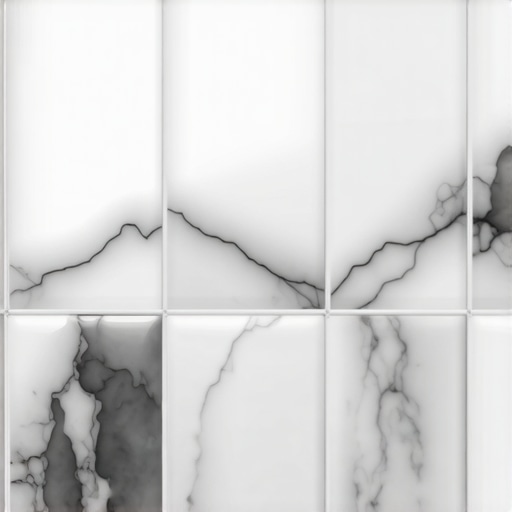
I have spent over twenty-five years on my knees with a moisture meter and a spirit level. My hands are covered in the scars of a thousand thin-set applications and my lungs have tasted more oak dust than most men have breathed air. I do not look at a floor as a pretty surface to walk on. I see it as a structural engineering challenge that must survive the laws of physics and chemistry. Most homeowners think they are being clever by using vinegar as a natural cleaner. They think it is a safe alternative to harsh chemicals. They are wrong. Most guys skip the leveling compound and think the underlayment will hide the dip. It won’t. I spent three days grinding concrete on a job last month just so the floor wouldn’t click like a castanet because the previous installer ignored the subfloor. That same level of ignorance applies to shower maintenance. I once walked into a luxury bathroom where a twenty thousand dollar Carrara marble shower was shedding its surface like a snake. The homeowner had been spraying it with white vinegar every morning for a year. The stone was chalky. The grout was failing. The structural integrity of the installation was compromised because they followed a blog post instead of the Tile Council of North America standards.
The chemical war on your shower floor
Vinegar is a dilute form of acetic acid that destroys natural stone tiles by reacting with the calcium carbonate found in marble, limestone, and travertine. This chemical reaction, known as etching, dissolves the stone surface on contact, creating dull spots and permanent damage that cannot be simply wiped away or polished out with household cleaners. Unlike laminate or hardwood floors which primarily struggle with moisture expansion, natural stone faces a molecular threat. When you spray an acid onto a base like calcite, you are initiating a transition that turns your expensive tile into calcium acetate. This is not a stain. It is the physical removal of the stone material. The acid eats into the crystals. It creates tiny pits that hold onto soap scum and skin cells. You are essentially sandblasting your floor with a liquid. Every time you smell that sharp scent of vinegar, you are smelling the slow death of your shower’s aesthetic and structural finish. This is why the TCNA is so specific about neutral cleaners. If it is not pH neutral, it does not belong on your stone.
Why your subfloor is lying to you
Subfloor integrity is the silent factor in stone tile failure because any deflection or movement in the wooden or concrete base causes the rigid stone and grout to crack. Most installers ignore the L over 720 deflection standard required for natural stone, leading to a floor that looks solid but is structurally vibrating with every step. I have seen guys throw down 1/4 inch cement board over a bouncy subfloor and call it a day. That is a crime. Natural stone has zero flex. If your subfloor moves even a fraction of an inch, the stone will not bend. It will snap. Or worse, the bond between the thin-set and the stone will shear. When you add acidic cleaners into the mix, you are attacking the grout which is the only thing providing a seal between your tiles. If the grout fails because the vinegar has eaten the Portland cement binder, moisture gets into that moving subfloor. Now you have rot. Now you have mold. Now you have a thirty thousand dollar demolition project on your hands. You have to treat the subfloor like the foundation of a skyscraper. If it is not dead flat and rock solid, the finish material is irrelevant.
The 1/8 inch that ruins everything
The precision of the 1/8 inch gap is the difference between a successful shower installation and a catastrophic failure of the waterproofing system. This tiny measurement dictates the slope of the shower pan and the expansion joints at the perimeter that prevent the tile from tenting or cracking under thermal pressure. Most people think a floor is static. It is not. It moves. In a shower, the temperature swings from sixty degrees to over a hundred degrees in minutes. The stone expands. The subfloor expands. If you have not left a 1/8 inch movement joint at the corners and filled it with 100 percent silicone rather than grout, the floor has nowhere to go. It will push against the walls until the bond breaks. When you use vinegar, you are often stripping the silicone’s ability to stay adhered to the stone. The acid migrates behind the tile. It starts to degrade the thin-set. It turns the mortar bed into a wet sponge. I have seen entire shower floors lift off the ground because the installer forgot that stone needs to breathe and move. You cannot ignore the physics of thermal expansion.
The ghost in the expansion gap
Expansion gaps are the invisible lungs of a flooring system that allow for the natural swelling and shrinking of materials due to seasonal humidity changes. Without these gaps, even the highest quality hardwood floors or stone tiles will buckle, peak, or delaminate from the substrate as they fight for space within the room. I once saw a solid oak floor that had pushed a baseboard three inches off a wall because the installer didn’t leave a gap. In a shower, the ghost in the gap is the moisture that gets trapped. If you are cleaning with vinegar, you are essentially opening the door for that ghost. The acid breaks down the grout’s crystalline structure. Grout is a porous matrix of sand and cement. The vinegar eats the cement. This leaves the sand. Without the cement binder, the sand just washes away. Now you have a gap where water can sit. That water travels via capillary action. It goes under the tile. It finds the subfloor. It finds the joists. By the time you see a leak in the ceiling below, the damage was done months ago by your salad dressing cleaning routine.
“A floor is only as good as the subfloor beneath it; deflection is the enemy of every joint.” – Master Flooring Axiom
When we look at the chemistry of the bond, we have to talk about the Janka scale and material density. Hardwood floors like Brazilian Cherry are incredibly dense, but even they cannot handle the standing water that a shower generates. Stone is perceived as the ultimate durable material, but its vulnerability is its chemical composition. Marble is basically compressed seashells. If you wouldn’t pour acid on a seashell, don’t pour it on your floor. The mil thickness of a wear layer on a laminate floor might protect it from a dropped glass, but nothing protects a stone tile from a homeowner with a spray bottle of white vinegar. You need to understand the porosity. Every stone has a different absorption rate. Granite is lower. Marble is higher. Travertine is like a sponge. When you use an acidic cleaner, you are increasing that porosity. You are opening the veins of the stone to deep staining. This is a one way street. Once the stone is etched, the only way to fix it is to mechanically regrind the surface with diamond abrasive pads. That is a messy, expensive process that most people want to avoid.
| Material Type | Janka Hardness (approx) | Acid Sensitivity | Recommended Cleaner |
|---|---|---|---|
| Carrara Marble | 990 | Extreme | pH Neutral Soap |
| Travertine | N/A (Sedimentary) | High | Stone Soap |
| White Oak | 1360 | Medium (Tannin reaction) | Hardwood Specialist |
| Laminate | N/A (Wear Layer) | Low | Microfiber/Damp Mop |
To keep your shower in professional condition, follow this protocol. It is the only way to ensure you don’t end up calling a guy like me to rip everything out. While most people want the thickest underlayment, too much cushion actually causes the locking mechanisms on LVP to snap under pressure, and similarly, too much reliance on