
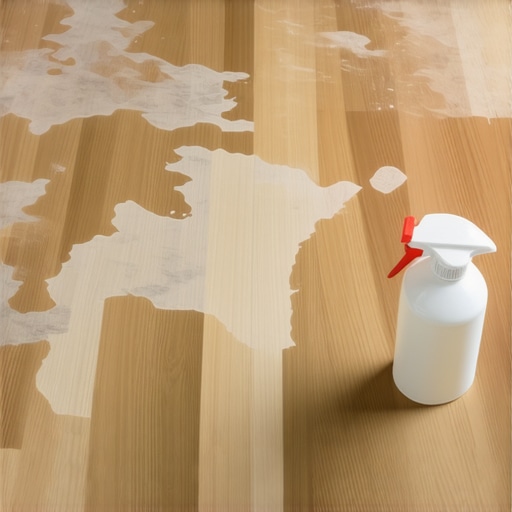
I once stood in a kitchen in Sarasota where a five thousand dollar wide plank laminate floor was peaking at the seams like a mountain range. The homeowner was proud of her cleaning routine. She used a steam mop every single day. She thought she was sanitizing. In reality, she was injecting pressurized vapor into the high density fiberboard core. I had to tell her the truth. The floor was junk. It was swollen beyond repair because the moisture had nowhere to go once it bypassed the melamine wear layer. People treat laminate like it is plastic. It is not plastic. It is a wood byproduct. It is a chemistry experiment held together by resin and prayer. If you use the wrong liquid, you are not cleaning. You are dissolving the bond that keeps your house looking decent. My hands are calloused from ripping out floors that were murdered by the very people who loved them. I smell like sawdust and floor wax because I spend my life fixing these mistakes. We need to talk about the liquids you keep under your sink. They are weapons. They are the reason your floor clicks when you walk on it. They are the reason the edges are starting to turn a dark, ugly grey. Let us look at the molecular destruction happening right under your feet.
Vinegar and the acid erosion of melamine
Vinegar is an acetic acid that eats through the protective aluminum oxide coating of your laminate floors over time. While many advocate for natural cleaners, the low pH level of vinegar strips the factory shine and leaves the surface vulnerable to scratches and deep moisture penetration into the core. You hear it all the time. Use vinegar and water. It is natural. It is cheap. It is also a slow death for a laminate finish. Laminate is topped with a wear layer usually made of melamine resin infused with aluminum oxide. This layer is tough but it is not invincible. Acetic acid is a solvent. When you wipe a five percent acetic acid solution across your floor, you are performing a microscopic chemical peel. It starts by dulling the sheen. Then it works into the micro-scratches. Once it gets past that top shield, it reaches the decorative paper layer. That is when you see the fading. I have seen floors in old farmhouses where the high traffic areas look like ghost versions of the rest of the room. That is the vinegar at work. It eats the pigment. It breaks the molecular chains in the resin. If you want a floor that lasts twenty years, keep the salad dressing in the kitchen. Professional installers know that a neutral pH cleaner is the only thing that belongs on a synthetic plank. Anything else is just professional suicide for your home value.
“A floor is only as good as the subfloor beneath it; deflection is the enemy of every joint.” – Master Flooring Axiom
Steam mops and the thermal expansion disaster
Steam mops use high temperature water vapor to force moisture into the expansion gaps and locking mechanisms of laminate flooring. This heat causes the wood fibers in the HDF core to expand rapidly, leading to permanent structural warping, edge cupping, and the eventual failure of the click lock system. This is the big one. This is the killer. Companies sell these machines by showing how they kill bacteria. They do not tell you they also kill your warranty. A laminate plank is a sandwich. The middle of that sandwich is High Density Fiberboard or HDF. HDF is basically sawdust and glue pressed together under immense pressure. It is incredibly stable until you add heat and water. When you trigger a steam mop, you are hitting that floor with vapor at over two hundred degrees. That vapor is smaller than water droplets. It finds the tiny gaps at the T-molding or the baseboards. It screams into the tongue and groove joints. The fibers drink it up. They swell. Because the top and bottom of the plank are sealed, the middle has nowhere to go but up. This is called peaking. Once those edges rise, they become a trip hazard. They also become prone to chipping. You walk over a peaked seam and your foot hits that raised edge. It snaps the melamine. Now you have raw fiberboard exposed. Next time you mop, it gets worse. It is a cycle of destruction that ends with me bringing a crowbar to your living room. Laminate and showers have one thing in common. They both deal with water, but only one of them is built to survive a soaking. Your floor is not a shower stall. Do not treat it like one.
Soap based oil cleaners and the sticky residue trap
Soap based cleaners leave a fatty lipid residue on non porous laminate surfaces that attracts dirt and creates a permanent haze. This buildup cannot be easily removed and often requires harsh stripping agents that further damage the structural integrity of the planks and the underlying adhesive bonds. You know that orange smelling stuff people love? It is a nightmare. Laminate is non porous. It does not need to be conditioned. It does not need to be fed. It is not like solid hardwood floors that can take a bit of oil. When you put an oil soap on laminate, it just sits there. It creates a film. That film is a magnet for every piece of grit and dust in the air. You walk on it, and you are basically sanding your floor with your socks. I have seen floors that felt like they were covered in syrup. The owners keep adding more cleaner to get the shine back, but they are just burying the dirt under more layers of wax and oil. This creates a slip hazard. It also makes the floor look dull and old. To get that junk off, you usually have to use something heavy duty. That process can seep into the joints. If you have a floating floor, that moisture sits on the underlayment. It rots the subfloor. I spent three days last month grinding concrete because a subfloor was soaked through by years of over-mopping and residue buildup. It smelled like a swamp. All because someone wanted their floor to smell like citrus.
| Cleaner Type | PH Level | Effect on Laminate | Risk Level |
|---|---|---|---|
| White Vinegar | 2.5 | Erosion of wear layer | High |
| Steam Vapor | N/A | Core swelling and peaking | Critical |
| Oil Soaps | 9.0 | Residue buildup and hazing | Moderate |
| Bleach | 12.0 | Pigment bleaching and joint rot | High |
Bleach and the structural breakdown of grout and resins
Bleach is a powerful oxidant that destroys the synthetic resins holding laminate planks together while also eroding any nearby grout lines in transition areas. Its corrosive nature breaks down the locking joints, leading to loose planks and a floor that shifts and clicks under normal foot traffic. Bleach is for laundry and bathrooms. It has no business on a floor. I have seen people use it because they had a pet accident. They think they are disinfecting. What they are actually doing is breaking the chemical bonds of the resin. Bleach is highly alkaline. It is corrosive. It eats the glue. If you have a laminate floor that meets a tiled area, like near showers or entryways, the bleach also kills the grout. It makes it brittle. It turns it into powder. Once the grout is gone, water moves freely under the laminate. I have seen entire hallways where the planks were literally floating on a layer of grey, bleach-scented sludge. The click lock system depends on the integrity of the material. If the material is soft because it has been chemically burned, the joint will snap. No amount of wood glue will fix a snapped laminate joint. You are looking at a full replacement. The 1/8 inch gap at the edge of your room is there for a reason. It is for breathing. When you fill that gap with bleach and water, the floor cannot move. It buckles. It is basic physics. Do not fight the physics of your home.
- Never use a mop that is dripping wet. Wring it until it is nearly dry.
- Avoid any cleaner with a pH below 6 or above 8.
- Skip the wax. Laminate is factory sealed and cannot absorb it.
- Use felt pads on every single piece of furniture to prevent deep gouges.
- Sweep daily to remove the silica grit that acts like sandpaper.
The ghost in the expansion gap is usually the moisture you put there yourself. I have spent twenty five years watching people ruin perfectly good installs. They want a shortcut. They want a magic spray. There is no magic. There is only maintenance. If you treat your floor like a piece of fine machinery, it will last. If you treat it like a sidewalk, it will fail. Most guys skip the leveling compound. They think the underlayment will hide the dip. It won’t. I spent three days grinding concrete on a job last month just so the floor wouldn’t click like a castanet. That level of care is what your floor needs from you every day. Stop the heavy chemicals. Use a microfiber pad. Keep the water to a minimum. Your subfloor will thank you. Your wallet will thank you. And you won’t have to call a guy like me to come out and tell you that your beautiful floor is now just expensive firewood.