
You just spent hours scraped clean of old silicone, carefully measured the track, and slid a brand new vinyl sweep onto your frameless glass shower door. You turn on the shower, step back, and within five minutes, a dark puddle starts creeping across your bathroom floor. It is maddening. You replaced the seal, so why is the water still winning? The truth is that water behaves like a hydraulic drill, finding every microscopic structural pathway through your tile, grout, and thresholds. When a shower door leaks, the issue is rarely just the rubber gasket. It is a fundamental failure of slope, capillary action, and water-channeling mechanics.
The hidden geometry of the tile threshold
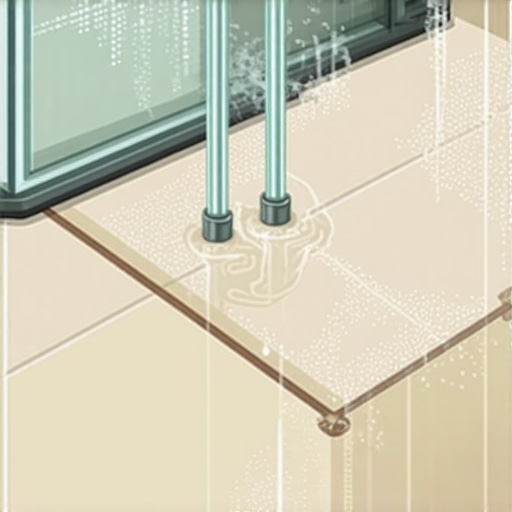
A successful shower threshold must be pitched inward toward the drain at a minimum angle of one quarter inch per foot. If your threshold is perfectly flat or sloped outward, gravity will draw water directly under your brand new door seal and onto your bathroom floor. Water clings to the underside of glass panels through surface tension, and a flat curb acts as a bridge rather than a barrier. When the tile installer fails to slope the marble or granite sill, no amount of rubber sweeps will stop the outward flow of water.
“Water cannot defy gravity unless assisted by capillary action; a flat curb is a guaranteed leak path regardless of the seal quality.” – Master Flooring Axiom
Tile layout plays a massive role here. If the installer ran grout joints directly across the threshold instead of using a single solid piece of stone, you have created small gutters. Water sits in these recessed grout channels, flows right under the rubber seal, and bypasses your barrier completely. This is why professional shower builders insist on solid, single-piece thresholds made of quartz or marble that are pitched back into the shower pan.
Why your subfloor is lying to you
The structural wood or concrete beneath your bathroom floor dictates the movement of every drop of water that escapes the shower. If your subfloor has even a slight dip near the shower entry, it creates a localized low spot that pulls water toward the walls. This is where we see major structural damage. I once walked into a house where a $15,000 wide-plank walnut floor was cupping so bad it looked like a potato chip because the installer didn’t check the crawlspace humidity and ignored a leaking shower threshold that was slowly feeding water under the transition. The subfloor had absorbed gallons of water over six months without the homeowner noticing a thing until the hardwood buckled. The subfloor must be absolutely flat, level, and waterproofed with a liquid-applied membrane like Laticrete Hydro Ban before any tile is laid.
Subfloor deflection is another silent killer. If your joists are too weak, the floor will flex when you step near the shower. This microscopic movement cracks the grout lines at the base of the shower curb. Once those grout lines crack, water seeps into the framing, rotting the subfloor and causing the shower door frame to shift out of plumb. A door that is out of plumb by even one sixteenth of an inch will not make consistent contact with its vinyl seals.
| Structural Element | Minimum Standard | Consequence of Failure |
|---|---|---|
| Threshold Slope | 1/4 inch per foot inward | Water pools under seal and runs onto bathroom floor |
| Subfloor Deflection | L/360 for ceramic, L/720 for stone | Grout joints crack, allowing water to rot joists |
| Glass Plumb Tolerance | Within 1/16 of an inch | Uneven pressure on seal, creating gaps at the bottom |
| Sill Material | Solid, non-porous slab | Grout lines act as micro-channels for water bypass |
The capillary action that bypasses vinyl
Water does not just fall down, it climbs. Through capillary action, water can travel upward through tiny gaps between the glass panel and the metal track. If your installer did not run a continuous bead of high-quality silicone behind the metal channels before screwing them to the wall, water will find its way behind the track. It then travels laterally behind the tile, bypassing the shower pan membrane entirely, and emerges on the drywall outside the shower.
This is especially true with laminate and hardwood floors adjacent to tile showers. Laminate is made of high-density fiberboard, which is essentially compressed sawdust. When water sneaks under a shower door seal and hits laminate, the edges of the planks swell like a sponge. Hardwood floors will cup and blacken from mold. If you have grout lines that meet the outer edge of the shower curb, they can act as a wick, pulling water from inside the wet zone directly out to your wood flooring.
The 1/8 inch that ruins everything
Shower doors are precision instruments. If the hinges on your frameless glass door have slipped by even an eighth of an inch, the entire geometry of the bottom seal is compromised. The vinyl sweep must make light, consistent contact with the top of the threshold. If it is compressed too tightly, the rubber will fold over, creating a pocket that holds water and channels it outward. If it does not touch at all, water will spray directly under the door.
Check your hinges first. Over time, the heavy glass slips in the brass clamps. You need to support the glass with wooden shims, loosen the hinge screws, realign the door so it is perfectly square in the opening, and retighten the hardware to the exact manufacturer torque specifications. Only then can you accurately cut and install your new sweep.
How to diagnose and repair your shower threshold leak
- Inspect the curb slope using a precise digital level to verify an inward pitch.
- Check the grout joints on the curb for micro-fractures or missing material.
- Verify that the glass door is plumb and hanging square within its frame.
- Examine the silicone seal along the vertical metal tracks for gaps or mold.
- Test the threshold by pouring water directly onto the curb with the door open to see if it drains inward.
The ghost in the expansion gap
In flooring, we talk constantly about expansion gaps. When installing tile next to hardwood or laminate outside a shower, you must leave a proper expansion gap filled with a flexible sealant, not hard grout. If you pack grout tightly between your shower tile and your wood flooring, the natural movement of the house will crack that joint. Once cracked, any water dripping from your shower door will seep deep into that crevice, saturating the end-grain of your wood floors. Using 100% silicone in transition joints is non-negotiable for protecting your subfloor from catastrophic rot.
“A floor is only as good as the subfloor beneath it; deflection is the enemy of every joint.” – Master Flooring Axiom
While most people want the thickest underlayment, too much cushion actually causes the locking mechanisms on LVP or laminate to snap under pressure. If you are running luxury vinyl plank right up to your shower curb, do not use a thick, squishy foam underlayment. The deflection will open up the micro-joints between the planks, allowing water from your leaky shower door to seep through to the concrete subfloor, where it will trap moisture and cause a musty, moldy odor that you can never get rid of without ripping up the entire floor.