
A sticky residue on your laminate flooring ruins the clean lines of a room and acts like a magnet for dirt, hair, and grit. Left untreated, this sticky film becomes a dark, abrasive paste that will eventually wear down the decorative layer of your floor. Clean laminate should feel completely smooth, dry, and free of friction under your socks.
Most people panic when they see sticky spots. They run to the store and buy heavy-duty oil soaps, wax-based polishes, or harsh abrasive scrubbers. This is a massive mistake. Laminate is not solid wood. It is a photographic paper layer bonded to a high-density fiberboard core, topped with a clear wear layer of melamine resin. Pouring soapy, oily water on this surface will only create a dull, sticky haze that traps more dirt and can eventually seep into the seams, causing the fiberboard core to swell and ruin your entire floor.
The science behind the sticky residue
Laminate residue usually stems from improper cleaning products, adhesive spillages, or greasy overspray. The most common culprit is surfactant build-up from commercial floor cleaners that claim to make your floors shine. These products leave behind a thin polymer or wax film that never fully evaporates, catching dust with every footstep and turning your floor into a sticky trap.
Understanding the chemistry of your laminate wear layer is the key to cleaning it without causing permanent structural damage. The top layer of modern laminate is typically made of aluminum oxide and melamine resin. This surface is highly non-porous, meaning fluids cannot penetrate it easily. However, this also means that any cleaner you apply will sit directly on top of the surface. If a cleaner contains soaps, oils, or waxes, those ingredients have nowhere to go. They dry in place, creating a microscopic, sticky blanket across your room.
Other common sources of sticky residue include glue left behind from tape during installation, spilled sugary drinks, adhesive backing from area rugs, and overspray from aerosol products like hairspray or cooking oils. Each of these substances requires a solvent that can break down the sticky chemical bonds without dissolving the melamine wear layer itself.
The one eighth inch that ruins everything
Most guys skip the leveling compound. They think the underlayment will hide the dip. It won’t. I spent three days grinding concrete on a job last month just so the floor wouldn’t click like a castanet. When a subfloor has a dip, the laminate boards bounce. This constant movement opens up the micro-gaps between the planks. Once those gaps open, any liquid cleaner you pour on the surface is sucked down into the raw fiberboard core by capillary action. If you are dealing with sticky residue near these open joints, you must be extremely precise. Flood the area with water or wet cleaners, and you will watch your plank edges swell and warp within forty-eight hours.
“A floor is only as good as the subfloor beneath it; deflection is the enemy of every joint.” – Master Flooring Axiom
Laminate is a floating floor system. It needs to move as humidity changes. When installers lock the perimeter or glue the joints tightly to avoid gaps, they often create tension. When you combine structural tension with moisture from wet mopping, you get a recipe for total floor failure. This is why dry, targeted solvent application is the only safe way to spot-clean sticky spots.
Why isopropyl alcohol is the ultimate laminate solvent
Isopropyl rubbing alcohol dissolves sticky adhesives and oils instantly without damaging the protective melamine wear layer. Because rubbing alcohol has a very low boiling point, it evaporates almost immediately upon contact with the air. This rapid evaporation prevents moisture from seeping into the vulnerable plank joints and swelling the fiberboard core.
When you apply isopropyl alcohol to a sticky residue, the alcohol molecules quickly penetrate the sticky polymers, breaking their chemical bonds. Rubbing alcohol is a polar solvent, which makes it incredibly effective at dissolving polar substances like sugars, hairspray, and water-based glues, as well as non-polar substances like oils and light adhesives. Unlike acetone, which can melt certain plastics and dull the finish of your laminate, isopropyl alcohol is completely safe for aluminum oxide and melamine coatings.
For the best results, you should use a seventy percent isopropyl alcohol solution. Avoid using hundred percent isopropyl alcohol, as it evaporates too quickly to dissolve stubborn residues, and avoid concentrations below fifty percent, as they contain too much water, which poses a moisture risk to your floor seams.
How to clean sticky residue with rubbing alcohol
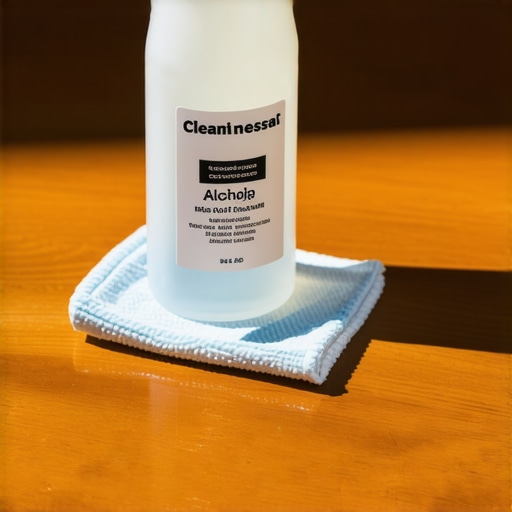
To remove sticky residue, mist seventy percent isopropyl alcohol directly onto a clean microfiber cloth and gently buff the spot. Never pour the alcohol directly onto the floor, as liquid can run into the joints. Work in small circular motions until the adhesive softens and transfers completely onto your cloth.
Here is a step-by-step checklist to ensure you do not damage your laminate during the process:
- Vacuum the area thoroughly to remove any loose grit or dirt that could scratch the floor during buffing.
- Dampen a clean, white microfiber cloth with seventy percent isopropyl alcohol until it is moist but not dripping wet.
- Place the cloth directly over the sticky residue and let it sit for thirty seconds to soften the adhesive.
- Gently rub the area in a circular motion, applying light pressure with your fingertips.
- Flip the microfiber cloth to a clean section to prevent transferring the dissolved residue back onto the laminate.
- Dry the area immediately with a separate dry microfiber towel to ensure no moisture remains in the joints.
If the residue is incredibly stubborn, such as dried construction adhesive or heavy tape residue, you can use a clean plastic scraper or the edge of an old credit card to gently lift the softened glue. Never use steel wool, scrub brushes, or metal blades, as they will permanently scratch the wear layer, leaving a dull spot that cannot be repaired.
Comparing laminate cleaning methods
Many homeowners rely on traditional cleaning methods that actually ruin their floors over time. The table below compares common cleaning agents and their physical impact on laminate flooring.
| Cleaning Agent | Solvent Type | Evaporation Rate | Risk to Laminate Core | Long-Term Finish Impact |
|---|---|---|---|---|
| Isopropyl Alcohol (70%) | Polar/Non-polar | Very Fast | Extremely Low | None, leaves zero residue |
| Commercial Floor Polish | Polymer/Wax | Slow | Medium | Creates a thick, sticky buildup |
| Vinegar and Water | Acidic / Aqueous | Medium | High | Can etch the wear layer over time |
| Dish Soap and Water | Surfactant / Aqueous | Very Slow | Very High | Leaves a dull, dirt-attracting film |
| Acetone (Nail Polish Remover) | Strong Ketone | Extremely Fast | Low | Can soften and dull the finish |
As shown in the table, isopropyl alcohol is the only solvent that combines a fast evaporation rate with zero risk of leaving a sticky residue or etching the protective wear layer of your laminate flooring.
The myth of the waterproof laminate floor
Waterproof laminate floors are only waterproof on their top surface, not at their raw joints or subfloor interfaces. When manufacturers market laminate as waterproof, they mean the wear layer can shed water for a limited time. If moisture sits in the joints, the wood-based core will expand, cup, and fail.
This is why wet mopping is the enemy of laminate. When you use a traditional mop and bucket, you force dirty water deep into the micro-gaps of the floor. As the water evaporates, it leaves behind the soaps and dirt right in the seams, leading to dark, sticky, and swollen edges. If you must wash your floors, use a damp microfiber mop and a dedicated laminate cleaner that contains alcohol to speed up drying times.
“Water on a laminate floor is like a slow poison; if it gets past the wear layer, the floor is dead.” – National Wood Flooring Association Guidelines
In high-moisture areas like kitchens or near showers, you must seal the perimeter expansion gaps with a one hundred percent silicone sealant. This prevents spilled liquids from running under the baseboards and attacking the raw edges of the laminate from underneath.
The ghost in the expansion gap
Laminate floors need room to breathe. You must leave a quarter-inch expansion gap around the entire perimeter of your room, hidden beneath your baseboards or quarter-round molding. If you tight-fit your laminate against walls, doorframes, or heavy cabinets, the floor will buckle when the humidity rises.
When a floor buckles, the joints lift slightly. This creates microscopic friction points. As you walk across the floor, these raised joints rub together, wearing away the decorative paper layer and exposing the dark fiberboard underneath. This exposed fiberboard absorbs oils from your skin and dirt from your shoes, creating dark, sticky lines that look like grout lines on a tile floor. No amount of rubbing alcohol will fix this issue, you must relieve the tension at the walls to allow the floor to lay flat again.
How to prevent future sticky residue buildup
The easiest way to prevent sticky residue is to stop using commercial soaps, waxes, and oil-based cleaners entirely. Clean your laminate floors using only a dry microfiber dust mop for daily maintenance, and spot-clean spills immediately with a damp microfiber cloth.
If your entire floor has a sticky haze from years of using the wrong cleaning products, you can strip the buildup using a mixture of one part isopropyl alcohol, one part white vinegar, and three parts water. Mist this solution lightly over the floor and buff it off immediately with a clean microfiber mop. The alcohol and vinegar will break down the wax buildup, while the dry microfiber lifts the residue off the floor for good.