
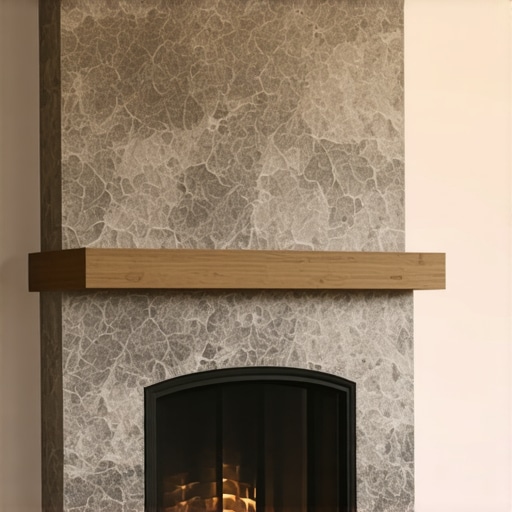
Homeowners always ask why their waterproof vinyl or laminate is buckling. Usually, it’s because they locked it under a heavy kitchen island or wedged it tight against a stone fireplace, killing the floor’s ability to breathe. I once walked into a house where a beautiful grey-wash laminate was forced against a jagged river rock hearth. The summer humidity arrived, the air became heavy, and the floor expanded as it was designed to do. Because there was no gap at the fireplace, the boards had nowhere to go but up. They peaked in the center of the living room like a mountain range. It was a total loss, all because the installer wanted a tight look without understanding the physics of the material. My boots have been on enough job sites to know that aesthetics without engineering is just a slow-motion disaster.
The phantom movement of floating floors
Laminate flooring expansion occurs because the high-density fiberboard core reacts to atmospheric moisture and temperature shifts. A floating floor is not anchored; it is a single, heavy sheet that slides across your subfloor. If you pin it against a stone fireplace, the mechanical stress will snap the locking tongues. You must maintain a 3/8 inch perimeter gap to ensure the floor remains flat and the joints stay locked during seasonal cycles. I smell the oak dust and wood wax on my clothes every night, a reminder that wood and its composites are living things. They move. They grow. They shrink. When you install laminate next to a static, unyielding object like a stone hearth, you are creating a collision course. The stones do not move. The subfloor, usually a concrete slab or plywood, might have its own moisture issues. Most guys skip the moisture barrier. I never do. I have seen 6-mil poly save a floor from a damp crawlspace that would have otherwise turned the laminate into a sponge. The core of these planks is made of compressed wood fibers and resin. When water molecules penetrate those fibers, the lignin expands. This is not just a cosmetic issue; it is a chemical and structural reality that governs every cut you make with your miter saw.
The failure of the quarter round solution
Standard transition moldings like quarter round or shoe molding often fail to cover the irregular gaps found at stone fireplace bases. Stone is rarely flat. It has depth, texture, and protrusions that a straight piece of wood cannot follow. Forcing a trim piece against stone looks amateur and leaves unsightly voids. You see it in builder-grade homes all the time. They slap some white MDF trim against a fieldstone hearth and call it a day. It looks like garbage. The shadow lines created by the gaps between the trim and the stone draw the eye to the very thing you are trying to hide. This is why I prefer more advanced techniques like scribing or undercutting. If you are working with hardwood floors, you might have more flexibility with sanding, but with laminate, you have one shot at the cut. The wear layer, often made of aluminum oxide, is incredibly hard on blades. It will dull a standard carbide tip in a few dozen cuts. I always keep a stack of fresh blades in the truck for fireplace days. If the blade is dull, it heats the resin in the laminate core, causing it to smoke and char. That smell, a mix of burnt glue and toasted wood, is the sign of a bad installer. Use sharp tools or do not bother doing the job.
Scribing the irregular contours of masonry
Scribing laminate planks involves using a compass or a specialized scribing tool to trace the exact profile of the stone onto your flooring material. This allows for a precision fit that maintains the expansion gap while appearing tight to the eye. This is a test of patience. You are translating the chaotic geometry of fieldstone into the rigid geometry of a laminate plank. A compass is your primary weapon here. You set the gap and trace. If you miss by a sixteenth, the gap screams at the eye. I have spent hours on my knees with a jig saw and a file, slowly shaving away the HDF core to match a particularly stubborn piece of granite. You have to back-cut the plank at a slight angle. This ensures the top decorative layer is what touches the stone, while the core underneath has plenty of room to move. It is about creating an optical illusion. You want it to look flush while being technically detached. This is where the amateurs are separated from the mechanics. The mechanic knows that the floor needs to slide under the stone or sit behind a perfectly matched bead of sealant. If you are in a high-humidity area like the coastal South, that expansion gap needs to be even wider. The moisture vapor transmission rate through your slab can fluctuate wildly. I always check the calcium chloride test results before I even pull a plank out of the box.
The chemical reality of flexible sealants
Color matched silicone sealants provide a flexible bridge between the floating laminate and the fireplace stone, allowing for movement while hiding the cut edge. Unlike grout, which is for showers and will crack when the floor shifts, silicone remains elastic and bonds to both surfaces. I have seen guys try to use grout in these gaps. Grout has zero flexibility. If you put grout between a moving laminate floor and a static fireplace, you are going to have a pile of sand in three weeks. You need something with at least a 25% movement capability. Look at the MSDS sheets for the fillers you buy. You want a high solids content. Low-grade caulks evaporate and shrink. They pull away from the stone and leave a sticky residue that attracts dust. I prefer a high-grade 100% silicone that is color-matched to the darkest grain in the wood. It creates a shadow line that makes the gap disappear. Before you apply it, you must use a backer rod. A backer rod is a foam cylinder that you stuff into the gap. It prevents three-sided adhesion. If the silicone sticks to the bottom of the gap, it cannot stretch correctly. It will tear. You want it to stick only to the edge of the laminate and the face of the stone. This allows the sealant to act like a rubber band as the floor moves in and out. It is simple chemistry, but most guys ignore it because it takes an extra ten minutes.
“A floor is only as good as the subfloor beneath it; deflection is the enemy of every joint.” – Master Flooring Axiom
Why undercut saws change the game
Undercutting a stone fireplace is the gold standard for hiding laminate edges, as it allows the flooring to slide underneath the masonry. This method completely hides the expansion gap and the cut edge by creating a pocket for the floor to live in. This is not a job for the faint of heart. You need a heavy-duty diamond blade and a steady hand. I use a Crain undercut saw. It is loud, it creates a massive amount of dust, and it is the only way to get a perfect finish. You set the depth of the blade to the height of your laminate plus the underlayment. You want a tiny bit of clearance, maybe a thirty-second of an inch. As you cut into the stone or the mortar, you are creating a void. The dust is oppressive. I always wear a respirator and have a vacuum attachment running. If you do not, the fine masonry dust will settle into the mechanical locking systems of the rest of the floor, causing them to squeak for years. Once the undercut is finished, you slide the laminate plank right into the pocket. It looks like the fireplace was built on top of the floor. It is the cleanest look possible. No trim, no caulk, just a perfect transition. This is how the high-end architects want it. They hate bulky T-molding and shoe trim. They want those clean, zero-threshold lines that make a room look expensive.
Material properties and Janka hardness comparisons
The Janka hardness scale measures the resistance of a wood species to denting and wear, which is relevant when choosing between laminate and hardwood floors near heavy stone. While laminate does not have a Janka rating in the traditional sense, its wear layer is often tougher than solid oak. Laminate is built for impact. If a piece of firewood falls out of the hearth and hits the floor, a solid walnut floor will dent deeply. A high-quality laminate with an AC4 or AC5 rating will likely shrug it off. This is the trade-off. You lose the soul of real wood, but you gain a surface that can survive a busy household. I have seen 3/4 inch white oak floors ruined by a single winter of wet boots and firewood dragging. Laminate is essentially a photograph of wood glued to a dense board and coated in plastic. It sounds cynical, but it is a miracle of modern manufacturing. The key is the density of the core. Cheap laminate feels like cardboard. High-end stuff feels like stone. Below is a comparison of how different materials handle the stress of fireplace transitions.
| Laminate HDF | 0.2% | 1200+ | 3000 PSI | Solid White Oak | 0.8% | 1360 | 4500 PSI | Stone Hearth | 0.01% | 10000+ | 15000 PSI |
Underneath the surface of the subfloor
Subfloor preparation and leveling are the most ignored aspects of a fireplace transition, yet they dictate whether the laminate will click or stay silent. If there is a dip in the subfloor near the hearth, the laminate will bridge that gap and flex every time someone walks near the fire. I spent three days grinding concrete on a job last month just so the floor wouldn’t click like a castanet. People think the underlayment will hide the dip. It won’t. Underlayment is for sound dampening and minor moisture protection; it is not a structural filler. If you have more than 3/16 of an inch of deviation over ten feet, you need a self-leveling compound. While most people want the thickest underlayment, too much cushion actually causes the locking mechanisms on LVP or laminate to snap under pressure. You want a high-density foam or felt. The physics are simple. If the floor can bounce, the tongue and groove will eventually fail. I have seen it a hundred times. The homeowner buys the thickest, squishiest pad they can find, thinking it will feel soft. Within a year, the joints are opening up and the floor is ruined. You want a firm base. The floor should feel solid underfoot, like a slab, not like a trampoline. This is especially true near a fireplace where the floor meets a hard, unmoving edge.
“Expansion gaps are not optional suggestions; they are the breathing room required for wood-based products to exist in a dynamic atmosphere.” – NWFA Technical Manual
Mandatory checklist for the master installer
- Measure the moisture content of the subfloor and the laminate planks to ensure they are within 4% of each other.
- Acclimate the laminate in the room where it will be installed for at least 48 hours to reach equilibrium with the local humidity.
- Choose an undercut saw with a diamond blade if you are working with real stone or brick hearths.
- Use a contour gauge to capture the profile of the stone for precise scribing.
- Install a 6-mil poly vapor barrier if you are over a concrete slab to prevent moisture from reaching the HDF core.
- Apply a high-quality, color-matched silicone with a backer rod to the expansion gap for a flexible, waterproof finish.
- Verify that the underlayment has a high compression resistance to protect the locking joints from vertical deflection.
The ghost in the expansion gap
The biggest mistake you can make is thinking you can outsmart the moisture. Whether you are in the swampy humidity of Houston or the bone-dry heat of Phoenix, the air will dictate what your floor does. In the South, that gap at the fireplace is a necessity for expansion. In the desert, it’s for the inevitable shrinkage when the AC runs 24/7. I’ve seen baseboards shrink so much in Arizona that they show a raw wood line at the bottom. The same logic applies to the fireplace. If you don’t account for the regional climate, your transition will fail. I don’t care how much you spent on the planks. If you don’t respect the gap, the floor will eventually find a way to move, even if it has to break itself to do it. Keep your tools sharp, your moisture meter calibrated, and your patience high. That is how you hide an ugly edge and make it look like it was always meant to be there. Most guys want to get in and out in a day. I want to make sure I never have to come back to fix a buckle. That is the difference between a floor installer and a master architect of the surface. You are building a system, not just laying boards. Every cut around that fireplace is a testament to whether you understand the physics of your craft or if you are just playing with expensive wood puzzles.