
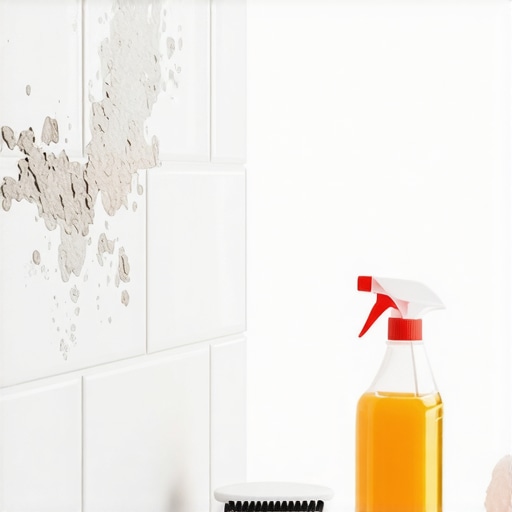
The chemical lie of chlorine bleach on porous surfaces
The Mechanic with Sawdust Under His Nails knows that beauty is only skin deep, but a failure in the subfloor or a mold colony in the grout goes all the way to the bone. I smell like WD-40 and oak dust most days, and I have seen enough ruined showers to know that homeowners are being lied to by the cleaning aisle. Most people reach for a bottle of bleach when they see black spots in their shower. This is a fundamental mistake in chemical engineering. Chlorine bleach has a high surface tension that prevents it from penetrating the microscopic pores of cementitious grout, meaning it merely whitens the surface while the water content in the solution feeds the mold roots deep within the substrate. To actually solve the problem, you need a pH-neutral approach or an oxygen-based oxidizer that can reach the mycelium rooted in the portland cement matrix. I spent three days grinding concrete on a job last month just so the floor wouldn’t click like a castanet. Most guys skip the leveling compound and think the underlayment will hide the dip. It won’t. It is the same with grout. If you don’t treat the structural root of the moisture, you are just painting a corpse. The physics of a shower assembly demand that we look at the capillary action of the grout lines. Grout is essentially a hard sponge. When you spray bleach, the chlorine stays on top while the water sinks in. You are essentially watering a weed. This leads to a cycle of regrowth that eventually compromises the thin-set mortar bond, leading to loose tiles and saturated backer board. This is where the real structural nightmare begins. Once the moisture passes the grout line and hits the subfloor, you are looking at rot that a gallon of bleach cannot touch. I have seen 3/4 inch plywood turn into mush because a homeowner thought a little Clorox was a substitute for proper maintenance and a quality sealer. We need to talk about how a floor actually works. Whether it is hardwood floors, laminate, or tile, the enemy is always the same. It is the uncontrolled movement of water. Hardwood floors will cup and crown the moment the equilibrium moisture content is disrupted. Laminate will peak at the seams if a wet mop is used too aggressively. In showers, the grout is the first line of defense, but it is a porous one. [image_placeholder_1]
Why your grout behaves like a sponge
Grout is a mixture of sand and portland cement that remains highly breathable and porous unless it is treated with a high-quality penetrating sealer. This porosity is measured at a microscopic level where tiny voids allow liquid to travel via capillary action. When mold spores land on a damp grout line, they find a perfect home in these voids. If you are using a standard sanded grout, those gaps are even larger. The Tile Council of North America (TCNA) provides strict guidelines on how these materials should be handled to avoid failure.
“A floor is only as good as the subfloor beneath it; deflection is the enemy of every joint.” – Master Flooring Axiom
The mechanical bond of the grout to the tile edge is what keeps the system rigid. When mold eats into this bond, it creates micro-fissures. You might not see them at first. You just notice the grout looks a bit dingy. You scrub it with bleach, it looks white for a week, and then the black returns. This is because the bleach did nothing to change the pH of the environment or kill the spores deep in the sand. You need to use an enzyme-based cleaner or a steam vapor system. High-heat steam at 200 degrees Fahrenheit will kill mold spores on contact without leaving behind the salt residue that bleach often does. Salts left behind by bleach can actually attract more moisture through a process called hygroscopic draw. This means your ‘clean’ floor is now a magnet for more humidity. It is a losing battle. I have seen $20,000 tile jobs ruined by five-dollar bottles of cleaner. People think they are being hygienic, but they are actually accelerating the breakdown of the polymers in the grout. Modern grouts often have latex or polymer additives to give them some flexibility. Bleach is an oxidizer that turns these polymers brittle. Eventually, the grout starts to crack and flake out. Then you have water getting behind the tile and sitting on your waterproofing membrane or, worse, your subfloor. This is how you end up with a bathroom that smells like a wet basement even when it’s dry.
The physics of moisture in shower assemblies
Shower floors must be pitched at a minimum of 1/4 inch per foot toward the drain to ensure that gravity overcomes the surface tension of the water on the tile. If the pitch is wrong, water sits on the grout lines. Even the best grout will eventually fail under standing water. This is why I tell people that the level is the most important tool in the bag. If I walk into a house and see standing water in the corner of a shower, I know the installer didn’t know his physics. We have to consider the vapor drive. In a hot shower, the air is saturated. That moisture wants to move from the hot shower into the cooler wall cavity. Your grout and your tile are the barriers. If the grout is compromised by mold and improper cleaning, that vapor drive pushes moisture into the studs. This leads to the growth of Stachybotrys or other toxic molds behind the wall. By the time you see the mold on the outside, the party is already over on the inside. I once walked into a job where the homeowner complained of a ‘springy’ feel under their feet in the hallway outside the master bath. I pulled up one piece of laminate and the subfloor was black. The shower had been leaking through the grout lines for years. The homeowner had been bleaching the grout every Saturday, thinking they were keeping it clean. They were actually just masking a structural failure. We had to gut the entire bathroom and replace six joists. That is the price of using the wrong chemicals. You need to respect the materials. Ceramic and porcelain tile are nearly impervious, but the stuff between them is a living, breathing component of your home’s structure. You treat it with respect, or it will cost you your savings. There is no middle ground here. You either follow the TCNA standards or you prepare for a demolition day.
Comparative analysis of mold remediation agents
| Agent | Penetration Power | Structural Impact | Residual Effect |
|---|---|---|---|
| Chlorine Bleach | Very Low | Corrosive to polymers | Leaves hygroscopic salts |
| Hydrogen Peroxide | Medium | Neutral | Breaks down to water/oxygen |
| Steam Vapor | High | None | Sanitizes without chemicals |
| Enzymatic Cleaners | Very High | None | Continues to eat organic matter |
The use of stabilized hydrogen peroxide or oxygen-based cleaners is the only way to safely oxidize mold without destroying the integrity of the grout joints. These solutions have a lower surface tension than bleach, allowing them to travel into the same pores that the mold occupies. When the oxygen bubbles form, they physically lift the mold and debris out of the grout. It is a mechanical action as much as a chemical one. This is how pros do it. We don’t want to just change the color. We want to remove the mass. If you are dealing with a heavily soiled area, you need a stiff nylon brush. Never use a wire brush on grout. You will scratch the glaze on the tile and tear the surface of the grout, making it even more porous for the next round of mold. It is about finesse, not just brute force. I have seen guys go in with steel wool and ruin a marble floor in ten minutes. Natural stone is even more sensitive. If you put bleach on a marble or limestone floor, you are going to etch it. You will leave a permanent dull spot that can only be fixed by professional polishing. People treat their homes like they are indestructible. They aren’t. They are a collection of chemical bonds and physical loads. If you mess with the chemistry, the physics will follow. This applies to your hardwood floors and laminate as well. You wouldn’t put bleach on an oak floor, so why do you think it is okay for the shower that sits right next to it? The overspray alone can ruin the finish on your baseboards. I have seen beautiful site-finished white oak floors with white spots near the bathroom door because of bleach spray. It is heartless. You spend all that money on a floor and then kill it with a cheap spray bottle.
The maintenance checklist for a permanent mold solution
- Apply a high-quality penetrating sealer to all grout lines every six to twelve months depending on usage.
- Squeegee the walls and floor after every shower to remove the bulk of the standing water.
- Run the bathroom exhaust fan for at least thirty minutes after a shower to lower the ambient humidity.
- Use a pH-neutral cleaner for weekly maintenance to avoid breaking down the grout sealer.
- Inspect the perimeter caulking for any signs of peeling or separation where water can enter the wall cavity.
A proactive maintenance schedule prevents the environmental conditions that allow mold to thrive by controlling both the surface moisture and the internal humidity of the grout. If you follow these steps, you will never need a bottle of bleach. You have to think like an architect. You are managing a system. The system includes the fan, the pitch of the floor, the sealer, and the cleaning agent. If one part of the system fails, the whole thing goes. I always tell my clients that a dry house is a healthy house. Moisture is the enemy of every flooring material. Whether it is the expansion of hardwood floors in the summer or the buckling of laminate in a humid basement, water is the variable you have to control. On that job where I was grinding concrete, the moisture levels in the slab were through the roof. We had to install a moisture barrier before the floor could go down. If we hadn’t, the hardwood would have been a wavy mess in six months. It is the same with your shower. You have to treat it like a technical installation. This isn’t just about cleaning. It is about preservation. You are preserving the structural integrity of your home. When you use bleach, you are taking a shortcut. And shortcuts in the flooring world always lead to a jackhammer eventually. I have spent twenty-five years on my knees looking at floors. I have seen what works and what doesn’t. Bleach doesn’t work. It is a cosmetic band-aid on a structural wound. If you want a clean shower, you need to use the right tools. You need a steamer, a good sealer, and the patience to let the chemistry work. Stop scrubbing and start thinking. The mold is smart. It found a way to live in your walls. You have to be smarter to get it out. You have to understand the molecular reality of the portland cement. You have to understand the vapor pressure of the room. Only then can you call your floor clean. I don’t care about the ‘aesthetic’ if the subfloor is rotting. I care about the bond. I care about the deflection. I care about the 1/8 inch gap that keeps the tile from cracking. That is what a floor is. It is a performance surface. Treat it like one.