
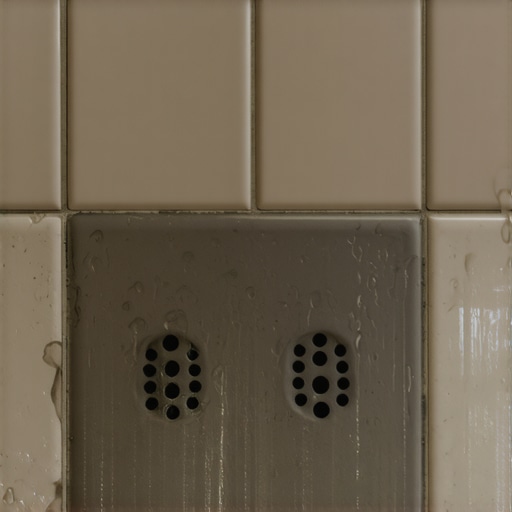
I spent three days grinding concrete on a job last month just so the floor wouldn’t click like a castanet. That is the level of obsession required when you deal with subfloors and moisture. Most guys skip the leveling compound. They think the underlayment will hide the dip. It won’t. When a homeowner calls me about a shower leak, I do not look at the water on the ceiling below first. I look at the structural integrity of the assembly. A shower is a pressurized system of layers, not just a pretty box of tile. If you think your waterproof vinyl is tough, try managing the hydrostatic pressure of a standing shower with a blocked weep hole. I have seen fifteen thousand dollar wide-plank walnut floors cupping like potato chips because a shower on the second floor had a slow, microscopic wick through the grout lines. You have to understand the physics of water migration before you touch a screwdriver.
The physics of hydrostatic pressure in wet areas
Hydrostatic pressure in showers occurs when water weight forces liquid through porous materials like cementitious grout or cracked tile. To identify the source, one must isolate the drain assembly from the tiling field using a test plug or colored dye to track migration through the subfloor layers. If the leak occurs immediately when the water is turned on, the supply line or the valve is the primary suspect. If the leak takes twenty minutes to manifest, you are likely looking at a failure in the capillary action of the grout or a breakdown in the secondary drainage system within the mortar bed. Water follows the path of least resistance, which is usually the gravity-driven route through a compromised sealant or a microscopic fracture in the cement matrix. We are talking about molecules finding their way through the crystalline structure of the floor. It is not a matter of if, but when, a poorly installed floor will succumb to these forces.
Signs that point to a drain flange failure
A drain flange failure manifests as a concentrated leak directly beneath the shower center, often involving waterproofing membrane detachment or clamping ring corrosion. If you plug the drain and fill the basin, and the water level drops without the shower head running, the mechanical seal at the flange is the culprit. This is a structural engineering failure. The connection between the PVC or cast iron pipe and the shower pan is a high-stress point. If the house has settled even a quarter of an inch, it can shear the bond of the solvent weld. I have seen plumbers use the wrong cement on a flange, and three years later, the whole thing just lets go. You can smell the dampness, a heavy, metallic scent that tells you the subfloor is rotting from the inside out. When the drain fails, it is a constant, predictable drip. It does not wait for you to scrub the walls. It is a gravity-driven disaster that is currently eating your joists.
“A floor is only as good as the subfloor beneath it, deflection is the enemy of every joint.” – Master Flooring Axiom
How grout porosity creates hidden structural rot
Grout porosity is an inherent characteristic of cementitious materials that allows capillary action to pull water into the mortar bed or thin-set layer. When grout is not properly sealed or maintained, it acts as a filter rather than a barrier, leading to efflorescence and the eventual delamination of the tile from the subfloor. Most homeowners think grout is a waterproof shield. It is not. It is a porous sand and cement mixture. If you have been using harsh acidic cleaners, you have been eating away the calcium carbonate that holds that grout together. Once that bond is gone, water wicks through and hits the plywood. Plywood is like a sponge; it will expand and push the tile up, creating a lippage that will eventually snap the locking mechanisms of any adjacent flooring. I have pulled up floors where the plywood was so soft you could stick a finger through it, all because of a hairline crack in a corner grout joint that the owner ignored for six months.
The concrete moisture test that saves thousands
The concrete moisture test involves using a hygrometer or calcium chloride test to determine the vapor emission rate of the slab before any floor installation. For shower diagnostics, an electronic moisture meter can detect latent dampness behind the tile, indicating whether the waterproofing membrane has been breached or if the leak is localized to the drain. You cannot trust your eyes. You have to trust the sensors. I have walked into jobs where the tile looked perfect, but the meter was screaming red. The water was trapped between the Kerdi membrane and the tile, with nowhere to go because the installer didn’t leave a gap for the weep holes. It is a pressurized tomb for your subfloor. If the concrete slab is holding more than three pounds of moisture per thousand square feet, your adhesives are going to emulsify. That is basic chemistry. You can’t fight the pH balance of a wet slab; you can only prepare for it or suffer the failure.
| Feature | Drain Assembly Leak | Grout or Tile Leak |
|---|---|---|
| Leak Timing | Immediate or during drainage | Delayed (15 to 45 minutes) |
| Water Location | Directly under the drain pipe | Spreads across the ceiling or walls |
| Test Method | Drain plug and static water test | Dye test or isolation spraying |
| Primary Cause | Mechanical failure or bad seal | Capillary action or lack of sealant |
| Repair Type | Plumbing or flange replacement | Regrouting or membrane repair |
The 1/8 inch that ruins everything
Precision in the shower throat and the drain flange is non-negotiable, as a one-eighth inch gap in the sealant bead or a deflection in the subfloor can cause catastrophic water migration. The National Wood Flooring Association and the TCNA have strict rules about subfloor flatness for a reason. If your floor has a dip, the water will pool. If the water pools, the chemicals in your soap will break down the grout faster. It is a feedback loop of destruction. I always tell my apprentices that if they aren’t using a straightedge to check the slope, they aren’t installing a floor; they are installing a future lawsuit. You need a quarter-inch per foot slope toward the drain. Anything less and you are inviting the water to sit and soak. When water sits, it finds those microscopic holes. It finds the 1/8 inch gap where the plumber got lazy with the silicone. That is where the rot starts.
“Waterproofing must be continuous from the floor to the wall, any break in the membrane is a point of total system failure.” – TCNA Handbook Standards
Step by step diagnostic protocol
- Remove the drain grate and inspect the weep holes for blockages caused by thin-set or debris.
- Perform a static water test by plugging the drain and filling the shower base with two inches of water.
- Use a moisture meter to check the perimeter of the shower for rising dampness in the drywall or baseboards.
- Conduct a dye test by adding food coloring to the water to track the exact path of the leak through the subfloor.
- Inspect the transition from the tile to the drain flange for any signs of separation or cracked grout.
- Check the shower arm and flange behind the wall using a borescope to rule out supply line leaks.
The 1/8 inch gap at the wall is another place where things go wrong. People think they should grout that corner. You never grout a change of plane. You use a 100 percent silicone sealant. Grout is rigid; houses move. When the house moves, the grout cracks. When the grout cracks, the water goes in. It is a simple mechanical reality that most installers ignore because they want to get home early. I have spent my life fixing those mistakes. If you want a floor that lasts, you have to respect the chemistry of the adhesives and the physics of the water. There is no shortcut. There is only the level, the meter, and the right way to do it. If your subfloor is lying to you, the moisture meter will tell the truth. Don’t wait for the ceiling to fall. Diagnose the source, isolate the failure, and rebuild it to the standards that keep the water where it belongs, in the drain and out of your joists.