
Most guys skip the leveling compound. They think the underlayment will hide the dip. It won’t. I spent three days grinding concrete on a job last month just so the floor wouldn’t click like a castanet. That job taught me that the smallest fraction of an inch can ruin a five figure installation. It is the same with your shower. People think a shower leak starts with a burst pipe. It does not. It starts in the corner where the grout has cracked because someone used the wrong cleaning tool or ignored the buildup of soap scum. I have seen laminate floors three rooms away buckle and swell because a shower corner was not maintained. You are not just cleaning a corner. You are performing structural maintenance on your home’s foundation.
The geometry of the ninety degree fail
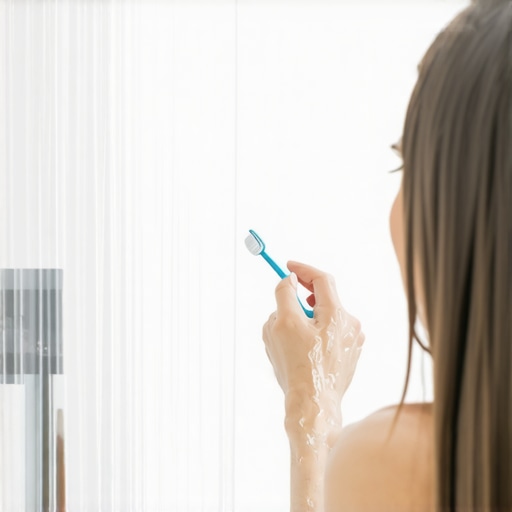
Cleaning shower corners with a toothbrush allows for focused mechanical agitation that large scrub brushes cannot achieve in tight ninety degree angles where grout meets tile. This method targets the biofilm and mineral deposits that accumulate in the porous structure of Portland cement grout. By using a soft bristle tool, you prevent the erosion of the grout surface while ensuring the removal of mold spores that lead to subfloor moisture intrusion. Most homeowners ignore the corners until they see the black spots, but by then, the water has likely already found a path to the wood framing. It is a slow death for your house.
The chemical battle inside the grout line
Grout is a thirsty material. If you look at it under a microscope, it looks like a volcanic landscape. It is full of holes. When you use a toothbrush, you are pushing your cleaning agent into those holes. If you use an acid based cleaner on standard sanded grout, you are eating the floor. You need a pH neutral cleaner or a specific alkaline solution to break down the body oils without dissolving the calcium carbonate that holds the grout together. I have walked into bathrooms where the grout felt like wet sand. That is what happens when you use the wrong chemicals. The toothbrush is the surgical tool that lets you apply the right chemistry to the specific point of failure. You should never use a metal brush. It will leave tiny shards of steel in the grout that will rust and turn your shower orange. Stick to nylon bristles with a high density count.
| Grout Type | Porosity Level | Cleaning Tool Recommendation | Failure Risk |
|---|---|---|---|
| Sanded Grout | High | Soft Toothbrush | Surface Erosion |
| Unsanded Grout | Medium | Extra Soft Toothbrush | Scratches |
| Epoxy Grout | Low | Stiff Nylon Brush | Chemical Film |
| Acrylic Grout | Low | Medium Toothbrush | Bond Failure |
Why your subfloor is lying to you
You might think your floor is dry because you do not see a puddle. You are wrong. Water moves through capillary action. It travels behind the tile, down the backer board, and into the plywood or OSB subfloor. Once it hits the wood, it stays there. The wood swells. If you have hardwood floors in the hallway, they will start to cup. You will blame the humidity. You will blame the installer. But the real culprit is that corner in the shower where the grout was failing. I have pulled up laminate floors that were bone dry on top but completely rotted underneath because of a tiny crack in a shower corner. The toothbrush technique is about precision. It is about making sure the sealant actually bonds to the grout. You cannot seal a dirty corner. If you seal over dirt, you are just trapping the moisture in.
“A floor is only as good as the subfloor beneath it; deflection is the enemy of every joint.” – Master Flooring Axiom
The physics of expansion and contraction
Every house moves. It breathes. When the seasons change, your subfloor expands and contracts. This movement is most aggressive in the corners of your shower. This is why the TCNA suggests using 100 percent silicone caulk in change of plane areas. But even silicone fails. It peels at the edges. When you use a toothbrush to clean these areas, you are removing the skin cells and soap fats that prevent the silicone from sticking. If the bond is not perfect, water will find the gap. I have seen water travel ten feet horizontally along a floor joist before it finally drips onto the ceiling below. By the time you see the stain, the damage is done. You are looking at a three thousand dollar repair because you did not want to spend twenty minutes on your knees with a toothbrush.
The local humidity factor in coastal regions
If you live in a place like Florida or Houston, your subfloor is already fighting a war against humidity. The moisture in the air keeps the wood fibers expanded. When you add a leaking shower corner to that environment, you are creating a petri dish. The mold will grow faster than you can imagine. In dry climates like Phoenix, the wood shrinks. This causes the grout in the corners to crack even faster. No matter where you live, the physics of water remains the same. It wants to go down. Your job is to keep it on top of the tile. Using a toothbrush to maintain the integrity of those corner joints is the only way to ensure the water goes down the drain and not into your floor joists.
“Proper surface preparation is not a suggestion; it is the fundamental requirement for any lasting installation.” – TCNA Handbook Standards
- Remove all loose debris from the corner with a dry vacuum before wetting the surface.
- Apply a pH neutral cleaner and let it dwell for five minutes to break down surface tension.
- Use the toothbrush in small circular motions to lift the dirt from the grout pores.
- Rinse with distilled water to avoid leaving mineral deposits behind.
- Dry the corner completely with a microfiber cloth before inspecting for cracks.
- Apply a high quality penetrating sealer once the grout is bone dry.
The ghost in the expansion gap
There is a hidden space behind your baseboards. It is the expansion gap. It is necessary for your hardwood and laminate floors to survive the summer. But this gap is also a highway for water. If your shower corner leaks, the water follows the wall plate and enters that expansion gap. From there, it wicks into the end grain of your wood flooring. Hardwood is like a bunch of straws glued together. It sucks up moisture. Once the end grain is wet, the board will never be the same. It will turn black. It will rot. You can sand it and refinish it, but the stain is deep in the fibers. All of this can be avoided. Clean the corners. Use the toothbrush. Pay attention to the details that most people ignore. A master installer knows that the beauty of the floor is a lie if the structure underneath is failing. Keep your grout tight and your subfloor dry. That is the only way a floor lasts a lifetime.