
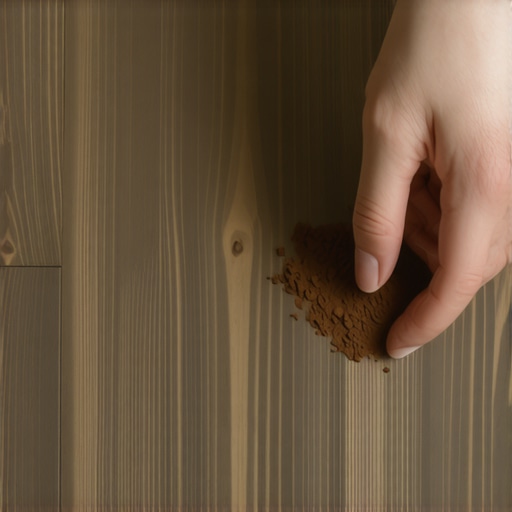
The Coffee Grounds Trick for Hiding Scratches in Dark Hardwood
I can still smell the mix of fresh oak dust and WD-40 on my coveralls when I think about the walnut floor heartbreak of 2014. I once walked into a house where a $15,000 wide-plank walnut floor was cupping so bad it looked like a potato chip because the installer didn’t check the crawlspace humidity. The homeowner was crying. The contractor was gone. The wood was screaming. People think hardwood is a set-it-and-forget-it product. It is not. It is a living, breathing structural material that reacts to every change in its environment. When you see a scratch on a dark floor, you are not just seeing a mark. You are seeing the physical destruction of the wood’s protective finish and the exposure of the raw, pale fibers beneath. My job is to tell you how to hide that damage without calling a guy like me to sand the whole room down.
The walnut floor heartbreak of 2014
Hardwood floor scratches are inevitable in high-traffic areas, but they represent a breach in the protective polyurethane layer that shields the organic material. When a scratch occurs, the light reflects off the jagged edges of the torn finish, making the mark appear white or grey against the dark stain. Using coffee grounds provides a natural pigment to darken these exposed fibers. Most guys skip the leveling compound and go straight to the aesthetic fix. They think the underlayment will hide the dip. It won’t. I spent three days grinding concrete on a job last month just so the floor wouldn’t click like a castanet. That same attention to detail applies to your surface. You do not just throw coffee on the floor. You treat the wood like the engineering marvel it is. Wood is composed of cellulose, hemicellulose, and lignin. When a chair leg or a dog claw rips through the finish, it exposes these lighter-colored elements. The coffee grounds trick is a chemistry hack designed to re-stain those fibers without the mess of oil-based stains.
The science of tannins in dark wood repair
Natural wood tannins and the acidic compounds in coffee work together to create a temporary dye that matches the deep hues of walnut or mahogany. The coffee trick works because the organic pigments in the roast are small enough to penetrate the open grain of the scratched area. I have seen guys try to use markers or crayons, but those often sit on top of the wood and look like a preschooler had a field day. Coffee grounds, specifically the wet ones, carry oils that help the pigment bind to the wood cells. You need to understand the Janka Hardness Scale to know how your wood will react. A soft wood like pine will soak up the coffee like a sponge. A hard wood like Brazilian Cherry will fight you every step of the way. You have to be patient. You have to be precise. It is about the bond between the liquid and the fiber. If the moisture content of your home is too high, the wood cells are already swollen and won’t take the color. You need a dry day and a steady hand.
“A floor is only as good as the subfloor beneath it; deflection is the enemy of every joint.” – Master Flooring Axiom
Why dark hardwood floors attract scratches
Dark hardwood floors show more scratches than lighter woods like maple or white oak because of the high contrast between the stain and the natural wood. When a scratch disrupts the finish, the refraction of light changes, highlighting the depth and width of the gouge. People love the look of dark floors. They want that sophisticated, deep look. Then they get a Golden Retriever and wonder why their floor looks like a skating rink after two weeks. The problem is the mil-thickness of the wear layer. Most modern engineered floors have a wear layer so thin you can’t even sand it once. You are living on a thin skin of wood. When that skin is broken, the pale core shows through. Coffee grounds are a surgical tool in this scenario. You are not refinishing the floor. You are camouflaging a wound. If you have solid 3/4 inch oak, you have more options. If you have cheap, builder-grade stuff, you better get used to the smell of espresso because you will be doing this often.
The physical structure of a floor gouge
Surface gouges and indentations in hardwood are physical depressions that require more than just color; they require a structural fill if they are deep enough. However, for minor surface scratches, the goal is purely optical. I look at a scratch under a magnifying glass and I see a canyon. The edges are frayed. There might be bits of grit or dirt trapped in there. Before you even think about coffee, you have to clean that canyon. If you leave dirt in the scratch, you are just staining the dirt. Use a vacuum with a soft brush attachment. Do not use a wet mop yet. Water makes wood fibers swell. If they swell before you apply the coffee, they won’t take the stain. You want the wood thirsty. I have spent decades on my knees with a moisture meter. I know when wood is thirsty. You want it to drink the coffee oils so the color stays deep inside the grain.
A comparison of scratch repair methods
Hardwood repair kits often include wax sticks, stain markers, and putty fillers, but the coffee ground method is favored for its organic integration and low cost. Below is a comparison of how different methods stack up against the coffee trick for dark floors.
| Method | Ease of Use | Durability | Color Match |
|---|---|---|---|
| Coffee Grounds | High | Medium | Excellent for Dark Wood |
| Wax Crayon | Medium | Low | Difficult to Blend |
| Stain Marker | High | High | Risk of Over-Darkening |
| Wood Putty | Low | High | Requires Sanding |
Why subfloor stability matters for surface finish
Subfloor deflection and moisture vapor transmission are the leading causes of premature floor failure, which leads to cracking and scratching as the planks move. If your subfloor is bouncing, your planks are rubbing against each other. This creates friction. Friction creates heat and wear. You might think that scratch came from the couch, but it might have come from the floor shifting under the couch. I have seen $20,000 installs ruined because the guy didn’t want to spend $500 on a proper moisture barrier. You can’t fix a structural failure with coffee. If your floor is clicking or popping, you have bigger problems than a scratch. You have a subfloor that is lying to you. It told you it was flat, but it is actually a roller coaster. Every time you walk across it, you are stressing the locking mechanisms or the nail-holding power of the wood. This movement causes the finish to brittle and flake, making the wood even more prone to scratching.
“Wood flooring is a hygroscopic material, meaning it constantly gains and loses moisture to reach an equilibrium with its environment.” – NWFA Standard Guidelines
The risks of using coffee on laminate floors
Laminate flooring is not real wood, and using moist coffee grounds on it can cause irreversible swelling at the seams. Do not do this on laminate. Laminate is basically a picture of wood glued to a hunk of sawdust and resin. It is a plastic sandwich. If you put wet coffee on a scratch in laminate, the moisture will seep into the core. The core will swell. The edges will peak. Now you don’t have a scratch; you have a mountain range in the middle of your kitchen. Same goes for those “waterproof” LVPs. They are waterproof from the top, but if you get moisture in the joints, you are asking for mold and adhesive failure. Save the coffee for the real stuff. Solid oak, walnut, cherry. That is where the chemistry works. If you are dealing with tile or grout, keep the coffee in the mug. Coffee will stain grout and you will never get it out. If you have a scratch in your shower tile, you need a professional glaze, not a breakfast beverage.
Maintenance steps for long term wood health
Hardwood maintenance requires a consistent humidity level between 35 and 55 percent to prevent the wood from shrinking or expanding. If you want to keep your floors looking like they were just installed, you have to be a warden of your environment. Follow this checklist to keep your dark floors in top shape.
- Use felt pads on every single piece of furniture. No exceptions.
- Maintain a consistent indoor climate to prevent gapping and cupping.
- Trim your pets nails every two weeks to prevent deep gouges.
- Avoid using steam mops which inject heat and moisture into the grain.
- Vacuum with a soft floor attachment to remove grit that acts like sandpaper.
The exact process for the coffee ground trick
Applying coffee grounds to a scratch involves creating a concentrated paste and allowing it to sit for a specific duration to ensure pigment transfer. Start by brewing a small, incredibly strong cup of coffee. You want the dark, oily stuff. Take the wet grounds and press them into the scratch with a cotton swab. Do not just rub it on top. You are trying to pack the pigment into the wound. Let it sit for ten minutes. If the scratch is deep, let it sit for twenty. Wipe it away with a damp cloth, not a soaking wet one. Look at the color. If it is still too light, do it again. It is like painting a wall; sometimes you need two coats. Once the color matches, let it dry for twenty-four hours. Then, if you want to be a pro, take a tiny bit of clear floor wax or a floor touch-up pen and seal the area. This locks the color in and prevents the coffee from being wiped away the next time you clean the floor. It is a simple fix for a complex material. Just remember that wood is a structural engineering challenge. Treat it with respect, keep your subfloor dry, and stop dragging your furniture across the room like a maniac.