
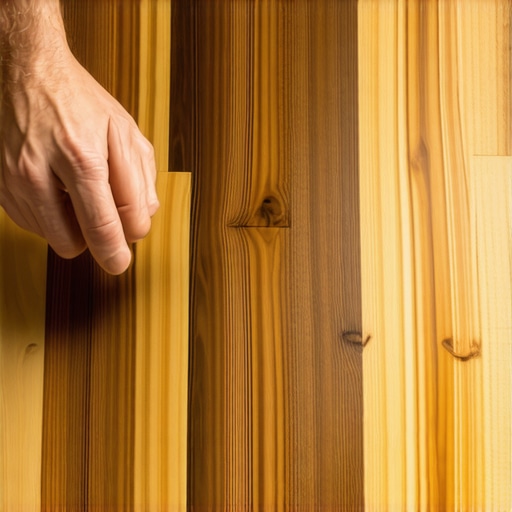
I once walked into a house where a $15,000 wide-plank walnut floor was cupping so bad it looked like a potato chip because the installer didn’t check the crawlspace humidity. It was a tragedy of structural engineering that could have been avoided with a simple moisture meter and a bit of patience. The wood was screaming, literally groaning under the pressure of cell-wall expansion as it drank up the vapor from a damp basement. Most people think of hardwood floors as a cosmetic layer, something you pick out of a catalog like wallpaper. I view them as a performance surface that must interact with the atmospheric pressure and moisture of a specific building envelope. When you are tasked with matching a floor installed in 1974, you are not just buying wood. You are trying to synchronize two different eras of forestry and chemical engineering. The old-growth timber used decades ago has a tighter cellular structure than the rapid-growth plantation wood found in big-box stores today. If you ignore the physics of the subfloor or the chemistry of the finish, the new boards will stand out like a neon sign against the mellowed patina of the original installation.
The ghost in the expansion gap
Matching new hardwood to 50-year-old planks requires a deep understanding of species identification, milling profiles, and oxidation cycles. To succeed, you must first identify if the existing wood is Red Oak or White Oak, as their tannin structures react differently to stains. You cannot simply rely on a visual check. You need a chemical reagent test. White oak contains high levels of tannic acid that will turn black when exposed to certain iron-based liquids. Red oak will not. This distinction is the difference between a floor that blends and one that looks like a patchwork quilt. While modern homeowners are obsessed with the waterproof claims of laminate or the ease of cleaning showers with tile and grout, real wood demands a respect for movement. Every board is a hygroscopic material. It absorbs and releases moisture based on the relative humidity of the room. When you introduce new planks, they must undergo a rigorous acclimation period. I am not talking about leaving the boxes in the living room for two days. I am talking about sticker-stacking the boards in the actual environment and measuring the moisture content until it is within 2 percent of the existing floor and the subfloor.
“A floor is only as good as the subfloor beneath it; deflection is the enemy of every joint.” – Master Flooring Axiom
[IMAGE_PLACEHOLDER]
Why your subfloor is lying to you
Subfloor levelness and moisture content are the two most common reasons why matching projects fail within the first year. You must use a straightedge to check for dips greater than 3/16 of an inch over a 10-foot radius. If the subfloor is concrete, a calcium chloride test is mandatory. Most installers skip this and rely on a cheap electronic meter. That is a mistake. Concrete is a sponge. It holds onto water for decades. If you pin a new piece of oak over a slab that is off-gassing vapor, that wood will expand, the tongue will snap, and you will hear a clicking sound every time you walk. This is why I despise the shortcut culture of modern construction. They want the look of 1950s craftsmanship with the speed of a 2024 assembly line. It does not work that way. You have to grind the high spots and fill the low spots with a high-compressive-strength leveling compound. Only then can you begin the delicate process of matching the thickness. Old planks were often a true 3/4 inch, but after three or four sandings over fifty years, they might only be 5/8 inch thick. If you buy new 3/4 inch stock, you will have a height transition that no amount of sanding can fix without ruining the structural integrity of the new board.
The 1/8 inch that ruins everything
Milling tolerances and tongue-and-groove alignment determine the long-term stability of a floor transition. If the groove on your new boards is even 1/16 of an inch higher than the tongue on the old boards, the floor will never be flush. You have to measure the wear layer, which is the wood above the tongue. On a 50-year-old floor, that wear layer has been thinned by decades of foot traffic and professional refinishing. When matching, I often have to custom-mill the underside of the new planks to drop them into the same plane as the old ones. It is tedious work. It requires a job-site table saw and a steady hand. But if you don’t do it, you end up with a lip. That lip catches the light. It catches dirt. It eventually splinters. Unlike the grout in a bathroom which can be patched, wood failure is permanent. You also have to consider the width. A 2.25-inch board from 1960 might actually be 2.22 inches due to decades of shrinking. If you try to marry it to a modern 2.25-inch board, your rows will slowly drift out of alignment. By the time you get across the room, you will be an inch off. You must measure ten boards of the old and ten of the new. Calculate the average. Adjust your spacing accordingly.
A comparison of structural performance
The following table illustrates the technical differences between common species used in older homes versus the modern equivalents. Understanding the Janka Hardness Scale and the stability coefficient is non-negotiable for an architect of floors.
| Wood Species | Janka Hardness | Stability Coefficient | Acclimation Time |
|---|---|---|---|
| Vintage White Oak | 1360 | .00365 | 14-21 Days |
| Modern White Oak | 1360 | .00365 | 7-10 Days |
| Vintage Red Oak | 1290 | .00369 | 14-21 Days |
| Modern Red Oak | 1290 | .00369 | 7-10 Days |
| Modern Laminate | N/A | .00011 | 48 Hours |
Notice the stability coefficient. This number tells you how much a board will move with every 1 percent change in moisture. While laminate is technically more stable, it lacks the soul and the repairability of real timber. The vintage boards require longer acclimation because they are often denser and have lower initial moisture levels from decades of being in a climate-controlled home. Introducing new wood to an old environment is a shock to the system. You are bringing a young, volatile material into a room filled with settled, stable elders.
Chemical warfare under the varnish
Refinishing and stain matching is the final hurdle in the architectural puzzle. You cannot just look at a stain chart. The wood has changed color due to UV exposure and the breakdown of lignin. Old oil-based polyurethanes from the mid-century have an amber tint that deepens over time. Modern water-based finishes are crystal clear. If you use a modern clear coat on new wood next to an old floor, they will never match. You have to “cook” the new wood. This involves using amber-tinted sealers or even slightly smoking the wood with chemicals to mimic fifty years of sunlight in five minutes. It is a dangerous game. If you over-stain, the grain will muddy. If you under-stain, the floor looks raw. I always tell my clients that the best match is a full sand-and-refinish of the entire contiguous area. Trying to spot-match a single room to a hallway is a fool’s errand. The chemistry of the old finish will react differently to the new sanding grits. You need to strip it all back to the bare wood, treat it with a wood conditioner to ensure even absorption, and then apply your stain. This ensures that the hardwood floors look like a single, unified architectural element rather than a series of afterthoughts.
The checklist for a perfect match
- Confirm species using a chemical tannin test or microscopic grain analysis.
- Measure the current thickness of the wear layer on the old planks using a digital caliper.
- Check the subfloor moisture content at ten different locations across the room.
- Verify that the new boards are from the same geographic region to ensure similar grain density.
- Sticker-stack the new wood for at least 14 days in the room where it will be installed.
- Sand a test patch of the old floor to see the true color of the wood without the aged finish.
- Apply three different stain samples to the new wood to find the closest UV-shifted match.
One contrarian data point that most big-box retailers will hate is this. While most people want the thickest underlayment possible, too much cushion actually causes the locking mechanisms on laminate or the tongues on hardwood to snap under pressure. A floor needs a firm, unyielding foundation. If there is a