
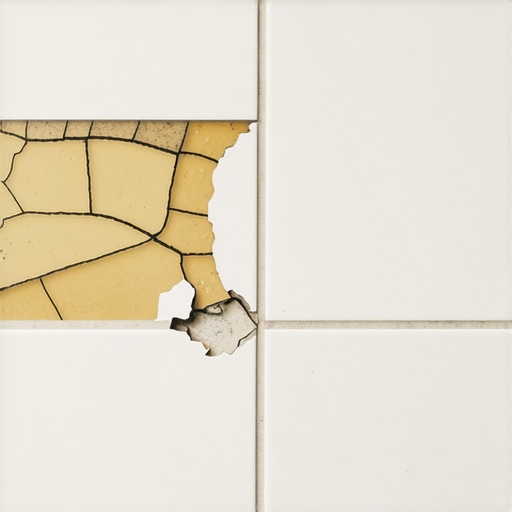
The hidden physics of grout failure and the peeling sealant nightmare
I spent three days grinding concrete on a job last month just so the floor wouldn’t click like a castanet. That job reminded me that most people ignore what happens beneath the surface. I once walked into a luxury bathroom where the homeowner had spent six figures on Italian marble only to have the grout sealant peeling off in long, translucent strips like a bad sunburn. They thought the product was defective. The truth was far more technical. They had applied a topical acrylic sealer over a high-density grout that was still off-gassing moisture. It was a chemical divorce. As an installer with twenty-five years on my knees, I have seen every way a floor can fail. Most guys skip the leveling compound. They think the underlayment will hide the dip. It won’t. The same logic applies to grout. If you don’t understand the molecular bond between the cement and the sealer, you are just painting a temporary film that will inevitably fail.
The molecular failure of topical coatings
Topical grout sealers fail because they create a mechanical bond rather than a chemical bond with the cementitious substrate. When moisture vapor rises through the subfloor and into the grout joint, it hits the underside of the plastic film and pushes it upward, causing delamination and peeling. Most people want the thickest underlayment or the thickest sealer, but too much cushion or too much film actually causes the locking mechanisms on LVP to snap under pressure or the sealer to flake off. Grout is a porous network of tiny tunnels. When you use a topical sealer, you are basically putting a lid on a jar of wet cookies. The moisture has nowhere to go but out. This pressure, known as hydrostatic pressure at a microscopic scale, is the primary driver of that glue-like peeling you see in showers and on kitchen floors.
“A floor is only as good as the subfloor beneath it; deflection is the enemy of every joint.” – Master Flooring Axiom
The tragedy of the wet sponge
Excessive water used during the grout cleaning process is the silent killer of sealant adhesion. If a contractor uses a dripping wet sponge to wipe the tile, they wash away the Portland cement at the surface, leaving behind a soft dusty residue that prevents the penetrating sealer from ever reaching the internal pores. You need to understand the water to cement ratio. If that ratio is skewed by an over-eager cleaner, the surface of the grout becomes friable. You can rub your finger across it and see a fine powder. No sealer in the world, not even the most expensive silane or siloxane, will stick to dust. It is like trying to tape a dusty cardboard box. The tape sticks to the dust, and the dust lifts off the box. This is why professional installers wait for a full cure cycle before even thinking about a bottle of sealer.
Why your subfloor is lying to you
Subfloor moisture levels and alkalinity levels determine whether your grout sealant will bond or peel away within weeks. If the concrete slab has a high pH above 9, it will chemically attack the polymer chains in many cheap sealers, effectively liquefying the bond from the bottom up. Most guys think the subfloor is just a flat surface. It is a living, breathing component of the house. If you are in a swampy area like Houston, that concrete is constantly drinking moisture from the soil. That moisture carries minerals. Those minerals collect at the surface of the grout in a process called efflorescence. If you seal over that white powder, the sealer will peel off like dried Elmer’s glue because it was never actually touching the grout. It was floating on a layer of salt.
| Grout Type | Porosity Level | Best Sealer Type | Typical Cure Time |
|---|---|---|---|
| Sanded Grout | High | Penetrating Silane | 72 Hours |
| Unsanded Grout | Medium | Solvent Based Penetrating | 48 Hours |
| Epoxy Grout | Zero | No Sealer Needed | 24 Hours |
| High Performance Cement | Low | Water Based Fluorochemical | 72 Hours |
The ghost in the expansion gap
Expansion gaps at the perimeter of the room are mandatory for structural integrity, and their absence often causes grout cracking and sealant failure. When a floor cannot move, the compression forces crush the microscopic structure of the grout, turning it into a dense non-porous mass that rejects sealant. I have seen laminate and hardwood floors buckled against a baseboard because some amateur didn’t leave a 1/4 inch gap. That same pressure transfers to the tile transitions. When the grout is under stress, it develops micro-fractures. Water gets into those fractures, goes under the sealer, and starts the peeling process. It is a chain reaction. A floor is a performance surface. It moves. It expands with the humidity of a New Jersey summer and shrinks in the dry heat of a Phoenix winter. If you don’t account for that movement, the grout is the first thing to scream.
The 1/8 inch that ruins everything
Grout joint width and depth must be uniform to ensure that sealant can penetrate deep enough to resist surface abrasion. If the joints are too shallow because of thin-set squeeze-through, the sealant volume is insufficient to create a durable barrier. This is common in showers. The installer is lazy and doesn’t scrape the thin-set out of the joints. You end up with a tiny layer of grout on top of the mortar. When you apply sealer, it has no place to soak in. It sits on the surface, dries into a thin film, and then peels when you scrub the floor with a brush. You need at least two-thirds of the tile depth to be pure grout for the system to work. Anything less is a cosmetic patch, not a structural installation.
“Cementitious grout requires a minimum of 28 days to fully hydrate, though most sealers are applied far too early in the construction phase.” – Tile Industry Standards
Regional climate and the cure cycle
High ambient humidity in coastal regions slows the evaporation of moisture from the grout matrix, leading to trapped water that destroys sealant adhesion. If you are working in a place like Miami, you cannot follow the instructions on the back of a bottle made in a dry climate. The air is already saturated. The grout might look dry on top, but the core is still wet. If you seal it then, you are trapping water inside the joint. This leads to mold growth under the sealer, which manifests as dark spots that you cannot clean. Eventually, the mold breaks the bond and the sealer peels. In dry climates like Denver, the opposite happens. The grout dries too fast, becomes brittle, and the sealer can’t soak in because the pores have collapsed. You have to dampen the joints before grouting to ensure a slow, strong cure.
The checklist for a permanent seal
- Wait at least 72 hours for the grout to hydrate and release initial moisture.
- Perform a water drop test to check if the grout is actually porous.
- Vacuum the joints to remove all construction dust and skin cells.
- Use a microfiber applicator to avoid over-applying the product.
- Buff away any excess sealer from the tile surface within 10 minutes.
- Maintain a consistent room temperature between 65 and 80 degrees during the cure.
The molecular reality of surfactants and cleaners
Chemical residues from acidic cleaners or heavy surfactants neutralise the active ingredients in grout sealers, causing them to gum up and peel. Many people use vinegar to clean their grout. Vinegar is an acid. It eats the lime in the cement. This creates a surface that is chemically unstable. When you put a sealer on top of an acid-etched surface, the chemical reaction creates a soapy film at the interface. This is why the sealer feels tacky for weeks and then eventually peels off in chunks. You must use a pH-neutral cleaner. If the chemistry at the bond line is off, the installation is doomed. I always tell my clients that the wrong cleaner is the fastest way to ruin a twenty thousand dollar floor. It is not about the mop you use, it is about the molecules you are leaving behind.
Final technical requirements for grout success
The path toward a permanent grout bond requires patience and an understanding of the material science. You cannot rush a cementitious product. It is a slow-motion chemical reaction that takes weeks to finalize. The peeling you see is almost always a symptom of impatience or improper cleaning. If the grout is dusty, wet, or too alkaline, the sealer is just a waste of money. Stop looking for a miracle product in a spray bottle. Start looking at your subfloor, your moisture levels, and your cleaning habits. That is how you build a floor that lasts twenty years instead of twenty days. The structural engineering of the floor starts with the subfloor and ends with the microscopic bond of the sealer.