
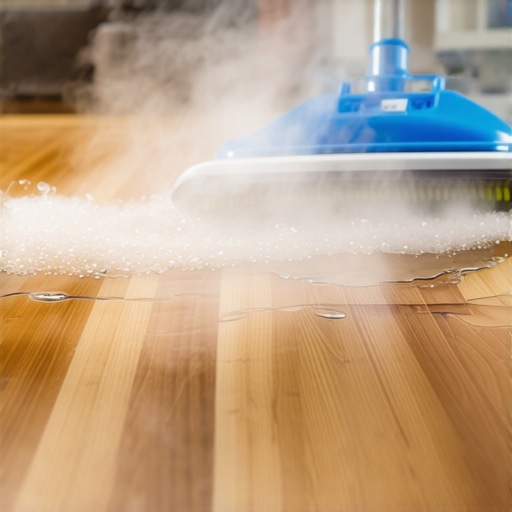
The Steam Mop Warning and Why Your Laminate is Starting to Peel
I have spent twenty five years with my knees on the subfloor and sawdust under my nails. I smell like oak dust and WD 40. I have seen every flooring failure known to man. Homeowners always ask why their waterproof laminate is buckling or peeling. Usually, it is because they locked it under a heavy kitchen island, killing the floor’s ability to breathe, or they bought a steam mop. I once walked into a luxury kitchen where a three thousand dollar laminate install was bubbling at every single seam. The owner was proud of her steam mop. She thought she was sanitizing. In reality, she was injecting pressurized vapor directly into the high density fiberboard core. It was a disaster. The floor was six months old. It was ruined. You cannot fix vapor blown HDF. You can only replace it. This is the structural reality of modern flooring that the big box retailers will never tell you because they want to sell you a new floor every seven years. I prefer floors that last forty.
The microscopic assault on melamine resins
Laminate flooring fails because steam mops force moisture into the core through high pressure vapor which bypasses the topical wear layer. The melamine resin coating on your floor is designed to resist liquid water spills for a short duration. It is not designed to resist gaseous HDF penetration. When you trigger that steam burst, you are pushing water molecules at two hundred degrees Fahrenheit into the click lock mechanism. The heat expands the physical space between the planks. The pressure drives the vapor into the urea formaldehyde resins that hold the wood fibers together. It is a chemical assault. Once those fibers absorb that moisture, they swell. They do not shrink back down. This is the molecular cause of the dreaded peaking seam. You can see it when the edges of your planks start to rise like a mountain range. It is irreversible damage caused by a tool marketed as a convenience.
Why heat is the enemy of a floating joint
Thermal expansion occurs when the steam mop introduces localized heat that exceeds the stable operating temperature of the laminate locking system. Most laminate floors are designed to live in a controlled environment between sixty and eighty degrees. A steam mop hits the surface at temperatures exceeding two hundred degrees. This creates a massive thermal gradient. The top of the plank expands rapidly while the bottom stays cool against the subfloor. This causes the plank to cup. It puts immense stress on the tongue and groove. These locking mechanisms are milled to tolerances of less than a millimeter. When you heat them and force them to move, they snap. A snapped lock means a loose plank. A loose plank means more moisture ingress. It is a cycle of destruction. I have seen guys try to glue these back down. It never works. The structural integrity of the click system is gone. It will buckle. It will shift.
| Material Type | Moisture Tolerance | Steam Resistance | Acclimation Time |
|---|---|---|---|
| Solid White Oak | Moderate | Zero | 14 Days |
| Engineered Wood | High | Low | 72 Hours |
| High Density Laminate | Low | Zero | 48 Hours |
| Stone Polymer Composite | Very High | Low | 24 Hours |
The structural lie of the waterproof label
Waterproof labels on laminate flooring only refer to topical resistance from liquid spills and do not account for vapor pressure or subfloor hydrostatic force. Do not trust the marketing. When a box says waterproof, it usually means the surface is non porous. It does not mean the joints are airtight. It definitely does not mean the floor can handle a steam cleaner. The industry standard is focused on a spill sitting on top of the floor for twenty four or seventy two hours. Steam is a different beast entirely. It moves faster and penetrates deeper. If you have a concrete subfloor with a high moisture emission rate, you are already fighting a battle from below. Adding steam from above is a pincer movement that destroys the HDF core. I always check the calcium chloride test results before I even pull a plank out of the box. If the slab is wet, the floor is doomed before you even start cleaning it.
“A floor is only as good as the subfloor beneath it; deflection is the enemy of every joint.” – Master Flooring Axiom
Expansion gaps and the physics of the perimeter
Expansion gaps are necessary because laminate flooring is a hygroscopic material that changes volume based on the relative humidity of the room. You need at least a quarter inch gap at every vertical obstruction. I prefer three eighths of an inch. If you run your laminate tight against the drywall, the floor has nowhere to go when it expands. It will push against the wall and then it will lift in the middle of the room. This is called crowning. Most installers skip the undercut on the door jams because they are lazy. They think the baseboard will hide the mistake. It wont. I spent three days grinding concrete on a job last month just so the floor wouldn’t click like a castanet. If the subfloor is not flat to within three sixteenths of an inch over a ten foot radius, your laminate will fail. The steam mop only accelerates this by forcing the planks to expand faster than the gap allows.
- Check for cupping at the plank edges with a flashlight at a low angle.
- Inspect the click locks for white chalky residue which indicates resin breakdown.
- Measure the expansion gap behind the baseboards to ensure it is not pinched.
- Test the moisture content of the HDF core with a pin style meter.
- Look for delamination of the decorative paper layer from the core material.
Adhesive failure at the molecular level
The chemical bond between the wear layer and the HDF core is weakened by the repeated application of high temperature moisture. Most people do not realize that laminate is a sandwich of paper, resin, and wood dust. The glue that holds these layers together is sensitive to heat. When you steam clean, you are literally cooking the glue. Eventually, the wear layer will begin to peel away from the edge. This is delamination. It starts small. You might only notice a little bit of grey at the edge of a plank. That is the core showing through. Once the core is exposed, it acts like a sponge. It will suck up any humidity in the air. The floor will grow. It will push against the walls. It will fail. I have seen entire living rooms worth of flooring ruined because someone wanted to save ten minutes on mopping. Use a damp microfiber pad and a pH neutral cleaner. That is all you need.
“Wood and water are old enemies; the floor is the battlefield where they meet.” – NWFA Technical Manual
The ghost in the expansion gap
The ghost in the expansion gap refers to the phantom clicking sounds caused by a floor that has expanded too much and is now rubbing against the subfloor. This happens when the humidity in the home is not controlled. If you live in a place like Houston or Miami, you must run your air conditioner. If you turn it off for a week while you go on vacation, your floor will swell. If you come back and steam mop it, you are adding fuel to the fire. The floor will lock itself against the walls. Then, when you walk on it, you hear that clicking. It sounds like someone is walking behind you. It is the sound of the tongue and groove rubbing together under extreme tension. It is the sound of your floor dying. I always tell my clients to keep their home between thirty and fifty percent humidity. Anything else is a gamble with your investment.
The one eighth inch that ruins everything
A subfloor deviation of just one eighth of an inch can cause the locking mechanisms of a laminate floor to fatigue and eventually snap. This is the most common installation error. Installers assume the underlayment will fill the hole. It will not. Underlayment is for sound dampening and minor moisture protection. It is not a structural filler. If there is a dip in the concrete, the plank will flex every time you step on it. This is called deflection. Over thousands of steps, the thin plastic or wood tongue will work harden and break. While most people want the thickest underlayment, too much cushion actually causes the locking mechanisms on LVP or laminate to snap under pressure. You want a high density, thin underlayment. You want a flat floor. You want to stop using that steam mop before you turn your expensive floor into a pile of wet cardboard. Stick to the basics. Keep it dry. Keep it flat. Keep it clean without the heat.