
The mechanical friction of a dragging sweep
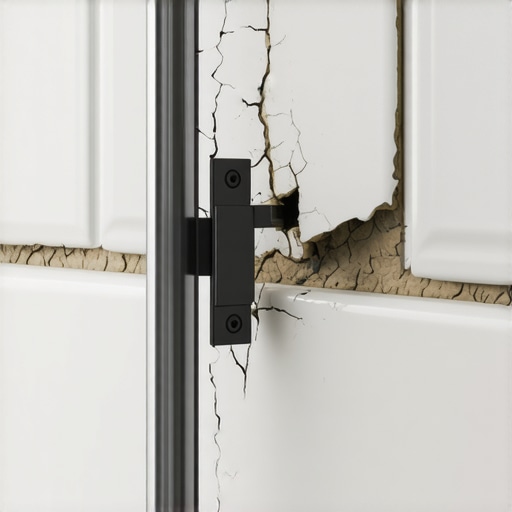
A shower door sweep causes grout damage through constant mechanical abrasion that wears down the porous surface of the cementitious joints. When a heavy glass door swings, the rubber or vinyl sweep acts like a low-grit sandpaper. Over hundreds of cycles, this friction creates micro-fractures in the grout line. Most guys skip the leveling compound. They think the underlayment will hide the dip. It won’t. I spent three days grinding concrete on a job last month just so the floor wouldn’t click like a castanet. This same lack of attention to detail often results in shower doors that hang slightly out of plumb. If the door is low, the sweep is not just touching the tile. It is gouging it. The physics of this are simple. You have a flexible polymer moving against a rigid, crystalline structure. The grout will always lose that fight eventually. It starts as a slight discoloration. Then you see the fine dust. Before you know it, the water starts migrating into the subfloor. Once moisture hits the plywood or the slab underneath, you are looking at a four-figure repair bill. This is not just an aesthetic issue. It is a structural failure in progress. Every time that door opens, you are essentially sanding away your waterproof barrier. Most homeowners ignore the scratching sound until the grout is gone. By then, the damage has reached the thin-set. If the thin-set gets wet, the bond to the tile breaks. Now you have loose tiles and a leaking pan.
The microscopic anatomy of a grout joint
Grout chemistry determines its resistance to friction and its ability to withstand the lateral shear forces applied by a door sweep. Sanded grout is essentially a mixture of Portland cement and silica sand. The sand provides the bulk and the strength. However, the cement is the glue. When a sweep drags across it, it slowly plucks the cement away from the sand grains. This process is called spalling. If you used an unsanded grout in a joint wider than one eighth of an inch, the problem is even worse. Unsanded grout lacks the structural aggregate to resist compression. It is soft. It is meant for narrow joints on walls, not for areas where mechanical force is applied. If you look at a grout joint under a microscope, you see a jagged landscape of peaks and valleys. The sweep catches on these peaks. It creates a lever effect on the microscopic level. This snaps the bond between the cement and the tile edge. Once that bond is broken, capillary action pulls water deep into the wall assembly. This is why I always tell people to check their door clearance. If you cannot slide a credit card under the sweep without it catching, you are killing your floor. I have seen guys try to fix this by smearing more grout on top. That never works. New grout does not bond to old grout. It just creates a thin layer that flakes off in a week. You have to rake out the old stuff and start over with a high-performance epoxy or a pre-mixed urethane grout that has better tensile strength.
Why the subfloor dictates your grout survival
Subfloor deflection is the hidden catalyst for grout failure beneath a shower door sweep because it changes the door height relative to the floor. If your joists are too thin or spaced too far apart, the floor bounces. This is called deflection. The Tile Council of North America has strict standards for this. They demand an L over 360 rating for ceramic tile. That means the floor should not bend more than the length divided by 360 under a full load. If the floor dips when you step into the shower, the door sweep suddenly has a different relationship with the tile. It might clear the grout when no one is in the room, but the moment you step on that threshold, the floor rises or the door sinks. This creates a rhythmic grinding. It is like a slow-motion saw.
“A floor is only as good as the subfloor beneath it; deflection is the enemy of every joint.” – Master Flooring Axiom
I have walked into jobs where the grout was pulverized into powder because the installer used half inch plywood as a subfloor. You need at least an inch and an eighth of total subfloor thickness for a stable tile installation. If you have a bouncy floor, no amount of high-quality grout will save you from a dragging door sweep. The movement is simply too great. You are asking a rigid material to act like a spring. It will not do it. It will crack. It will crumble. And then the mold starts growing in the wet plywood.
Comparing floor durability across wet zones
Hardwood floors and laminate have no place inside a wet shower area because their expansion cycles are incompatible with the rigid nature of shower enclosures. While some people try to run laminate right up to a shower pan, the moisture eventually causes the core to swell. This swelling can lift the floor height by a quarter inch. Suddenly, a door sweep that used to clear the floor is now catching on the edge of the planks. This creates a cascading failure. The sweep tears at the laminate wear layer, exposing the HDF core. The core absorbs more water. The floor gets higher. The door gets harder to open. Hardwood floors are even worse. Oak and maple are like sponges. In a high humidity environment like a bathroom, they will cup or crown. This movement is powerful enough to shear the screws right out of a shower door track. You need to keep organic materials away from the splash zone. If you want the wood look, use a porcelain plank. Porcelain has a water absorption rate of less than point five percent. It is dense. It is hard. It can handle a door sweep better than any natural wood. But even porcelain needs a proper grout joint. If the grout is low or poorly mixed, the sweep will still find a way to cause trouble.
| Material Category | Shore A Hardness | Abrasion Resistance | Thermal Stability | Moisture Sensitivity | | :— | :— | :— | :— | :— | | Portland Grout | 90 | Low | High | High | | Epoxy Grout | 95 | High | High | Low | | PVC Door Sweep | 75 | Medium | Moderate | Low | | Silicone Sealant | 30 | High | High | None | | Laminate Core | 50 | Very Low | Low | Critical |
The checklist for a bulletproof shower transition
Follow these technical steps to ensure your shower door does not destroy your flooring installation over time. You must be proactive about the physical relationship between the moving parts and the stationary tile.
- Verify the door hinges are rated for the weight of the glass to prevent sagging.
- Set the sweep height to maintain a gap of at least one sixteenth of an inch.
- Use a polymer-modified thin-set to ensure the tiles under the sweep are fully back-buttered.
- Apply a high-quality penetrative sealer to cementitious grout every six months.
- Check the subfloor for deflection before the first tile is ever laid.
- Ensure the shower curb has a slight inward pitch of one quarter inch per foot.
If you miss even one of these steps, you are inviting failure. I have seen it a thousand times. A guy thinks he can save twenty bucks on cheap grout. Six months later, he is calling me to tear out the whole pan because the sweep ground the grout into a slurry and the water got into the wall.
Structural movement and the one eighth inch rule
The one eighth inch expansion gap is the most misunderstood requirement in flooring architecture. Every hard surface needs room to move. Tile is no different. While we grout the joints between tiles, the perimeter must remain open or filled with a flexible sealant. If you run your tile tight against the shower base and then grout that joint, the grout will crack. The shower base is made of acrylic or heavy cast iron. It moves differently than the tile floor. When you add the friction of a door sweep to a joint that is already under stress from expansion, you get a catastrophic failure. The sweep provides the final push that pops the grout out of the channel. This is why the joint directly under the door sweep should often be a color-matched silicone rather than a hard grout.
“Movement joints are not optional; they are the lungs of the flooring system.” – TCNA Installation Handbook
Silicone can compress and stretch. It can handle the dragging of a sweep without cracking. It absorbs the energy of the friction. If you insist on grout in that high-stress zone, you are betting against the laws of physics. The expansion and contraction of the house, combined with the mechanical force of the door, will always win.
The hidden cost of cheap sweeps
Low-quality vinyl door sweeps harden over time due to exposure to soaps and hard water minerals. When the sweep loses its flexibility, it becomes a rigid blade. Instead of gliding over the grout, it hits it like a chisel. This is particularly problematic in regions with hard water like Phoenix or Las Vegas. The calcium deposits build up on the sweep. Now you are literally dragging a mineral-encrusted blade across your floor. You should replace your door sweep every two years. It is a ten-dollar part that saves a three-thousand-dollar floor. Most people wait until the sweep is yellow and brittle. By then, it has already done the damage. You can hear the difference. A fresh, soft sweep makes a dull thud. A hardened sweep makes a sharp clicking sound against the tile. That click is the sound of your grout being destroyed. If you notice that sound, stop using the door. Adjust the sweep or replace it immediately. Do not wait for the dust to appear. Once the dust is there, the seal is gone.
Moisture migration and the capillary effect
Water moves through damaged grout via capillary action which pulls moisture upward and outward into the surrounding subfloor. When the door sweep creates a crack, it creates a straw. Water from the shower spray hits the floor and is sucked into that crack. It does not just stay there. It travels. It will move three feet away from the shower if the subfloor is level. This is how you end up with mold under your bedroom carpet that is adjacent to the bathroom. You think the leak is in the wall, but it started with a door sweep and a bad grout joint. This is why I am so obsessed with subfloor prep. If the floor is perfectly flat, the water has fewer places to pool. If you have a dip under your door, that dip becomes a reservoir. The sweep sits in that water. It keeps the grout saturated. Saturated grout is soft grout. It is much easier to damage soft grout than dry grout. By maintaining the integrity of the surface, you are protecting the entire structural envelope of your home. Do not let a simple piece of rubber ruin your investment. Check your clearances. Seal your joints. And for heaven’s sake, make sure your subfloor is solid.