
I spent three days grinding concrete on a job last month just so the floor wouldn’t click like a castanet. Most guys skip the leveling compound. They think the underlayment will hide the dip. It won’t. I have spent thirty years on my knees. My joints creak like a poorly installed floating floor. I smell like sawdust and old coffee. I have seen every mistake a homeowner can make. The worst ones involve chemistry. People treat their laminate floors like they are solid stone. They are not. Laminate is a structural sandwich of resin and wood fiber. When you drop a permanent marker on that surface, you are not just cleaning a stain. You are managing a chemical interaction on a microscopic level. I have fixed too many floors ruined by people using nail polish remover or harsh abrasives. If you want to save your floor, you use isopropyl alcohol and you use it the right way. No shortcuts. No guesswork.
The subfloor secret behind laminate durability
Subfloor levelness determines the lifespan of laminate wear layers because uneven surfaces cause plank deflection. When a floor dips, the locking mechanisms rub together. This creates microscopic gaps in the surface seal. Laminate flooring requires a substrate that varies by no more than one eighth of an inch over a ten foot radius to prevent structural fatigue. If your subfloor is not flat, the protective coating on top will eventually crack. This allows ink and moisture to penetrate the core board where they cannot be removed. You must address the foundation before you can appreciate the finish. I have seen beautiful floors destroyed because the installer was too lazy to use a straightedge. It is a tragedy of physics. If the base is wrong, the top will fail. It is that simple.
Why isopropyl alcohol dissolves ink without melting your wear layer
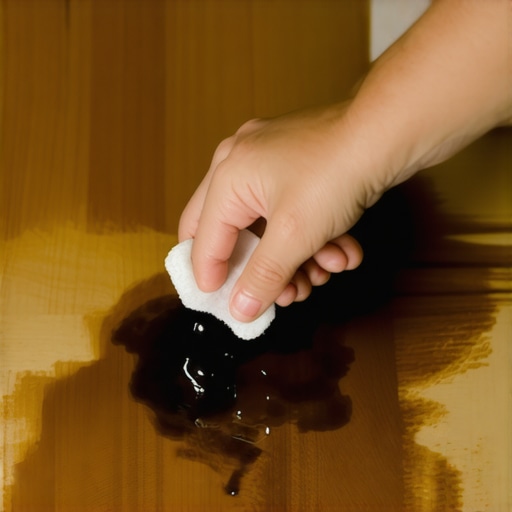
Isopropyl alcohol acts as a solvent that breaks the polymer chains in permanent ink while remaining inert enough to avoid damaging aluminum oxide coatings. Most permanent markers use an alcohol based carrier. By applying ninety percent isopropyl alcohol, you re-liquefy the ink. Removing permanent marker from laminate works because the wear layer is non-porous. This prevents the pigment from sinking into the wood fibers. You must act fast. You must use a white microfiber cloth to avoid dye transfer. Do not pour the alcohol directly on the floor. You dampen the cloth. You dab the spot. You do not scrub. Scrubbing pushes the ink into the texture of the grain. If you scrub, you lose. I have watched homeowners sand through their wear layer trying to get a dot of ink off. It makes my head hurt. Use the chemistry. Let the alcohol do the heavy lifting.
“A floor is only as good as the subfloor beneath it; deflection is the enemy of every joint.” – Master Flooring Axiom
The chemistry of the protective aluminum oxide shield
Laminate floors are coated with aluminum oxide crystals embedded in a melamine resin. This is one of the hardest substances known to the flooring industry. It is designed to resist scratches and impact. However, it is not invincible. The crystalline structure has tiny valleys. Permanent marker ink settles into these valleys. This is why the floor looks stained even after a quick wipe. You are fighting physics. The ink is trapped in the texture. Isopropyl alcohol has a low surface tension. This allows it to flow into those microscopic valleys and lift the pigment. I always tell my apprentices that they are not cleaning a flat surface. They are cleaning a mountain range of protective crystals. If you understand the topography, you understand the cleaning process. You need a solvent that can penetrate without dissolving the resin. Alcohol is the only choice for a pro.
Why your subfloor is lying to you about floor health
Every subfloor has a story. Most of those stories are lies. You look at a plywood deck and think it is flat. It isn’t. Plywood swells at the edges. It crowns in the middle. If you install laminate over these peaks and valleys, the floor will bounce. Every time you step on it, the tongue and groove joint flexes. Over time, that flex creates heat. That heat weakens the melamine bond. Now you have a floor that is vulnerable to every spill. I once saw a floor where the homeowner used a steam mop. The steam went straight through the flexed joints and turned the HDF core into oatmeal. It was a fifteen thousand dollar mistake. All because they didn’t want to spend two hundred dollars on floor patch. It drives me crazy. You have to check the moisture levels too. A concrete slab might look dry, but it could be pumping out vapor like a sauna. Use a calcium chloride test. Do not guess. If the moisture is over three pounds per thousand square feet, you are asking for trouble.
The ghost in the expansion gap
Laminate moves. It is a living thing. It expands in the summer and shrinks in the winter. You need a quarter inch gap at every wall. Most people cover this with baseboard or quarter round. If you don’t leave that gap, the floor will bridge. It will hump up in the middle of the room. When the floor is under that kind of tension, the surface tension of the wear layer changes. It becomes easier to scratch. It becomes harder to clean. I have seen floors pinned against a door casing that buckled so hard they ripped the trim off. You have to let the floor breathe. If you lock it down with heavy cabinets or lack of gaps, you are killing it. I tell people to think of the floor as a giant sheet of ice on a pond. It needs room to shift. If it hits the shore, it breaks. Don’t be the guy who forgets the expansion gap. It is the most basic rule in the NWFA handbook and yet people skip it every single day.
| Material Type | Janka Hardness | Chemical Resistance | Acclimation Time |
|---|---|---|---|
| Solid White Oak | 1360 | Moderate | 7 to 14 Days |
| AC4 Laminate | N/A | High | 48 Hours |
| Engineered Maple | 1450 | Moderate | 3 to 5 Days |
| Luxury Vinyl Plank | N/A | Very High | 24 Hours |
The 1/8 inch that ruins everything in laminate installation
Precision is not a suggestion in this trade. If you have a dip that is one eighth of an inch deep, your floor will fail. It might take a year. It might take two. But the clicking will start. Then the gaps will open. Then the marker ink from your kids’ art project will find its way into the core. I spend more time with a level than I do with a saw. You have to be obsessed with the flat. I use a ten foot straightedge. I mark every low spot with a pencil. I fill it with high strength portland based leveler. I sand the high spots. It is dusty work. It is hard work. But it is the only way to ensure that the floor stays quiet. A quiet floor is a happy floor. If I hear a click when I walk across a finished job, I can’t sleep at night. It means I failed. Most big box installers don’t care. They just want to get to the next house. You have to care. You have to be the one who demands perfection from the slab.
Procedures for deep cleaning beyond ink stains
- Vacuum the floor with a soft brush attachment to remove abrasive grit.
- Mix a solution of one part isopropyl alcohol to three parts distilled water.
- Mist a microfiber pad with the solution until it is slightly damp.
- Wipe in the direction of the floor grain to lift embedded oils.
- Dry the surface immediately with a separate clean microfiber towel.
- Avoid all waxes or oil based soaps that leave a dulling film.
Regional humidity and the behavior of click-lock joints
I live in a place where the humidity swings forty percent between seasons. In the winter, the air is dry as a bone. The wood fibers in the laminate core shrink. The joints get tight. In the summer, the moisture comes back. The floor grows. If you installed that floor in the dead of winter without acclimating it, the summer will destroy it. It will swell and the joints will peak. I have seen floors that looked like a mountain range in July because the installer took the boards straight from a cold truck and clicked them together. You need forty eight hours of acclimation in the room where the floor will live. Set the HVAC to normal living conditions. Don’t leave the boxes in a garage. Don’t leave them in a crawlspace. Bring them into the house. Stack them in a log cabin pattern. Let the air move. This is the structural reality of wood products. They are sponges. Treat them like sponges and you won’t be surprised when they change size.
“Wood flooring is a natural product that responds to its environment; control the environment to control the floor.” – NWFA Professional Guidelines
The structural limits of waterproof claims
While most people want the thickest underlayment, too much cushion actually causes the locking mechanisms on LVP and laminate to snap under pressure. I see this all the time. People buy that thick, squishy foam because it feels good underfoot. It is a trap. That foam allows the floor to move too much. When you walk, the tongue of the board is forced down while the groove of the next board stays up. That shear force will snap the plastic or fiber locking tab. Once that tab is gone, the floor is junk. You want a high density underlayment. It should be thin and firm. It should have a high compression strength. This supports the joint. It protects the structural integrity of the floor. Don’t listen to the salesman who tells you that thicker is better. He has never had to replace a floor because the joints failed. I have. Stick to the specs. Use the underlayment the manufacturer requires. It is usually thin for a reason.
Final thoughts on structural integrity versus cosmetic fixes
Removing a marker stain is easy. Maintaining a floor for twenty years is hard. It requires an understanding of moisture, physics, and chemistry. You have to respect the materials. You have to respect the process. If you use rubbing alcohol to clean a spot, you are using a tool. If you level your subfloor, you are building a foundation. Both are necessary. I will keep my sawdust and my WD-40. I will keep my creaking knees. As long as people keep trying to install floors on top of trash, I will have work. Just remember that the floor is a system. It is not just a pretty surface. It is an engineered product that requires an engineered approach. Keep your alcohol handy for the accidents, but keep your level handier for the installation. That is how you build a floor that lasts long enough for your grandkids to spill ink on it.