
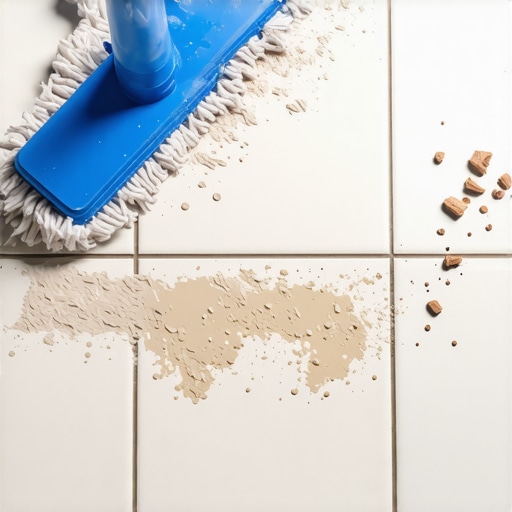
I spent three days on my knees in a high-end bistro last month because the cleaning crew thought a string mop and a bucket of grey water was acceptable maintenance. It was a disaster. The owner called me because his expensive Italian porcelain looked like it had been salvaged from a swamp. Every single grout joint was black with a greasy, sticky film that smelled like old dishwater. I took out my moisture meter and my inspection light to show him the reality of the situation. He wasn’t just cleaning. He was injecting liquid filth into the cement matrix of the floor. Most guys skip the leveling compound and they think the underlayment will hide the dip. They think a mop cleans. It does not. It redistributes. This is the structural reality of flooring that most homeowners and janitors ignore until the floor is ruined beyond repair.
The capillary trap of cementitious grout
Cementitious grout is a porous mineral structure that functions like a hard sponge. When you apply dirty water to the surface, the capillary action of the Portland cement pulls liquefied soil deep into the grout joints. This process creates a permanent stain profile that cannot be removed by simple surface scrubbing or topical cleaners.
The physics of grout is often misunderstood by those who see it as a decorative filler. In reality, grout is a dense network of microscopic voids. When you mix water with dirt on the tile surface and then push it around with a mop, you are creating a slurry. This slurry has a lower surface tension than clean water, allowing it to penetrate the grout more effectively. As the water evaporates, it leaves behind the solids. We are talking about skin cells, kitchen grease, pet dander, and the very soap you thought was cleaning the floor. Over months, these solids build up in layers. The grout does not just get dirty. It becomes a composite material made of cement and filth. This is why your floors look darker every year despite your daily efforts. You are literally building a new, dirtier floor on top of the old one.
“A floor is only as good as the subfloor beneath it; deflection is the enemy of every joint.” – Master Flooring Axiom
Why a string mop is a dirt delivery system
String mops are low-tech tools that lack extraction capabilities. They rely on dilution physics rather than soil removal. When a mop head becomes saturated with contaminants, it begins to deposit particles into the recessed grout lines which act as natural collection troughs for gravity-fed debris.
Think about the mechanics of the traditional mop. You dip it in a bucket of water and soap. The first few square feet of the floor get somewhat clean. But then you dip that same mop back into the bucket. Now, your cleaning solution is a tea made of the dirt you just picked up. By the time you are halfway through the room, you are just painting the floor with grey, bacteria-laden water. The tile is non-porous, so the water sits on top until it finds the grout. Because the grout is lower than the tile surface, the water naturally flows into the joints. It stays there until it dries. If you live in a high-humidity area like New Orleans, that moisture stays trapped even longer, encouraging the growth of microbial colonies within the grout itself. In dry climates like Denver, the water flashes off so fast that the dirt is locked into the cement before you can even think about a second pass.
The chemical failure of universal cleaners
Generic floor cleaners often have a high pH level or contain surfactants that leave a sticky residue. This chemical film acts as a magnet for dust and organic matter. When alkaline residues are not neutralized or rinsed, they chemically bond with the grout and create a re-soiling cycle.
Many people use too much soap. They think more bubbles mean more clean. This is a lie. If the water on your floor is sudsy, you have already used too much. When that soap dries, it remains tacky. Every time you walk across the floor, your shoes deposit micro-particles of dirt that stick to that soap residue. This is particularly dangerous for hardwood floors that abut tiled areas. The residue from the tile cleaning often migrates to the wood, where it can eat through the polyurethane finish or cause the wood to swell at the edges. I have seen 1/8 inch gaps in oak flooring because of the moisture migration from over-mopped tile in the adjacent kitchen. The chemistry of the cleaner must match the material. Acidic cleaners will eat the lime in your grout, making the pores even bigger and more receptive to dirt. It is a losing game unless you understand the molecular bond you are dealing with.
The structural risk of wet mopping laminate
Laminate flooring is constructed with a high-density fiberboard core that is extremely hydrophilic. When excess moisture from a saturated mop reaches the tongue and groove joints, the wood fibers swell. This results in peaking and irreversible edge damage that compromises the wear layer.
Laminate is not vinyl. I have to tell people this every week. While the top layer is a tough photographic film protected by melamine, the core is basically pressed sawdust and glue. When you mop a tile floor next to a laminate floor, the water often seeps under the transition strips. Once that moisture hits the raw edge of the laminate, it is over. The board will expand. It will buckle. The locking mechanisms will snap under the pressure of the expansion. You cannot fix this. You can only replace it. Most homeowners think their waterproof laminate can handle a soaking. It cannot. The term waterproof usually refers to the surface, not the joints or the subfloor. If water gets under that floor, it will sit on the concrete or plywood subfloor and rot it from the bottom up while the top looks fine. I have torn up floors that looked perfect but smelled like a locker room because of the mold growing in the underlayment.
| Material Type | Porosity Rating | Recommended Cleaning Method | Acclimation Time |
|---|---|---|---|
| Porcelain Tile | Low (<0.5%) | Steam or Microfiber Extraction | None |
| Natural Stone | High | pH Neutral Encapsulation | 24-48 Hours |
| Hardwood Floors | Medium | Damp Cloth Only | 7-14 Days |
| Laminate Core | Extreme | Dry Dusting or Minimal Mist | 48 Hours |
Moisture migration and the shower floor crisis
Showers represent the most aggressive moisture environment in the home. Grout in showers is subjected to hydrostatic pressure and constant saturation. If the cleaning protocol involves harsh chemicals without proper rinsing, the waterproof membrane behind the tile can be chemically degraded.
People treat showers like they are indestructible. They aren’t. A shower is a complex engineering assembly of a pre-slope, a liner, a mortar bed, tile, and grout. If you use a mop to clean a walk-in shower floor, you are just pushing the soap scum and body oils into the grout. In a shower, this leads to the dreaded orange or pink slime, which is actually a bacterium called Serratia marcescens. It thrives on the fatty acids found in soap. When you mop your bathroom and then use that same mop in the shower, you are cross-contaminating the entire house. The moisture in the shower stays high, and the grout never truly dries out. This creates a soft spot in the grout joints over time. Eventually, the water finds a way behind the tile, and that is when your subfloor starts to fail. I have seen joists rotted out under a shower because the owner thought a wet mop was enough to keep the grout clean. It was the 1/8 inch gap in the corner that ruined everything.
“Maintenance begins with the removal of dry soil; adding water to un-vacuumed grout creates an abrasive paste.” – Master Flooring Axiom
The physics of the microfiber extraction method
Microfiber technology uses polyester and polyamide fibers that are split at the microscopic level. This creates thousands of tiny hooks that mechanically lift soil out of the grout texture. Unlike cotton loops, microfiber traps the debris within the fabric matrix until it is laundered.
If you want to actually clean a floor, you have to remove the dirt, not just move it. This is why I tell my clients to throw away their string mops. Use a flat-head microfiber system with multiple pads. You use one pad for a small area, then you take it off and put on a clean one. You never put a dirty pad back into your clean water. This is the only way to ensure you are not creating that filthy slurry. For grout, you need a brush that can get into the valley of the joint. The flat surface of a mop will never reach the bottom of a recessed grout line. It just skips over the top, leaving the dirt to settle. It is a matter of geometry and physics. If the tool can’t reach the dirt, the dirt stays. It is that simple. This is why professional cleaners use truck-mounted extraction units. They use high-pressure water to break the soil loose and then immediate vacuum suction to pull it out of the house. Your mop has no vacuum. It has no pressure. It only has you, and you are tired.
Professional Flooring Maintenance Checklist
- Vacuum the floor thoroughly with a HEPA filter to remove 90 percent of dry soil before any liquid touches the surface.
- Use a pH-neutral cleaner specifically formulated for the floor type to avoid stripping sealers or damaging finishes.
- Change the cleaning solution every 100 square feet to prevent the formation of a dirt slurry.
- Utilize a dedicated grout brush for recessed joints to mechanically agitate and lift trapped particles.
- Dry the floor immediately with a clean microfiber cloth to prevent water spots and mineral deposition.
- Inspect expansion gaps at the perimeter to ensure they remain clear of debris and allow for structural movement.
The ghost in the expansion gap
Every floor needs room to breathe. Whether it is hardwood floors, laminate, or large-format tile, the expansion gap is the safety valve of the installation. When you wet mop excessively, the moisture accumulates in these hidden gaps under the baseboards. This leads to mold growth and structural rot that goes undetected for years.
The expansion gap is usually 1/4 to 1/2 inch around the perimeter of the room. It is covered by baseboards or quarter-round molding. When you slap a soaking wet mop against the baseboard, the water wicks behind the wood and into that gap. There is no airflow there. The water just sits. If you have a plywood subfloor, it starts to delaminate. If it is concrete, the moisture can trigger an efflorescence reaction where salts from the concrete rise to the surface and blast the grout right out of the joints. While most people want the thickest underlayment, too much cushion actually causes the locking mechanisms on LVP to snap under pressure, and excess water in the expansion gaps speeds up this failure by softening the material. You have to respect the gap. It is not a trash can for your cleaning water. It is a critical component of the floor’s engineering. Treat it with respect, or the floor will eventually push back, buckling and popping until you’re calling a guy like me to rip it all out and start over.