
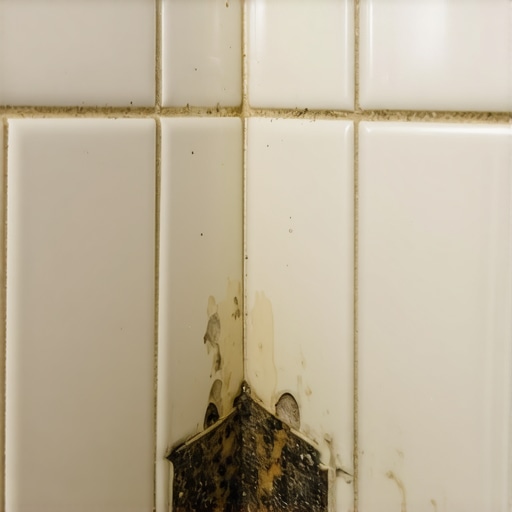
The Hidden Reason Your Shower Grout Always Gets Moldy in One Spot
I spent three days grinding concrete on a job last month just so the floor would not click like a castanet. That job reminded me why I have spent twenty five years obsessed with what happens under the surface. I once walked into a luxury bathroom where the homeowner had spent five thousand dollars on Italian marble, yet a single black patch of mold kept returning in the corner of the bench. They had scrubbed it with bleach, resealed the grout, and even replaced the silicone. Nothing worked. When I finally pulled up one tile, the smell of stagnant swamp water hit me like a physical wall. The subfloor was a sponge. The installer had skipped the pre-slope, meaning the water was not flowing to the drain but was instead hitching a ride on the liner and sitting in a stagnant pool. This is the reality of flooring. It is not about the tile you see, but the physics of the assembly you do not.
The invisible birdbath under your tile
Mold grows in specific spots because waterproofing membranes and sub-slopes fail to move moisture toward the weep holes of the drain. A shower pan requires a minimum slope of one quarter inch per foot. When the liner is installed flat on the subfloor, water permeates the grout and sits indefinitely, creating a biological film that feeds mold growth from the bottom up.
Most people look at a shower floor and see a solid surface. I see a filter. Grout is porous. Even when you seal it, moisture eventually finds its way through. In a properly built shower, that moisture hits a sloped liner and slides down into the drain through small openings called weep holes. If the installer put the liner directly on a flat plywood or concrete subfloor, that water has nowhere to go. It sits there. It rots. It breeds. You can scrub the surface until your hands bleed, but the mold is living in the mortar bed three inches deep. It is a structural failure disguised as a cleaning problem. This is why I tell people that the most important part of their bathroom is the part they will never see in a magazine. If your subfloor is not pitched, your grout is a ticking time bomb. This same logic applies to why you never put hardwood floors in a splash zone. The physics of moisture migration do not care about your aesthetic goals.
The chemistry of capillary action in cementitious grout
Cementitious grout acts as a capillary network that pulls moisture into the mortar bed through molecular tension. Standard sanded grout consists of portland cement and aggregate, which creates a porous matrix. Without a hydrophobic additive or epoxy resin, the grout joints will perpetually hold water, leading to efflorescence and mold colonization.
“A floor is only as good as the subfloor beneath it; deflection is the enemy of every joint.” – Master Flooring Axiom
When we talk about the chemistry of a shower, we have to talk about how water moves. Water is sticky on a molecular level. It wants to cling to surfaces. In a shower with a flat sub-base, the water stays trapped in the sand bed. This creates a localized high humidity zone right under that one tile. This is often why that one spot stays moldy while the rest of the shower is dry. The heat from your shower creates a greenhouse effect under the tile. If you are using laminate or hardwood floors in an adjacent room, this moisture can even migrate through the wall studs via capillary action, warping your baseboards and causing the laminate to peak at the seams. I have seen laminate floors three feet away from a shower door turn into a mountain range because the shower pan was leaking underneath the transition strip. You cannot fight the physics of water with a bigger bottle of Tilex.
Why your waterproofing membrane failed you
Waterproofing failures usually occur at the transition points where the wall board meets the shower base. If the membrane is not integrated with the drain flange, water will bypass the primary barrier and saturate the wood framing. This leads to structural rot and fungal growth that remains hidden until the subfloor loses structural integrity.
| Material Type | Porosity Level | Moisture Resistance | Typical Use Case |
|---|---|---|---|
| Sanded Grout | High | Low | Large tile joints |
| Epoxy Grout | Zero | Maximum | Commercial kitchens |
| Laminate Core | Extreme | Very Low | Dry living areas |
| Hardwood | Medium | Moderate | Climate controlled rooms |
I have seen guys use the wrong thin-set over a high-end membrane and wonder why the tiles are popping off. The chemistry matters. You need a modified thin-set with enough polymer to bond to the plastic of the membrane but not so much that it never cures in the moist environment of a shower. If the bond is weak, water fills the voids between the ridges of the trowel marks. These voids become little underground lakes. Once mold starts growing in those lakes, it is game over. You are looking at a full rip out. People hate hearing that. They want a magic caulk. There is no magic caulk for a lack of mechanical bond. I tell my apprentices that if they do not see the water’s path in their sleep, they have no business holding a trowel. You have to think like a raindrop. Where do you go when the lights are off? If the answer is ‘I sit in a corner on a flat piece of rubber,’ you have failed the house.
The physical limit of moisture movement in thin-set
Thin-set mortar is designed for adhesion, not waterproofing. When moisture remains stagnant in the mortar ridges, it undergoes hydrostatic pressure changes that can degrade the bond. This moisture saturation is the primary catalyst for mold spores to germinate within the grout assembly.
- Check the pre-slope before the liner is installed.
- Ensure weep holes are protected with crushed stone or spacers.
- Use a high quality sealant on all cementitious grout lines.
- Verify that the curb is pitched back into the shower.
- Monitor the humidity in the subfloor before laying any adjacent hardwood.
One contrarian data point that most ‘pros’ ignore is the thickness of the underlayment. While most people want the thickest underlayment to hide imperfections, too much cushion actually causes the locking mechanisms on LVP to snap under pressure. In a bathroom, if you use a thick, squishy underlayment near the shower, the movement of the floor will crack the silicone seal at the floor-to-tub transition. Once that seal cracks, water gets under your ‘waterproof’ vinyl and stays there. Since vinyl is plastic, the water cannot evaporate. It just sits there and rots your plywood subfloor. I have pulled up ‘waterproof’ floors that were only two years old and found the subfloor was so soft I could put a screwdriver through it with one finger. True waterproofing is a system, not a product name on a box. You have to respect the transition. If you are transitioning from tile to hardwood floors, that joint is the most vulnerable spot in your house. If the shower is leaking into the subfloor, your expensive oak planks will be the first thing to tell you by turning black at the edges.
“Deflection is the silent killer of tile; a subfloor must be rigid enough to support the weight without a millimeter of flex.” – TCNA Handbook Standards
The solution to the moldy spot is almost always mechanical. If the shower was built right, that spot would be dry ten minutes after you turn off the water. If it is still wet an hour later, you have a drainage problem, not a cleaning problem. The grout is just the messenger. It is showing you where the water is trapped. You can replace the grout with epoxy, which is non-porous, and that might mask the issue for a few years, but the water will still be trapped under the tile. Eventually, it will find a way out, usually through the ceiling of the room below or by wicking up the drywall and molding your baseboards. I have spent my life’s work trying to convince people that ‘good enough’ is the reason their houses smell like mildew. You do it right, or you do it twice. There is no middle ground when it comes to water management in a structural assembly.