
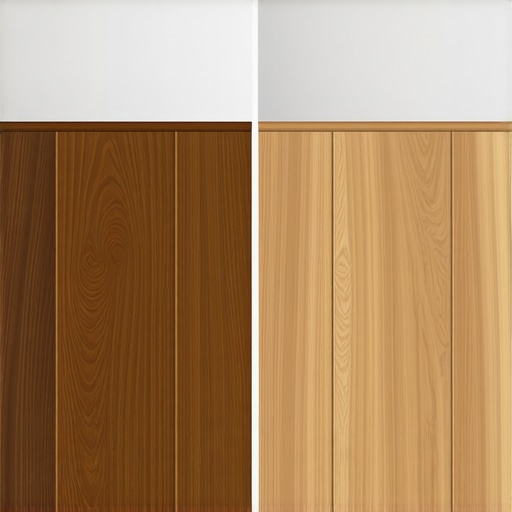
The hidden science of surface reflection and finish durability
I once walked into a house where a $15,000 wide-plank walnut floor was cupping so bad it looked like a potato chip because the installer didn’t check the crawlspace humidity. It was a tragedy of engineering. People get caught up in the look of a floor, but they forget it is a structural component. When you choose a finish, you are choosing the sacrificial layer of your home’s foundation. It is not just about whether you want it to shine or stay dull. It is about how that finish handles the physics of light, the chemistry of cleaning agents, and the mechanical stress of foot traffic. I have spent twenty five years on my knees with a moisture meter and a level, and I can tell you that a floor is only as good as the prep work and the protection you put on top of it. Building a floor is an act of architecture, not interior design. If you ignore the technical specs, you are just waiting for a failure to happen. Let us get into the grit of how these finishes actually work at a molecular level.
The physics of light reflection in matte and glossy finishes
Matte and glossy hardwood finishes differ primarily in their gloss units and how they manipulate light refraction across the wood grain. A high-gloss finish creates a mirror-like surface that reflects light at a consistent angle, while a matte finish uses matting agents like silica to scatter light in multiple directions, hiding surface scratches and subfloor imperfections effectively.
When we talk about gloss, we are talking about the specular reflection of light. A high gloss floor is a flat, smooth film. When light hits it, the rays bounce off at the same angle they arrived. This creates that deep, wet look that many homeowners associate with luxury. However, from a mechanical perspective, that smoothness is a liability. Every microscopic scratch from a grain of sand acts like a canyon on that smooth plain. The light hits the scratch, scatters, and suddenly you have a white mark that sticks out like a sore thumb. Matte finishes are engineered differently. They contain microscopic particles, usually silica or specialized ceramics, that stay suspended in the polyurethane. These particles create a textured surface at the nano-scale. You cannot feel it with your hand, but light feels it. The light hits these particles and bounces everywhere. This is why matte floors look the same from every angle and why they are so much better at hiding the inevitable wear and tear of a living house. I tell my clients that if they have a golden retriever or kids with Tonka trucks, gloss is a death wish for their sanity.
Why your subfloor is lying to you
Subfloor levelness and moisture content are the two most critical factors that determine if a high-gloss hardwood finish will look professional or like a total disaster. A concrete slab or plywood subfloor must be flat within 1/8 inch over a 10 foot span to prevent light deflection from highlighting high spots and dips in the finished wood.
If your subfloor has a dip, a high gloss finish will find it. It acts like a magnifying glass for every mistake made during the framing or the leveling process. When the light hits a floor that is not perfectly flat, the reflection bends. It looks like a funhouse mirror. This is why I spend days grinding concrete and pouring self-leveling underlayment. You can use the most expensive Swedish finish on the market, but if the floor underneath has a 3/16 inch wave, it will look cheap. Matte finishes are more forgiving because they do not rely on that consistent reflection. They absorb the light, which masks the slight variations in the subfloor. But do not think that means you can skip the prep. A bad subfloor will eventually cause the tongue and groove joints to rub together, leading to squeaks and eventual mechanical failure of the wood itself. You need to use a pin-style moisture meter to check the wood and a calcium chloride test for the concrete. If those numbers are off, the finish choice is irrelevant because the floor will cup or crown within six months.
“A floor is only as good as the subfloor beneath it; deflection is the enemy of every joint.” – Master Flooring Axiom
The chemistry of polyurethane and light absorption
Polyurethane finishes for hardwood flooring come in oil-based and waterborne formulas, each with different solids content and curing times. The sheen level is determined by the concentration of matting agents, which affects the clarity of the wood species and the durability of the wear layer over time.
The chemistry of these coatings is fascinating. Oil-modified polyurethane has been the industry standard for decades. It is thick, it smells like a refinery, and it ambers over time. That ambering gives white oak a warm, golden glow, but it can make gray-stained floors look muddy. Waterborne finishes have come a long way. They are now harder and clearer than oil, thanks to advanced cross-linking technology. When a waterborne finish cures, the molecules link together in a dense grid that resists chemicals and abrasion better than the old-school stuff. The matte version of these finishes has a high volume of solids. When the water evaporates, those solids settle into a protective shield. High gloss finishes have fewer matting agents, meaning they are mostly pure resin. This creates a harder, more brittle shell. In a museum, that is great. In a kitchen where you might drop a cast iron skillet, it is a recipe for a shatter-mark. I prefer a satin or matte waterborne finish for 90 percent of my jobs because the molecular bond is tighter and it does not turn yellow after three years of UV exposure from the windows.
The grit sequence that determines your sheen
The sanding process is the foundation of a high-quality floor finish, requiring a grit sequence that starts at 36 grit and moves up to 120 grit. High-gloss finishes require a more meticulous sanding pass to remove every swirl mark and chatter line, as the sheen will highlight any abrasion left by the floor sander.
If you want a gloss floor, your sanding game has to be perfect. I start with a big belt sander, usually at 36 or 40 grit to flatten the boards. Then I move to 60, then 80. If I am going for a high gloss, I cannot stop at 100. I have to go to 120 and then hit it with a multi-disc sander or a buffer to get it glass-smooth. If there is even one tiny swirl mark from a piece of 80-grit sandpaper that got stuck, the gloss finish will find it and light it up like a neon sign. Matte finishes are a bit more industrial. They still need a good sand, but they don’t punish you for the microscopic imperfections. You also have to consider the species. A closed-grain wood like Maple is incredibly hard to sand for gloss because it does not absorb the finish evenly. Open-grain wood like Red Oak is more forgiving because the finish sinks into the pores. I always tell people that if they want that piano-finish look, they need to be prepared to pay for the extra labor hours it takes to get the wood ready for it.
| Sheen Type | Gloss Units (GU) | Best Use Case | Maintenance Level |
|---|---|---|---|
| High Gloss | 70+ GU | Formal Dining Rooms | Very High |
| Semi-Gloss | 45-55 GU | Traditional Homes | High |
| Satin | 25-35 GU | Modern Families | Moderate |
| Matte | 10-20 GU | High Traffic / Pets | Low |
| Extra Matte | Under 10 GU | Ultra-Modern / Rustic | Very Low |
Maintenance realities for high traffic households
Hardwood floor maintenance varies significantly between matte and glossy sheens, with glossy floors showing footprints, dust, and pet hair almost immediately. Matte finishes offer a low-maintenance alternative that hides daily wear and requires less frequent buffing or recoating to maintain its aesthetic appeal.
Let us talk about the reality of living on these surfaces. A high gloss floor is a part-time job. If you walk across it in bare feet, the oils from your skin will leave visible prints. If the sun hits it at a 45-degree angle in the afternoon, you will see every speck of dust that has settled since you vacuumed that morning. It is a constant battle against entropy. Matte floors are the opposite. They are the working man’s finish. You can go a week without sweeping and it still looks decent. When it comes to cleaning, you have to be careful. You cannot just use any mop. Too much water will get into the seams and cause the wood to swell, which ruins the finish at the edges. I always recommend a microfiber mop and a pH-neutral cleaner. Never use wax or oil soaps on a modern polyurethane floor. It creates a film that makes the floor look cloudy, and once that film is there, you cannot just wash it off. You have to chemically strip it or sand the whole floor down to bare wood and start over. I have seen more floors ruined by bad cleaning products than by actual foot traffic.
The Janka scale and wood density variables
The Janka Hardness Scale measures the dent resistance of wood species, which influences how a hardwood finish will perform over time. Denser woods like Brazilian Cherry or Hickory provide a more stable base for brittle high-gloss coatings, whereas softer woods like Pine or Walnut are better suited for flexible matte finishes.
Understanding the Janka scale is vital for choosing your finish. If you put a high gloss finish on a soft wood like Black Walnut (which sits around 1010 on the Janka scale), you are asking for trouble. The wood is soft enough that it will dent under the pressure of a high heel or a dropped can of soup. When the wood dents, the brittle high-gloss finish can crack or delaminate from the surface, creating a white spot where the finish has pulled away from the wood fibers. Hickory, on the other hand, is up at 1820. It is like iron. It can handle a harder finish because the wood itself does not give as much under pressure. But even with Hickory, you have to watch out for the expansion and contraction. Wood is a living material. It breathes. It expands in the summer and shrinks in the winter. A matte finish usually has a bit more elasticity, allowing it to move with the wood without cracking at the joints. This is why I often steer people toward engineered hardwood with a thick wear layer if they live in places with high humidity swings. The cross-ply construction makes the wood more stable, which protects the integrity of the finish regardless of the sheen.
- Check the moisture content of the subfloor and the wood planks.
- Acclimate the wood to the room’s temperature for at least 72 hours.
- Ensure the HVAC system is running at normal living conditions.
- Vacuum and tack-rag the floor to remove every speck of dust.
- Apply the finish in thin, even coats to avoid puddling or bubbling.
Atmospheric pressure and the curing process
The curing process of hardwood floor finishes is heavily influenced by ambient humidity and temperature, affecting the final sheen and surface hardness. High-gloss polyurethane requires a dust-free environment for a longer period during the drying phase to ensure a flawless reflection without embedded contaminants.
I have seen guys try to finish a floor with the windows open in July. That is a mistake you only make once. The humidity slows down the evaporation of the solvents, which means the finish stays tacky for longer. The longer it is tacky, the more time there is for dust, dog hair, or insects to land in your perfect gloss finish and get stuck there forever. Matte finishes dry a bit faster because they have a higher solids-to-solvent ratio. But temperature is still an issue. If it is too hot, the finish will skin over the top while the bottom is still wet. This causes bubbles or a finish defect we call orange peel. It looks exactly like the skin of an orange. If you get orange peel on a matte floor, you might be able to live with it. If you get it on a gloss floor, you are sanding it back to the beginning. You need to control the environment. Turn off the fans, close the vents, and let the air settle before you pour that final coat. The molecular cross-linking that happens in the first 48 hours is what determines the lifetime of the floor. If you walk on it too soon with socks, you will dull the sheen. If you walk on it with shoes, you will dent the finish before it has reached its full Rockwell hardness. Give it time. A floor is a slow-cooked meal, not a microwave snack.
The final verdict for your renovation
Choosing between matte and glossy is not just a matter of taste. It is a matter of lifestyle and technical reality. High gloss is for the meticulous homeowner who wants a showpiece and is willing to put in the work to keep it pristine. Matte is for the real world, where people live, play, and occasionally spill things. If you have done your subfloor work, checked your moisture levels, and picked a high-quality waterborne finish, either choice will last for years. Just remember that the floor is the foundation of your home’s interior. Treat it with the respect that structural engineering deserves. Do not let a cheap installer talk you into skipping the sanding grits or ignoring the humidity. Your floor is only as good as the technician who stands on it. Take your time, do the math, and choose the sheen that fits the way you actually live, not just the way you want your house to look in a magazine photo.