
Natural Ways To Clean Paint From Your Laminate Surfaces
Most homeowners treat their flooring like a backdrop for their furniture, but a floor is a performance surface that requires structural respect. I spent three days grinding concrete on a job last month just so the floor would not click like a castanet. The subfloor was a mess of high spots and valleys that the previous installer tried to hide with a thick underlayment. It did not work. This same lack of technical understanding leads people to ruin their laminate when they see a few drops of paint. They reach for the harsh solvents or the steel wool, and they end up melting the wear layer or scratching the finish into oblivion. My hands smell like WD-40 and oak dust from decades of fixing these mistakes. You do not need a chemistry set to clean your floor. You need to understand the physics of the bond between the paint and the melamine resin.
The physical bond of paint on melamine
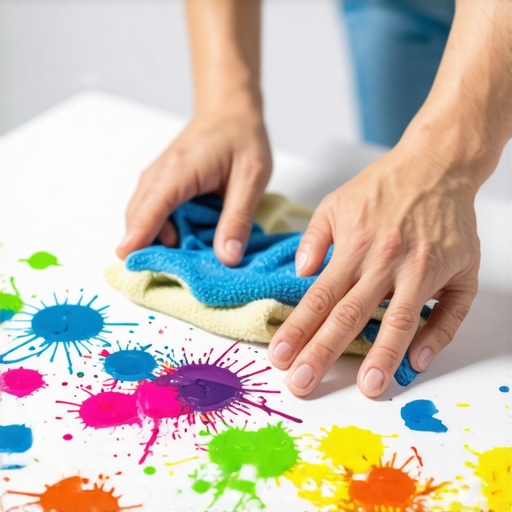
To remove paint splatters from laminate without chemicals, use mechanical force with a plastic scraper or apply indirect heat with a hair dryer to soften the bond. Warm water mixed with white vinegar acts as a mild surfactant to lift the edges of the paint without damaging the melamine wear layer. This process relies on breaking the surface tension rather than dissolving the polymer. Laminate is not wood. It is a high density fiberboard core topped with a photographic image and a protective layer of melamine-formaldehyde resin. This resin is a thermoset plastic cured under intense heat and pressure. It has a very low surface energy. When paint falls on it, the paint cannot soak in like it would on raw oak or pine. The paint sits on the surface, held there by mechanical adhesion and Van der Waals forces. If you understand that the paint is merely resting on top of a plastic shield, you realize that you do not need to dissolve the paint. You just need to break the physical connection.
Why your subfloor is lying to you
The stability of your laminate surface depends entirely on the flatness of what is underneath it. If your subfloor has a dip, the laminate planks will flex every time you step on them. This deflection is the enemy of every joint and every cleaning attempt. When you are trying to scrape paint off a floor that has a void beneath it, the plank will bounce. This bounce makes it nearly impossible to get the right angle with your scraper. You might find yourself pushing harder to compensate for the flex, which is exactly how you gouge the wear layer. I always tell my clients that a floor is only as good as the preparation. If you did not level the slab to within three sixteenths of an inch over a ten foot radius, your floor is technically failing before you even move the furniture in. This lack of support makes the surface more vulnerable to impact damage during cleaning. You have to be mindful of the structural integrity before you start scrubbing at a spot.
“A floor is only as good as the subfloor beneath it; deflection is the enemy of every joint.” – Master Flooring Axiom
Thermal agitation as a mechanical solution
Using indirect heat from a hair dryer is the safest way to weaken the molecular bond of dried latex paint splatters. By increasing the temperature of the paint, you cause the polymers to expand and soften, making them more malleable for a plastic putty knife. This method avoids the use of volatile organic compounds and protects the integrity of the HDF core. Do not use a high powered heat gun meant for stripping lead paint from a Victorian porch. Those guns can reach temperatures that will liquefy the melamine on your floor. Use a standard hair dryer on a medium setting. Hold it about six inches away from the splatter and move it in a circular motion. You are looking for the paint to lose its brittle quality. Once it becomes slightly rubbery, you can get a plastic edge under the corner. The physics here is simple. The paint has a different coefficient of thermal expansion than the laminate. As they heat at different rates, the bond between them begins to shear. This is the moment you strike with your plastic tool.
The danger of liquid penetration in HDF cores
When cleaning paint splatters, you must minimize the amount of liquid used to prevent moisture intrusion into the tongue and groove joints. Laminate floors are highly susceptible to edge swelling when water sits on the surface for more than a few minutes. If the High Density Fiberboard absorbs water, the edges will peak and the floor will be permanently ruined. This is why I hate the bucket and mop approach to paint removal. People think they can just soak the paint until it softens. All they are doing is feeding the HDF core. Water travels through capillary action. It finds the tiny gaps between the planks and gets sucked in. Once it is in, it has nowhere to go. The core swells, the laminate image peels, and you are left with a floor that looks like a topographical map. Use a damp microfiber cloth, not a dripping one. If you are using a vinegar and water solution, spray the cloth, not the floor. Your goal is to keep the moisture on top of the melamine and away from the seams.
A comparison of paint types on synthetic floors
| Paint Type | Bond Strength | Removal Tool | Risk Level |
|---|---|---|---|
| Latex Water-Based | Moderate | Plastic Scraper | Low |
| Acrylic Artist Paint | Low | Damp Cloth | Very Low |
| Oil-Based Enamel | High | Heat + Scraper | Moderate |
| Spray Paint (Aerosol) | High | Plastic Scraper + Alcohol | Moderate |
Not all paints are created equal when they hit your floor. Latex paint is basically a liquid plastic that hardens as the water evaporates. It is relatively easy to pop off because it does not form a chemical bond with the melamine. Oil-based paint is a different animal. It cures through oxidation, creating a much tougher film. If you have oil-based splatters, you are going to have to work harder. You might need to use the heat method several times. In the humid climates of the Gulf Coast, the moisture in the air can actually slow the drying time of these splatters, which is a blessing in disguise for the cleaner. In a dry place like Phoenix, the paint will turn into a rock within hours. Regardless of the type, the approach remains the same. You want to use the least amount of force and the least amount of liquid possible.
“Laminate flooring must be treated as a floating system where surface integrity dictates long term performance.” – NWFA Flooring Standards
Mechanical force without surface abrasion
The plastic putty knife is the most effective tool for mechanical removal because its Shore D hardness is lower than that of the melamine wear layer. This ensures that the tool will wear down or flex before it can scratch the floor. Always maintain a forty-five degree angle to the surface to maximize shearing force against the paint splatter. I have seen guys try to use a metal razor blade. That is a death sentence for a floor. One slip and you have a silver gouge that you can never fix. A plastic scraper is sacrificial. It will blunt its edge on the paint, which is exactly what you want. If the paint is stubborn, don’t press harder. Instead, use a series of light taps with the heel of your hand against the handle of the scraper. This creates a vibration that can help pop the bond. It is the same principle I use when I am trying to seat a stubborn plank during an installation. You are using physics, not brute strength. This is especially important near transitions to other materials like grout or hardwood floors where the height change might make your scraping angle awkward.
The essential checklist for chemical free cleaning
- Check the floor for any loose planks or deflection before applying pressure.
- Use a plastic putty knife with a clean, sharp edge to prevent scratching.
- A hair dryer for softening oil-based or old latex splatters.
- White vinegar mixed with warm water in a one-to-four ratio.
- Microfiber towels that do not leave lint in the textured grain of the laminate.
- A vacuum with a brush attachment to remove debris before scraping.
Proper maintenance of laminate wear layers
The AC rating of your laminate determines how much abrasion the wear layer can handle before the decorative image is exposed. Most residential floors are AC3, which is tough but not invincible. To maintain this layer, avoid using steam mops or abrasive pads which can cause micro-scratching and dull the finish over time. While most people want the thickest underlayment, too much cushion actually causes the locking mechanisms on LVP or laminate to snap under pressure. This relates back to the paint removal process. If the floor is stable, the cleaning is easy. If the floor is spongy, everything is harder. When you are finished removing the paint, wipe the area down with a dry cloth immediately. You want to ensure no residue is left behind. Even a small amount of vinegar solution can leave a streak if left to air dry. Laminate is a fantastic product if you treat it with respect. It is durable, it looks great, and it can last for twenty years if you don’t drown it in water or melt it with chemicals. Keep it simple, keep it dry, and keep your metal tools in the toolbox. That is the only way to keep your floor looking like it did the day I put it in.