
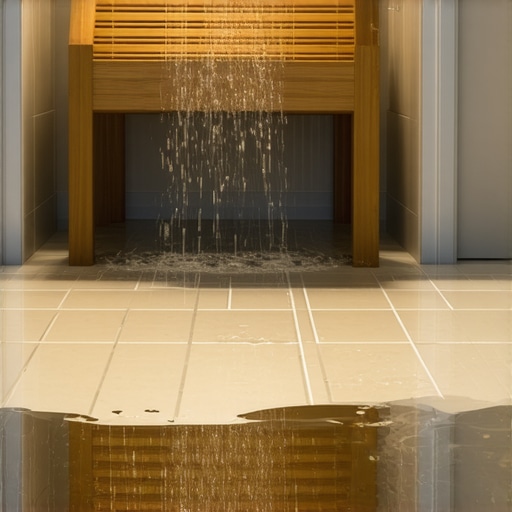
You probably think that the tile in your shower is the thing that keeps the water out of your house. That is your first mistake. I have spent over twenty five years on my knees with a moisture meter and a grinding wheel, and I have seen more rotted subfloors than most people have seen sunsets. Most guys skip the leveling compound when they are prepping a room. They think the underlayment will hide the dip. It won’t. I spent three days grinding concrete on a job last month just so the floor wouldn’t click like a castanet. When it comes to shower benches, that same level of negligence leads to structural failure. A shower bench is not just a seat, it is a complex engineering assembly that must manage gravity, hydrostatic pressure, and capillary action. When a bench leaks, it is almost never the fault of the tile. It is a failure of the waterproofing system or the structural slope beneath it. I have seen fifteen thousand dollar wide-plank walnut floors in adjacent rooms cup like potato chips because a shower bench in the master suite was wicking water directly into the joist system. The smell of mold and wet sawdust is something you never forget once it gets under your fingernails. We are going to look at the physics of why your shower is failing and what you need to do to stop the rot before your floor collapses into the crawlspace.
The physics of water migration in saturated environments
A leaking shower bench occurs when water penetrates the grout and tile layer and encounters a flat or improperly sloped substrate where it pools and eventually finds a breach in the waterproofing membrane. Gravity forces water downward through the porous cementitious grout. If the bench top is perfectly level rather than sloped toward the drain at a minimum of a quarter inch per foot, the water will sit against the corner joints. Eventually, the hydrostatic pressure or simple capillary action will pull that water through microscopic pinholes in the waterproofing. Tile is a finish, not a barrier. Every grout joint is a highway for moisture. Hardwood floors in the hallway will often show the first signs of a shower leak by turning black at the edges as the moisture travels through the subfloor via capillary action along the plywood grains. You cannot trust a builder who says the grout is sealed. Sealant wears off. Physics is forever.
“A floor is only as good as the subfloor beneath it; deflection is the enemy of every joint.” – Master Flooring Axiom
Why your grout is a sieve not a shield
Grout is a cement-based product that is naturally porous and designed to fill gaps between tiles rather than act as a primary water barrier. Even if you use high-performance epoxy grout, the transition points between the bench and the wall are subject to structural movement and vibration. When these joints crack, water enters the wall cavity. I have seen homeowners spend thousands on exotic stone only to have it ruined because they did not understand the chemistry of their substrate. Laminate flooring in the adjacent bedroom will often swell at the seams when a shower bench is failing because the water travels under the baseboards. The vapor pressure builds up behind the tile and pushes moisture into the wood framing. If you are not using a topical waterproofing membrane like a sheet system or a high-quality liquid-applied elastomeric, you are essentially building a swimming pool out of cardboard. Cement board is not waterproof. It is water-stable, meaning it will not fall apart when wet, but it will let water pass right through it like a sponge.
The structural cost of a flat bench top
The primary cause of bench failure is the lack of a proper pitch which allows standing water to sit against the change of plane joints until the sealant fails. In the world of the TCNA standards, every horizontal surface in a wet area must have a slope. If I walk onto a job and see a level on a bench top and the bubble is dead center, I know that floor is going to fail within five years. I have pulled up hardwood floors that were buckling because a shower bench was leaking three rooms away. The water follows the subfloor seams. [IMAGE_PLACEHOLDER_1] Below is a comparison of how different materials handle the moisture loads found in a typical shower environment.
| Material Name | Water Absorption Rate | Structural Density | Common Failure Point |
|---|---|---|---|
| Standard OSB | Very High | Moderate | Swelling at 12 percent moisture |
| Marine Grade Plywood | Low | High | Delamination under standing water |
| Cement Backer Board | High | High | Wicking moisture into wall studs |
| Extruded Polystyrene | Zero | Low | Compression under heavy stone |
How capillary action bypasses your thinset
Capillary action is the ability of water to flow into narrow spaces without the assistance of gravity and often in opposition to it by wicking through mortar. When you set tile on a bench, the thinset creates a series of channels. If those channels are not fully collapsed by back-buttering the tile, they act like straws. They suck water from the grout lines and pull it toward the wall studs. I have seen grout lines that looked perfect while the 2×4 studs behind them were so soft you could poke a screwdriver through them. This is why I am a stickler for the NWFA guidelines even when I am doing tile work, because the moisture from the tile will always find its way to the wood. You have to break the capillary bond by using a waterproof bond coat. Most guys are too lazy to do the extra step. They want to get in and get out. They do not care if your subfloor turns to mush after the warranty expires.
“Moisture management is the single most important factor in assembly longevity.” – TCNA Handbook Logic
The truth about liquid waterproofing membranes
Liquid waterproofing membranes are only effective if they are applied at the correct dry mil thickness and cover every square inch of the substrate without pinholes. Many installers do a single thin coat that looks pretty but is functionally useless. You need to measure the thickness. It is like painting a car, if you miss a spot, the rust starts there. In showers, that rust is mold. I have seen showers where the installer used a cheap liquid membrane and did not reinforce the corners with fabric. The house settled, the corner cracked, and the water started its journey to the subfloor. Once water hits a plywood subfloor, it is game over. The plywood expands, the tile above it cracks, and the leak accelerates. It is a feedback loop of destruction. I always tell people to skip the fancy shower head and spend that money on a better waterproofing system. You cannot see the membrane once the tile is down, but it is the only thing standing between you and a ten thousand dollar repair bill.
- Verify the pitch of the bench with a digital level before tiling.
- Ensure all changes of plane are filled with 100 percent silicone sealant.
- Check for a continuous waterproofing membrane from the floor to the bench.
- Perform a flood test of the shower pan and bench before installing tile.
- Inspect the weep holes in the drain for blockages.
Fixing the failure at the subfloor level
Repairing a leaking shower bench requires removing the tile and the substrate to inspect the wooden subfloor for rot and structural compromise. You cannot just patch a leak from the outside. If the wood is black, it has to come out. I have seen guys try to bleach the rot and cover it back up. That is a crime in my book. You need to replace the damaged joists and subfloor panels. If you have hardwood floors nearby, you need to check them for moisture with a pin-type meter. If the wood is above 12 percent moisture, it needs to dry out before you do any repairs. Sometimes you have to set up industrial dehumidifiers for a week just to get the house back to a baseline. Flooring is a science of moisture control. Whether it is laminate or luxury vinyl plank, the subfloor must be dry, flat, and stable. A leaking shower bench ruins all three of those requirements. Do not let a contractor tell you that a little water is fine. It is never fine. It is the beginning of the end for your home structural integrity.
{“@context”:”https://schema.org”,”@type”:”Article”,”headline”:”Why Your Shower Bench is Leaking Into the Subfloor”,”author”:{“@type”:”Person”,”name”:”Master Floor Architect”},”description”:”An expert guide on the structural failures of shower benches and how they cause subfloor rot and flooring damage.”,”articleSection”:”Flooring Engineering”}