
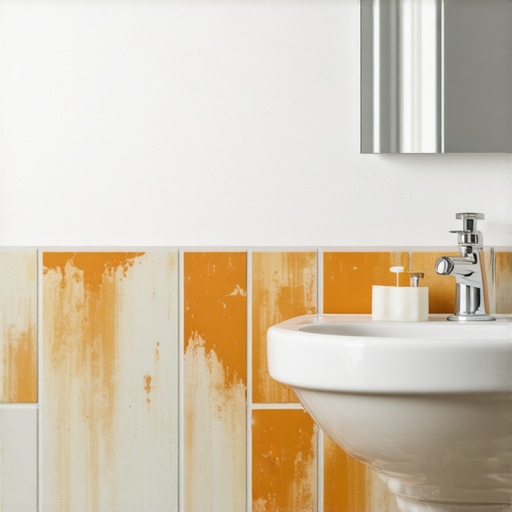
Why Your Grout is Turning Orange in the Guest Bathroom
I spent three days grinding concrete on a job last month just so the floor wouldn’t click like a castanet, and that is when the homeowner asked me to look at their guest bathroom. The grout lines were a vibrant, sickly orange. Most guys would just tell you to scrub it with bleach and walk away, but I have seen this movie before. That orange stain is not just a cosmetic fluke. It is a sign that the chemistry of your home is out of balance. I have spent 25 years on my knees with a moisture meter and a level, and I can tell you that a floor is a performance surface, not a decoration. When your guest bathroom grout starts looking like it was soaked in carrot juice, you are looking at a structural and chemical failure. Most people skip the leveling compound and they definitely skip the high grade sealers. They think the underlayment will hide the dip or the sealer is just an upsell. It is not. That 1/8 inch dip in the subfloor or the cheap sealer is exactly what leads to standing moisture and bacterial blooms.
The orange stain mystery in the guest bathroom
Orange grout is typically caused by iron oxidation from water or the growth of Serratia marcescens bacteria in humid environments. This phenomenon occurs when minerals in the water supply react with the cementitious components of the grout or when airborne bacteria find a porous, damp surface to colonize. In guest bathrooms, where water often sits stagnant in the pipes or the air remains humid due to poor ventilation, these issues are magnified. You are not just looking at dirt. You are looking at a chemical reaction. Grout is basically a hard sponge. If you do not treat it like a technical component of the flooring assembly, it will fail you every single time. I despise builder grade installations because they use the cheapest sanded grout possible, which has the density of a cracker and the porosity of a sponge.
“A floor is only as good as the subfloor beneath it; deflection is the enemy of every joint.” – Master Flooring Axiom
The microscopic war inside your grout lines
Grout is a porous cementitious material that acts as a capillary system for moisture and minerals to move through the floor. When you look at grout under a microscope, you see a network of voids and channels. These channels are created during the hydration process of the Portland cement. If the installer used too much water in the mix, those channels are even larger. This is why I am a stickler for the mix ratio. Too much water means more pores. More pores mean more places for iron and bacteria to hide. The physics of the installation dictate that any liquid sitting on that surface will be pulled into the grout matrix. Once inside, the liquid evaporates and leaves behind whatever was dissolved in it. If your water has iron, that iron stays behind and oxidizes when it hits the air. It is like rust growing inside your floor. This is not a problem you can just wipe away because the stain is embedded three millimeters deep into the cement structure.
Why minerals in your water supply hate your floors
Iron and manganese in the local water supply are the primary culprits for inorganic orange staining in bathroom grout. In many regions, especially where well water is common, ferrous iron is dissolved in the water. When this water is sprayed on the shower floor, the iron reacts with oxygen to become ferric iron, which is the technical name for rust. This rust particles are microscopic and they wedge themselves into the pores of the grout. Over time, the concentration builds up until the entire line looks orange. Manganese can also contribute, though it usually leaves a darker, more brownish tint. If you live in an area with high mineral content, your grout is essentially acting as a filter for your water supply. This is a battle you will lose unless you address the water chemistry or use an epoxy grout that has zero porosity. I have seen solid oak floors ruined by the same moisture issues when homeowners try to transition from a wet bathroom to a hallway without a proper moisture barrier.
The pink bacteria masquerading as rust
Serratia marcescens is a common bacterium that produces a red or orange pigment and thrives on the fatty substances found in soaps. This is the most common cause of orange or pink slime in guest bathrooms. The guest bathroom is the perfect breeding ground because it usually has less airflow and the water in the traps stays still for weeks. This bacterium is airborne and loves the damp, dark corners of a shower stall. It feeds on the phosphorus and fatty acids in your shampoo and body wash. As it grows, it secretes a pigment called prodigiosin. This pigment is what gives it that bright orange hue. If you are not scrubbing your grout with a pH neutral cleaner regularly, you are giving this colony a permanent home. Unlike iron stains, this is a biological film. It is slippery and can actually degrade the grout over time if left unchecked. Most homeowners think their grout is rusting when they are actually dealing with a bacterial colony that is thriving on their choice of soap.
| Source of Stain | Chemical or Biological Agent | Visual Identification | Primary Fix |
|---|---|---|---|
| Well Water | Ferrous Iron Oxidation | Uniform rusty orange tint | Water Softener or Iron Filter |
| Soap Scum | Serratia Marcescens Bacteria | Pink or bright orange slime | Improved Ventilation and Cleaning |
| Subfloor Wicking | Alkali and Efflorescence | White crust with orange edges | Moisture Barrier Installation |
| Cheap Sealers | Acrylic Yellowing | Patchy amber or orange spots | Stripping and Resealing |
How subfloor moisture feeds the orange monster
Moisture wicking from a damp subfloor can carry minerals upward through the grout lines in a process called capillary action. I have walked into houses where the $15,000 wide plank walnut floor was cupping so bad it looked like a potato chip, and the bathroom next to it had orange grout. Both problems came from the same place. The crawlspace or the concrete slab was saturated with moisture. When moisture moves from the bottom up, it carries salts and minerals. When it reaches the surface of the grout, the water evaporates and leaves the minerals behind. This is called efflorescence, but when iron is involved, it turns orange. If your guest bathroom is on a slab, you need to check the Moisture Vapor Emission Rate. If the slab is wet, your grout will never stay clean. It is like trying to paint a moving car. You have to stop the moisture at the source before you can ever hope to have a clean floor. I have spent days grinding concrete just to get to a fresh surface that would actually bond with a moisture mitigator.
The failure of standard builder sealers
Inexpensive water based sealers used by many contractors provide little protection against the deep penetration of minerals and bacteria. Most builders use a cheap spray on sealer that lasts about six months. Once that sealer wears off, the grout is wide open. A real sealer should be a high solids, solvent based penetrating sealer that fills the pores of the cement. When the sealer fails, the orange stains can become permanent because they are no longer on the surface. They are part of the grout itself. I have seen homeowners try to fix this by layering more sealer on top, but all they do is trap the orange stain underneath a new layer of plastic. It is a disaster. You have to strip the old sealer, deep clean the minerals out with an acid based cleaner, and then apply a professional grade product. Most people think waterproof LVP means they do not have to worry about moisture, but if that LVP is next to a leaking shower with orange grout, the moisture will eventually find the subfloor and rot the transitions.
Chemical reactions with improper cleaners
Using bleach or highly acidic cleaners on a regular basis can erode the grout and make it more susceptible to future staining. Bleach is a favorite for people seeing orange stains, but bleach is a high pH chemical that can actually damage the structure of the grout. It kills the bacteria but leaves the pores even more open than before. Acidic cleaners are worse. They dissolve the calcium carbonate in the grout. This creates a rougher surface that traps even more iron and bacteria. It is a vicious cycle. You scrub the orange away, you damage the grout, and the orange comes back faster and darker next time. You need to use a pH neutral cleaner that is designed for stone and tile. If you must use a heavy hitter, you have to follow it up with a neutralizing rinse. I have seen guys ruin a brand new tile job by using the wrong cleanup acid, turning the whole floor a weird shade of pumpkin before the owner even moved in.
“Cementitious grout is a living material in the sense that it reacts to its environment; treat it with the wrong chemicals and it will perish.” – TCNA Guidelines Analysis
Structural fixes for porous bathroom surfaces
If the orange staining is permanent, the most effective structural solutions include grout color sealing or replacement with epoxy grout. Color sealing is a process where a specialized urethane coating is applied to the grout lines. This coating is non porous and contains pigments that hide the existing stains. It effectively turns your grout into a plastic-like surface that minerals cannot penetrate. If the grout is structurally sound, this is the way to go. If the grout is crumbling or the orange is coming from the subfloor, you have to rip it out. I recommend epoxy grout for guest bathrooms that see heavy mineral water. Epoxy grout is made from resins and fillers. It does not have the pores that Portland cement grout has. Water cannot get in. Bacteria cannot grow. It is harder to install and costs three times as much, but you will never see an orange stain again. I despise the cheap way out, and epoxy is the only way to ensure a lifetime of clean lines.
Maintenance steps to save your shower floors
- Install a high CFM exhaust fan and run it for at least thirty minutes after every shower to drop the humidity.
- Wipe down the shower floor with a squeegee to prevent standing water from depositing minerals into the grout.
- Apply a high quality solvent based penetrating sealer every twelve to eighteen months depending on usage.
- Test your home water supply for iron and install a filtration system if levels exceed 0.3 ppm.
- Switch to synthetic soaps or body washes that do not contain the fatty acids that Serratia marcescens feeds on.
The guest bathroom is often the most neglected part of the house, but it is the one that guests see first. If you have orange grout, do not just reach for the bleach. Check your water. Check your sealer. Check your subfloor. If you treat the floor as a structural system, you can solve the problem for good. I have spent my career making sure the floors I lay stay flat and clean. It takes more work and better materials, but the result is a floor that doesn’t just look good for a week, it looks good for a generation. Stop letting builder grade materials ruin your home. Get a moisture meter, get a real sealer, and fix the chemistry of your bathroom. The orange monster is not unbeatable, you just have to be smarter than the minerals in your pipes.