
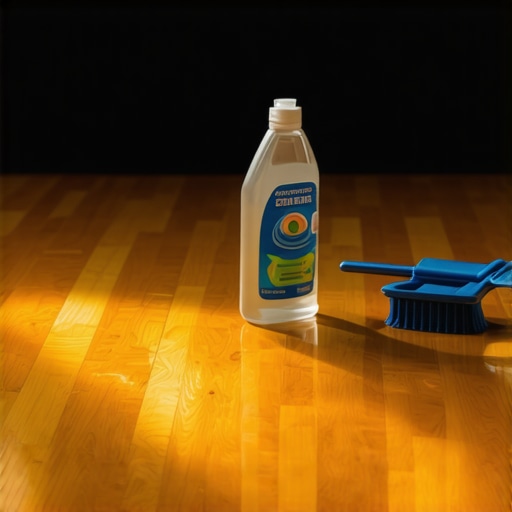
The oily film in your kitchen
Dish soap is engineered to strip animal fats and grease from ceramic or stainless steel surfaces, but its chemical composition makes it a disaster for laminate flooring. When you apply surfactants to a melamine wear layer, they leave behind a molecular residue that manifests as stubborn streaks. These streaks are not just dirt, they are a semi-permanent chemical film. Most guys skip the leveling compound. They think the underlayment will hide the dip. It won’t. I spent three days grinding concrete on a job last month just so the floor wouldn’t click like a castanet. That job taught me that if the foundation is off, the finish never stands a chance. You see it every day. A homeowner spends thousands on a high-end floating floor and then ruins the visual appeal with a ninety-nine cent bottle of lemon-scented degreaser. The smell of sawdust and WD-40 is my morning coffee. I have seen floors that looked like they were coated in wax because of five years of improper cleaning. Laminate is a specific beast. It is a photograph of wood sandwiched between a high-density fiberboard core and a clear resin top. That resin is non-porous. Unlike hardwood floors, which can absorb some liquids, laminate rejects them. When you use dish soap, the water evaporates but the surfactants remain. They sit there. They attract dust. They catch the light from your windows and look like a hazy mess. It will buckle. It will fail. You cannot treat a synthetic performance surface like a dinner plate. Every footstep on a soapy laminate floor presses that residue deeper into the micro-texture of the grain. It is a structural engineering nightmare disguised as a cleaning routine.
The molecular failure of household surfactants
Surfactants in dish soap work by lowering the surface tension of water, allowing it to emulsify oils into micelles that can be rinsed away easily. On a non-porous laminate surface, there is no rinsing phase, which causes the residual chemicals to bond to the aluminum oxide or melamine resin. This creates a hydrophilic layer that attracts environmental moisture and atmospheric particulates. Imagine the microscopic level of your floor. It is not perfectly flat. It has ridges meant to mimic oak or hickory. The soap fills these valleys. Once the water part of your mop bucket dries, the soap thickens. It becomes a magnet for skin cells, pet dander, and outside dirt. This is how the ‘cloudy’ look begins. You think the floor is dirty, so you use more soap. It is a cycle of failure. I have seen people try to scrub it off with more water, but that leads to the next disaster: moisture intrusion at the joints. Laminate joints are the Achilles heel of the entire system. If you introduce too much liquid trying to fix the streaks, the HDF core will swell. Once it swells, the edges peak. You can’t sand laminate. Once it peaks, it is garbage. It is junk. You are looking at a full tear-out because of a dish soap habit. The chemistry is simple but the consequences are permanent. You need a pH-neutral cleaner that evaporates without leaving a trace of solids behind.
“A floor is only as good as the subfloor beneath it; deflection is the enemy of every joint.” – Master Flooring Axiom
Why your subfloor determines the final look
Subfloor flatness is the primary factor in how light reflects off your laminate planks, making streaks and residue more visible in low-angle sunlight. If your concrete slab or plywood subfloor has high spots, the floating floor will flex, causing the locking mechanisms to rub and creating micro-gaps where soap collects. I remember a job in a high-rise where the contractor swore the floor was flat. I put a 10-foot straight edge on it and found a half-inch dip near the balcony. If I had laid the laminate there, every time the sun hit that spot, you would see every mop stroke and every streak. We spent two days with a floor grinder and bags of self-leveler. We made it like a skating rink. That is the only way to ensure the finish looks consistent. People complain about the shine being uneven. Usually, it is because the floor is waving like the Atlantic Ocean. When the floor isn’t flat, your mop doesn’t apply even pressure. You get more soap in the low spots and less in the high spots. The result is a splotchy, streaky mess that no amount of buffing can fix. You have to understand the physics of the installation. A floating floor needs to be able to move as a single unit. If it is catching on a hump in the subfloor, the tension affects the surface tension of your cleaning solution. It sounds crazy, but it is the truth. A flat floor cleans better. A flat floor looks better. Stop looking at the bottle of cleaner and start looking at your subfloor with a level. If you don’t fix the bones, the skin will always look wrinkled.
| Cleaning Method | Residue Level | Risk of Swelling | Surface Impact |
|---|---|---|---|
| Dish Soap Mixture | High | Moderate | Creates cloudy film |
| Steam Mopping | None | Extreme | Melts edge adhesives |
| PH Neutral Cleaner | Zero | Low | Maintains factory sheen |
| Vinegar and Water | Low | High | Acid can etch resin over time |
The moisture battle within hardwood planks
Hardwood floors possess a cellular structure that reacts to ambient humidity, unlike laminate, which relies on a density-based core to resist expansion and contraction. While laminate streaks from soap, solid oak or maple can suffer structural degradation if excessive water from mopping reaches the unfinished underside of the wood. The Janka Hardness Scale tells us how tough a wood is, but it doesn’t tell us how it handles a bucket of soapy water. I have walked into houses where the walnut was cupping so bad it looked like a potato chip. The homeowner thought they were being ‘clean’ by mopping every day. They were actually killing the wood. Hardwood needs a gentle touch. It needs specialized oils or finishes that protect the fiber without suffocating it. If you use dish soap on hardwood, you are stripping the natural oils or the polyurethane finish. You are making the wood brittle. Over time, the wood will shrink. Gaps will appear between the boards. Those gaps are the perfect place for dirt and soap residue to hide. It is a slow death. Laminate is faster. It just looks like garbage immediately. Hardwood takes its time to fail. But both are victims of the same misunderstanding. You cannot use a one-size-fits-all approach to flooring maintenance. You have to respect the material. You have to respect the chemistry of the finish.
Grout porousness and the soap scum cycle
Tile grout is a cementitious material that is inherently porous, meaning it will absorb dish soap and dirty water if the sealant has degraded or was never applied. When surfactants enter the capillary structure of grout, they create a sticky environment that traps bacteria and mold spores, leading to permanent discoloration. This is why your bathroom floor looks grey even after you scrub it. You are literally feeding the grout soap. I have seen showers where the grout was so saturated with soap film that you could scrape it off with a fingernail. It is disgusting. You think you are cleaning, but you are actually just building a layer of organic filth. If you have laminate transitioning into a tiled bathroom, this is a double threat. The soap you use on the tile gets tracked onto the laminate. Now you have a streaky floor and a moldy grout line. It is a mess. You need to use a penetrating sealer on grout and a dedicated cleaner for the laminate. Don’t cross the streams. Keep the chemicals separate. I have spent years fixing these mistakes. I have seen what happens when people ignore the technical data sheets. They think they know better than the manufacturers. They don’t. The TCNA has standards for a reason. The NWFA has standards for a reason. Follow them or pay me to tear your floor out in five years. The choice is yours.
“Grout is the most vulnerable part of any tile installation; its porosity is its downfall if not managed.” – Tile Council Protocol
The 1/8 inch rule for flat surfaces
Floor flatness must be within one-eighth of an inch over a ten-foot radius to prevent the vertical deflection that causes laminate click-joints to fail and cleaning solutions to pool. If your floor has more variance than this, the mechanical bond of the locking system will eventually snap under the dynamic load of walking. It will creak. It will pop. And yes, it will look streaky. Why? Because the light doesn’t hit a wavy surface evenly. You get shadows in the dips and glares on the humps. No cleaner in the world can fix a bad installation. People want the thickest underlayment they can find. They think it makes the floor feel ‘soft.’ Wrong. Too much cushion actually causes the locking mechanisms on LVP or laminate to snap under pressure. You want a firm, flat base. You want a subfloor that has been prepped with a grinder and a vacuum. I carry a HEPA vac on every job. I don’t leave dust behind. If you trap dust under the planks, it eventually works its way up through the joints and mixes with your dish soap cleaning solution. Now you have a grey paste in your seams. It is basic physics. It is basic chemistry. If you want a floor that looks like the showroom, you have to treat the installation like an engineering project. Check your moisture. Check your level. Throw away the dish soap. Use a microfiber mop barely dampened with the right solution. That is the secret. There are no shortcuts. Only the right way and the way that ruins your house.
- Ensure the subfloor is flat within 1/8 inch over 10 feet.
- Maintain a consistent indoor humidity between 30 and 50 percent.
- Use a pH-neutral cleaner specifically formulated for laminate.
- Avoid using more than one cup of water for every ten square feet of flooring.
- Replace your microfiber mop pads frequently during a single cleaning session.
- Never use wax or polish on a laminate surface.