
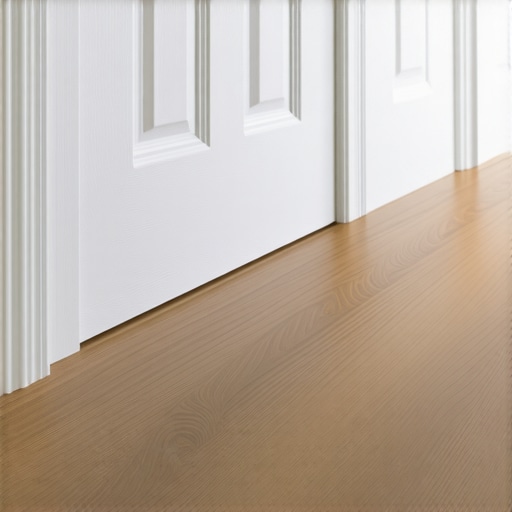
The ghost in the expansion gap
Laminate thresholds gap because the floating floor is restricted or the T-molding was installed incorrectly into the floor plank instead of the subfloor track. To fix this for under ten dollars you must clear the expansion channel and reset the molding with a proper mechanical bond to the substrate while allowing the laminate to move independently. Homeowners always ask why their waterproof vinyl or laminate is buckling or gapping at the doorway. Usually, it is because they locked it under a heavy kitchen island or pinned the transition strip directly to the planks, killing the floor ability to breathe. I once walked into a job where a beautiful wide-plank installation had separated so badly at the bathroom threshold that you could see the subfloor. The installer had used finishing nails through the T-molding and straight into the laminate. When the humidity dropped in winter, the floor tried to shrink, but the nails held it tight, causing the joints to blow out three feet away. It was a mess that could have been avoided with a ten dollar tube of construction adhesive and a little respect for physics. A floor is not a static object. It is a living, moving sheet of high density fiberboard that expands and contracts with every breath the HVAC system takes. When you ignore that movement, the floor wins every time.
Why your subfloor is lying to you
A subfloor might look flat to the naked eye but a deviation of even one eighth of an inch over six feet will cause a transition strip to fail. High spots create a pivot point that forces the T-molding to rock back and forth until the adhesive bond snaps or the track bends. You have to understand the molecular reality of the materials involved. Laminate is composed of high density fiberboard, which is essentially wood fibers compressed under extreme pressure with melamine resin. These fibers are hygroscopic. They drink moisture from the air. When the humidity rises near showers or damp entryways, the core swells. If your T-molding is sitting on a subfloor that is not perfectly level, that swelling creates vertical pressure. I spent three days grinding concrete on a job last month just so the floor would not click like a castanet. If you skip the prep work, you are just putting a bandage on a broken leg. The subfloor is the foundation of the entire system. If it is plywood, check for delamination. If it is concrete, you need to be worried about calcium chloride tests and moisture vapor emission rates. A slab that looks bone dry can be pumping out pounds of water vapor that will rot your transition from the bottom up.
“A floor is only as good as the subfloor beneath it; deflection is the enemy of every joint.” – Master Flooring Axiom
The 1/8 inch that ruins everything
The expansion gap is the most misunderstood part of any laminate installation because people think it is a mistake rather than a requirement. You need a minimum of one quarter inch of space between the edge of your laminate and the center of your T-molding track to prevent gapping. Without this gap, the floor hits the track, has nowhere to go, and begins to peak at the seams. Conversely, if the gap is too wide, the T-molding has nothing to cover, and you end up with a visible hole. It is a balancing act. In regions with high humidity fluctuations, like the coastal areas or the Midwest, this gap is even more critical. You are dealing with thermal expansion and moisture-driven linear expansion. When I see a T-molding popping up, the first thing I do is pull it off and look at the edge of the laminate. Nine times out of ten, the plank is tight against the track. I have to get in there with a multi-tool and trim back the laminate just to give the floor room to relax. It is a delicate operation, but it saves the entire room from a complete failure.
| Material Type | Expansion Rate | Acclimation Time | Ideal Humidity |
|---|---|---|---|
| Laminate HDF | High | 48-72 Hours | 35-55% |
| Engineered Hardwood | Medium | 72-96 Hours | 30-50% |
| Solid White Oak | Extreme | 7-14 Days | 30-50% |
| LVP Stone Core | Low | 24-48 Hours | 30-70% |
The chemical bond of modern adhesives
Fixing a loose threshold for ten dollars requires a high-quality polyurethane construction adhesive rather than cheap wood glue or silicone. Polyurethane creates a flexible yet permanent bond that can withstand the vibrations of foot traffic and the minor movements of the subfloor without becoming brittle. Most people grab a tube of whatever is cheapest at the big box store. That is a mistake. You want something with a high solids content. When you apply the bead of glue into the T-molding track, you are creating a mechanical anchor. If you are transitioning to a tile shower, you also have to deal with grout lines and moisture. The grout at the edge of the tile is porous. It will wick water. If your adhesive cannot handle a damp environment, the T-molding will be loose within six months. I always use a product like PL Premium or a specialized flooring epoxy for these transitions. You apply a thin, consistent bead. Do not overdo it, or the squeeze-out will get onto the wear layer of your laminate and ruin the finish. The wear layer is often an aluminum oxide coating that is incredibly tough against scratches but very difficult to clean once an adhesive has cured on top of it.
The step by step threshold restoration
Follow this checklist to ensure your ten dollar fix lasts for the life of the house.
- Remove the old T-molding carefully using a flat pry bar and a scrap piece of wood to protect the flooring.
- Clean out the expansion channel using a vacuum and a putty knife to remove old glue, sawdust, or debris.
- Measure the distance between the two floor surfaces to ensure the T-molding is centered.
- Trim the laminate planks with a multi-tool if they are touching the transition track or the opposing floor.
- Apply a continuous 3/16 inch bead of polyurethane adhesive to the bottom of the track or the center of the gap.
- Press the T-molding firmly into place and wipe away any immediate squeeze-out with a damp rag or mineral spirits.
- Weight the molding down with heavy toolboxes or buckets of water for at least 24 hours to ensure a full cure.
The physics of heavy furniture and floor movement
A floating floor must be allowed to float, meaning no part of the floor should be pinched by heavy cabinetry, baseboards, or transition strips. If you place a heavy pool table or a kitchen island on top of laminate, you have effectively anchored that side of the floor, forcing all movement toward the opposite wall. This is why thresholds gap. The floor is moving away from the doorway because it is anchored somewhere else. I have seen floors pull out of their transitions because the homeowner installed a heavy safe in the corner of the room. You have to think about the total square footage. A large room will move more than a small room. This is the basic coefficient of linear expansion. If your room is thirty feet long, that HDF core might move a quarter of an inch between summer and winter. If the T-molding is the only thing holding it back, the molding will fail. You must ensure that your baseboards are not nailed into the flooring and that your T-moldings have that crucial breathing room. It is the difference between a floor that lasts thirty years and one that looks like a topographical map after one season.
“Deflection is the silent killer of click-lock joints; if the subfloor moves, the floor fails.” – Master Flooring Axiom
The final word on floor stability
Repairing a gapping laminate threshold does not require a contractor or a thousand dollar budget. It requires an understanding of how wood fibers react to their environment and the discipline to prep the subfloor correctly. By spending ten dollars on the right adhesive and taking the time to clear the expansion gap, you are addressing the structural engineering of the surface. Do not fall for the marketing that says these floors are indestructible. They are engineered systems that require precision. Treat the transition with the same respect you would a structural beam. Keep the moisture in check, allow for movement, and your laminate will remain stable for decades to come. Stop ignoring the small gaps before they turn into major structural failures. A little maintenance today prevents a full tear-out tomorrow.