
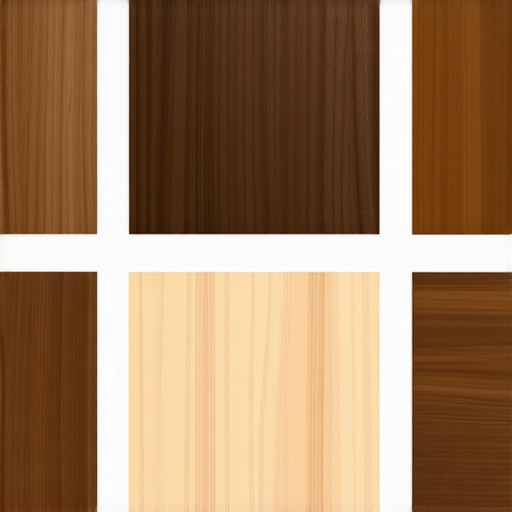
I’ve spent twenty-five years on my knees with a moisture meter and a level. My world smells like WD-40 and oak dust. I don’t see a floor as a decoration. I see it as a structural engineering challenge. I once walked into a house where a $15,000 wide-plank walnut floor was cupping so bad it looked like a potato chip because the installer didn’t check the crawlspace humidity. It was a tragedy of physics. The wood was beautiful, but the installation ignored the cellular reality of the material. When you understand the density of the grain, you understand how that floor will behave for the next century. Most people look at the color. I look at the growth rings. I look at the vascular tracheids. If you want a floor that doesn’t click like a castanet or buckle when the AC goes out, you have to look deeper than the stain.
The physics of annual growth rings
High quality hardwood grain density is determined by the ratio of latewood to earlywood within the annual growth rings. Dense wood features narrower rings and a higher percentage of latewood. This provides superior structural integrity and higher Janka hardness ratings while increasing resistance to moisture induced dimensional changes over time. Earlywood is the part of the ring that grows quickly in the spring. It is porous and weak. Latewood grows slowly in the summer and fall. It is dense and hard. When you buy a cheap, fast-growth timber, you are buying a floor made of air and soft fibers. It will dent if you drop a fork. It will swell if the humidity rises five percent. You want timber that grew slowly in a competitive forest. That slow growth creates the density that defines a legacy floor.
“A floor is only as good as the subfloor beneath it; deflection is the enemy of every joint.” – Master Flooring Axiom
The Janka scale as a density proxy
The Janka hardness scale measures the force required to embed a 0.444 inch steel ball into the wood to half its diameter. This metric serves as a primary indicator of grain density and the ability of hardwood floors to withstand impact and wear in high traffic residential or commercial environments. A higher Janka rating usually correlates with tighter grain structures. For example, Brazilian Cherry is significantly denser than American Walnut. This density affects everything from how the wood takes a stain to how many saw blades I go through during an installation. If the grain is too loose, the stain will soak in unevenly, creating a blotchy mess. If it is dense, the surface remains uniform and hard. This is where laminate fails. It mimics the look but lacks the cellular mass to absorb sound or resist the localized pressure of heavy furniture.
| Wood Species | Janka Hardness (lbf) | Average Weight (lbs/ft3) | Stability Rating |
|---|---|---|---|
| Ipe (Brazilian Walnut) | 3,684 | 69 | Excellent |
| Hickory | 1,820 | 50 | Average |
| White Oak | 1,360 | 47 | High |
| Black Walnut | 1,010 | 38 | Moderate |
| Douglas Fir | 660 | 32 | Low |
Why grain orientation determines stability
Grain orientation refers to the angle at which the wood was sawn from the log which dictates the stability of the plank. Riftsawn and quartersawn lumber offer the highest density and stability because the growth rings are perpendicular to the face of the board. This minimizes the expansion and contraction across the width of the plank. Plainsawn wood is the standard. It is cheaper and more common. However, the grain is tangential to the face. This means when the humidity changes, the board wants to curl. In a bathroom environment near showers, this movement is catastrophic. Even if you have the best moisture barrier, the internal stresses of a low density, plainsawn board will eventually win. The wood will move. The finish will crack. The floor will fail.
The chemistry of moisture absorption
The cellular structure of hardwood is hygroscopic meaning it constantly exchanges moisture with the surrounding environment until it reaches an equilibrium moisture content. Dense hardwoods have smaller cell cavities and thicker cell walls which slows the rate of moisture exchange and provides better dimensional stability in fluctuating climates. When you look at the end grain of a board, you are looking at thousands of tiny straws. These straws are the vessel elements. In species like White Oak, these vessels are plugged with tyloses. This makes the wood nearly waterproof. It is why they use White Oak for wine barrels and ships. Red Oak does not have these plugs. If you put Red Oak in a damp area, it will suck up water like a sponge. The water moves through the wood, hits the subfloor, and stays there. This can even affect nearby tile installations where moisture wicks through the wood into the grout of an adjacent room, causing efflorescence and bond failure.
“A floor is only as good as the subfloor beneath it; deflection is the enemy of every joint.” – Master Flooring Axiom
The 1/8 inch that ruins everything
Subfloor flatness is a non-negotiable requirement for high density hardwood installations with a standard tolerance of 1/8 inch over a 10 foot radius. High density planks are less flexible than softer woods and will not conform to dips in the subfloor, leading to vertical movement, noise, and eventual locking mechanism failure. I have spent days grinding concrete or sistering joists just to get that 1/8 inch. Most guys skip the leveling compound. They think the underlayment will hide the dip. It won’t. I spent three days grinding concrete on a job last month just so the floor wouldn’t click like a castanet. If the subfloor is uneven, a dense Ipe or Hickory board will bridge the gap. When you walk on it, the board flexes. That flex puts immense pressure on the tongue and groove. Eventually, the wood splinters or the joint opens up. You cannot fix a bad subfloor with a expensive wood. You can only hide it for a month before the physics of the house take over.
The checklist for a high quality installation
- Verify the moisture content of the subfloor and the hardwood match within 2 to 4 percent.
- Ensure the wood has acclimated to the home environment for at least 7 to 14 days.
- Check the grain density by inspecting the end grain for narrow annual rings.
- Confirm the subfloor is flat within 1/8 inch over a 10 foot span.
- Use a moisture barrier with a perm rating of less than 1.0 for on-grade installations.
- Leave a minimum 1/2 inch expansion gap at all vertical obstructions.
The ghost in the expansion gap
The expansion gap is a mandatory space left around the perimeter of a room to allow for the natural seasonal movement of the hardwood. For high density species, this gap must be calculated based on the expected moisture fluctuation of the region to prevent bucking or structural damage to the walls. People think the gap is a sign of a bad job. It is actually the sign of a pro. Wood is alive. It breathes. In the summer, the cells swell with humidity. In the winter, they shrink as the heater dries the air. If you push the wood tight against the baseboards, it has nowhere to go. It will push against the wall with enough force to crack the drywall or pop the boards off the floor. I always use spacers. I always check the humidity. And I never, ever install a heavy kitchen island on top of a floating floor. It locks the floor in place and kills the ability to breathe. It is a rookie mistake that costs thousands to fix.