
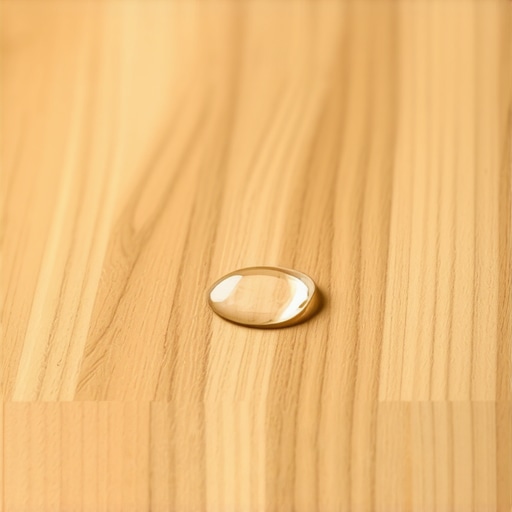
I once walked into a house where a $15,000 wide-plank walnut floor was cupping so bad it looked like a potato chip because the installer didn’t check the crawlspace humidity. The homeowner was devastated. They thought the shiny topcoat was an impenetrable shield. It was not. I stood there with my moisture meter and watched the wood struggle to breathe. That walnut was beautiful, but it was dying. This is the reality of hardwood floors. They are living, breathing organisms that react to the microscopic fluctuations of their environment. If you do not understand the chemistry of your sealant, you are just waiting for a disaster. I have spent twenty five years with sawdust under my nails and the smell of oak dust in my lungs. I have seen every shortcut in the book. Most people think a floor is just something you walk on. To me, it is a structural engineering challenge where moisture is the primary antagonist. The water drop test is the first line of defense in this war. It is a simple, physical assessment of surface tension and molecular bonding. If your sealant fails this test, your subfloor is at risk, and your investment is evaporating.
The physics of surface tension on timber
The water drop test works by measuring the ability of a wood sealant to maintain surface tension against liquid molecules. When a droplet beads up, it indicates that the chemical bonds of the polyurethane or oil finish are intact and effectively repelling moisture from entering the porous wood grain. Wood is composed of cellulose, hemicellulose, and lignin. These components are naturally hygroscopic, meaning they attract water. When you apply a sealant, you are essentially trying to plug millions of microscopic pores. A high-quality finish creates a hydrophobic barrier. If the water drop flattens or sinks in, it means the sealant has worn thin or the chemical chain has broken down due to UV exposure or mechanical abrasion. This is why testing is vital. In my shop, we do not guess. We verify. If the water penetrates, the wood cells will swell, leading to crowning or cupping. This is especially true for softer species like black walnut which have a lower Janka rating and higher porosity than something like Brazilian cherry.
“A floor is only as good as the subfloor beneath it; deflection is the enemy of every joint.” – Master Flooring Axiom
The ghost in the expansion gap
Expansion gaps are the intentional spaces left around the perimeter of a room to allow hardwood floors to expand and contract with seasonal humidity changes. Without these gaps, the pressure of expanding wood will cause the boards to buckle or the sealant to crack under the mechanical stress. I see it all the time. DIY installers push the boards tight against the drywall. Then summer hits, the humidity rises, and the floor has nowhere to go. It lifts. It groans. In regions like the humid Southeast, a 3/4 inch gap is often required, while in dry desert climates, you might get away with less. But the gap is only half the battle. If your sealant is compromised, the wood absorbs moisture from the air much faster. This leads to uneven expansion. I always tell my clients that the floor needs to breathe, but it should not be drinking the air. The sealant controls the rate of moisture exchange. Without it, your expansion gaps cannot save you from the warping that follows a major spill or a humid week.
| Wood Type | Janka Rating | Absorption Rate | Acclimation Time |
|---|---|---|---|
| Red Oak | 1290 | Medium | 7-10 Days |
| Brazilian Cherry | 2350 | Low | 14-21 Days |
| Black Walnut | 1010 | High | 7-10 Days |
| White Oak | 1360 | Low | 10-14 Days |
Why your subfloor is lying to you
A subfloor might look flat and dry, but it often hides high moisture levels that can migrate upward and destroy your hardwood sealant from underneath. Using a moisture meter to verify the subfloor relative humidity is the only way to ensure the long term integrity of the topcoat. Many installers skip the leveling compound. They think the underlayment will hide the dip. It won’t. I spent three days grinding concrete on a job last month just so the floor wouldn’t click like a castanet. If the subfloor is uneven, every step you take creates a minute deflection in the wood. This flexes the finish. Over thousands of steps, that microscopic flexing causes the sealant to develop hairline fractures. You won’t see them at first. But when you perform the water drop test, the water will find those cracks and seep into the grain. This is why a stable subfloor is the foundation of a waterproof finish. It is not just about the liquid on top. It is about the vapor pressure from below.
The 1/8 inch that ruins everything
Precision in flooring is measured in increments of 1/8 inch, which is the maximum allowable deviation over a ten foot span for most professional hardwood and laminate installations. Exceeding this tolerance causes structural stress on the locking mechanisms and the protective wear layer of the boards. In the world of laminate and LVP, people talk about the wear layer in mils. They think a 20 mil layer makes the floor invincible. But if the subfloor has a 1/4 inch dip, the click-lock joint will eventually snap. Once the joint snaps, the sealant is irrelevant because there is now a literal canyon for water to enter. I have seen people try to install hardwood floors near showers without proper transitions. They use standard grout in the gap between the tile and the wood. Grout is rigid. Wood moves. The grout cracks, water gets in, and the wood rots from the edge inward. You need a flexible 100 percent silicone caulk at those junctions to maintain the seal.
Hardwood maintenance checklist
- Clear the floor of all dust and debris using a soft bristle vacuum attachment.
- Select at least four different locations for testing, including high traffic paths and near windows.
- Use a dropper to place three beads of water about the size of a dime on the surface.
- Observe the water for ten minutes to see if it maintains a high contact angle.
- Wipe away the water and check for any darkening of the wood fibers.
- Inspect the perimeter expansion gaps to ensure they are not blocked by debris or tight trim.
“Proper acclimation is not a suggestion; it is a chemical necessity for the stability of the finish.” – NWFA Professional Guidelines
Molecular realities of water based vs oil based finishes
The choice between water based and oil based sealants determines the molecular density and the ambering effect of the hardwood floor over time. Water based finishes often provide a harder wear layer with lower VOCs, while oil based finishes penetrate deeper into the wood fibers. I prefer the old school durability of a high solids oil finish for certain oaks, but the industry is moving toward water based polyurethanes for a reason. They dry faster and stay clear. However, they require more coats to achieve the same mil thickness. When you perform the water drop test on a water based finish, you are testing the integrity of a plastic-like film. On an oil finish, you are testing the saturation of the wood fibers themselves. If you live in a high humidity area like Houston, the choice of sealant is a life or death decision for your floors. The swampy humidity means solid wood is a risk. You often need engineered cores with a thick wear layer to survive the vapor pressure. A failed water drop test in a humid climate is an emergency. It means the wood is actively absorbing atmospheric moisture, which will lead to structural failure within months.