
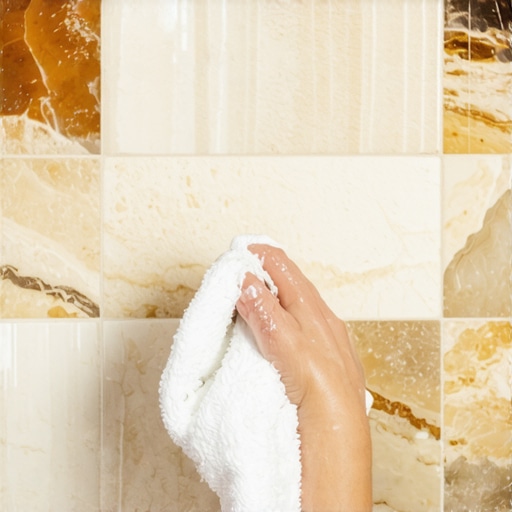
I spent three days grinding concrete on a job last month just so the floor would not click like a castanet. That same level of obsession applies to stone showers. Most people look at a marble or travertine shower and see a luxury surface. I see a porous mineral sponge that is currently engaged in a slow motion chemical war with your shampoo. Natural stone is not a set it and forget it material. It is a structural element that requires an understanding of geology and chemistry to maintain. I once walked into a house where a homeowner had used a standard bathroom spray on a five thousand dollar Carrara marble install. The acid in the cleaner had eaten so far into the stone that it looked like a salt flat. The surface was etched and the grout was crumbling. This happens because people treat stone like plastic. It is not plastic. It is a living breathable substrate that reacts to every drop of water and every ounce of soap you throw at it.
The structural reality of natural stone porosity
Natural stone showers consist of millions of microscopic pores that act as capillary channels for moisture and chemical contaminants. To clean soap scum safely you must use pH neutral detergents that do not react with the calcium carbonate found in stones like marble, limestone, and travertine. These stones are fundamentally different from ceramic or porcelain. When you look at a piece of slate or granite under a microscope you see a network of voids. Soap scum is not just sitting on top of the stone. It is often wedged into these voids. If you use a harsh abrasive or an acidic cleaner you are not just removing the scum. You are dissolving the stone binders. This leads to a permanent loss of structural integrity at the surface level. I have seen stone that becomes soft enough to scratch with a fingernail because the owner used a vinegar solution for years. Vinegar is an acid. Marble is a base. They will find a way to neutralize each other and the stone will lose that battle every single time.
The physics of soap scum adhesion
Soap scum forms when the fatty acids in bar soap react with the calcium and magnesium minerals present in hard water to create a waxy insoluble precipitate. This substance binds to the textured surface of natural stone and becomes a breeding ground for mold and mildew colonies. The bond is not merely mechanical. It is a complex interaction between the minerals in your water and the minerals in your wall. This is why a simple wipe down rarely works once the scum has hardened. In my twenty five years of handling high end installs I have found that the biggest mistake is letting this layer build up until it becomes a crust. At that point you are forced to use mechanical force which risks scratching the stone face. You need to understand the molecular weight of the scum versus the density of the stone. A dense granite can handle a bit more pressure while a soft limestone will yield and scar under the same conditions.
“A floor is only as good as the subfloor beneath it; deflection is the enemy of every joint. A shower is only as good as its chemistry; acidity is the enemy of every stone.” – Master Flooring Axiom
A chemical breakdown of safe stone maintenance
Safe maintenance of natural stone requires a surfactant based cleaner with a pH level between seven and eight to break the surface tension of oils without etching the mineral. Avoid any product containing lemon, vinegar, bleach, or ammonia as these chemicals cause immediate and irreversible surface damage. You want a cleaner that emulsifies the soap scum. Emulsification is the process where the cleaner surrounds the oil and fat molecules and lifts them away from the stone pores. This is the only way to get a deep clean without reaching for a scouring pad. I always tell my clients to think about their stone like they think about their skin. You would not wash your face with industrial degreaser or muriatic acid. Your stone shower deserves the same level of care. If you treat it right it will last a century. If you treat it like a cheap laminate floor it will look like junk in three years.
| Stone Type | Porosity Level | pH Sensitivity | Cleaning Frequency |
|---|---|---|---|
| Marble | High | Extreme | Daily Wipe |
| Travertine | Medium-High | High | Daily Wipe |
| Granite | Low | Moderate | Weekly Scrub |
| Slate | Medium | Low | Weekly Scrub |
The truth about grout and moisture barriers
Grout is the most vulnerable component of a natural stone shower because it is typically cementitious and highly absorbent unless it is modified with epoxy resins. Soap scum often hides within the grout lines where it degrades the seal and allows water to penetrate into the substrate behind the tile. When water gets behind the stone it causes efflorescence. That is the white crusty salt you see blooming on the surface. It is not a cleaning issue. It is a structural failure. Most guys skip the high quality sealers because they are expensive. I do not. I use a penetrating solvent based sealer that goes into the pores and sits there to block anything else from entering. If your grout is stained do not reach for the bleach. Bleach kills the mold but it also eats the grout. Use a dedicated oxygen based cleaner that bubbles the dirt out of the gaps without destroying the cement bond.
Professional steps for stone restoration
Professional stone restoration involves a multi stage process of chemical softening followed by gentle agitation with a non woven nylon pad and a final high volume rinse with distilled water. This ensures that no residual cleaning agents remain in the pores to attract more dirt or cause long term yellowing. Do not use steel wool. Do not use green scouring pads. These contain minerals that are harder than your stone. They will leave tiny scratches that you cannot see at first but they will catch the light and make the shower look dull. I use white pads only. They are designed for delicate surfaces. Start from the top and work your way down. Gravity is your friend. Let the cleaner sit for ten minutes. Let the chemistry do the heavy lifting so your muscles do not have to. This is the difference between a hack job and a master technician approach. We do not scrub hard. We scrub smart.
- Apply a pH neutral stone soap to all surfaces
- Allow a dwell time of ten minutes to emulsify fats
- Agitate gently with a soft nylon brush in circular motions
- Rinse thoroughly with warm water to remove all surfactants
- Dry the surface immediately with a microfiber cloth to prevent water spots
Long term protection strategies for heavy moisture zones
The key to preventing soap scum in natural stone showers is the application of a high quality hydrophobic sealer every six to twelve months depending on the frequency of use and the mineral content of the local water supply. This creates a tension barrier that causes water and oils to bead on the surface rather than soaking in. In regions with hard water you might even consider a whole house water softener. Hard water is the primary fuel for soap scum. If you remove the minerals from the water you remove the ability for the soap to create that waxy buildup. Also consider switching from bar soap to liquid body wash. Bar soaps contain talc and paraffin which are the main ingredients in the scum crust. Liquid soaps are usually synthetic detergents that rinse away much cleaner. It is a small change that saves you hours of maintenance work every year.
“True durability is achieved through the marriage of structural integrity and chemical compatibility; never force a material to be something its geology forbids.” – Master Flooring Axiom
When you deal with stone you are dealing with history. That marble was formed over millions of years under intense heat and pressure. It deserves better than a cheap spray bottle from a grocery store. I have seen hardwood floors ruined by wet mopping and I have seen stone showers ruined by laziness. Both come down to the same thing. A failure to respect the material. If you follow this protocol you will maintain the luster and the value of your home. If you ignore it you will be calling someone like me to tear it all out and start over. And trust me. I am not cheap when I have to bring the jackhammer. Protect your investment. Keep the chemistry neutral. Keep the stone dry. That is the only way to win the war against soap scum in a natural stone environment.