
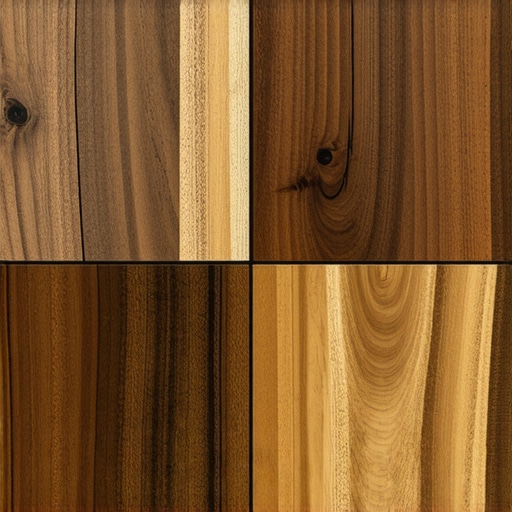
The shadow of the mismatched dye lot
Checking the batch number on your laminate ensures that every plank matches in color, texture, and locking mechanism precision. Manufacturers produce laminate in runs, and variations in resin temperature or ink density between batches can cause visible seams and mechanical failures during the installation process. I spent three days grinding concrete on a job last month just so the floor wouldn’t click like a castanet. Most guys skip the leveling compound. They think the underlayment will hide the dip. It won’t. When you add a batch number discrepancy on top of a wavy subfloor, you are inviting a structural disaster that no amount of molding can hide. I have seen fifteen thousand dollar projects ruined because a homeowner bought four boxes from one pallet and three boxes from another. The grain didn’t line up, the sheen was slightly off, and the tongue-and-groove joints fought each other every inch of the way. If you want a floor that lasts twenty years, you have to respect the chemistry and the physics of the manufacturing run. This is not about aesthetics. This is about structural integrity and the molecular bond of the wear layer. When you ignore the batch number, you are gambling with the flat surface of your home.
The science of the production run
A production run involves specific settings on the high-pressure press and the digital printing equipment that creates the wood-grain visual. Even a minor fluctuation in the ambient humidity of the factory or the pressure of the rollers can alter the thickness of the HDF core. These differences are often measured in microns. While a micron seems insignificant, it becomes a massive problem when you try to click a plank from Batch A into a plank from Batch B. The tolerance of modern click-lock systems is tighter than the engine components in a truck. If Batch A is 8.02 millimeters thick and Batch B is 7.98 millimeters thick, that 0.04 millimeter ledge will catch the light, collect dirt, and eventually cause the wear layer to peel at the edge. The decorative layer is essentially a high-resolution photo impregnated with melamine resin. The ink levels in the rotogravure process can shift. If you mix batches, you might find a slight blue or yellow tint in half of your living room that only becomes visible at noon when the sun hits the floor. It is a nightmare that no floor wax can fix.
“A floor is only as good as the subfloor beneath it; deflection is the enemy of every joint.” – Master Flooring Axiom
Why your subfloor is lying to you
Subfloors often appear flat to the naked eye but contain subtle undulations that stress the locking mechanisms of laminate flooring. A subfloor must be flat within 3/16 of an inch over a 10 foot radius to prevent the joints from rubbing together and creating a squeaking sound. Most installers are too lazy to pull out a straightedge. They trust the plywood or the concrete slab. Concrete is a porous sponge. It holds moisture that can migrate upward and swell the bottom of your laminate planks. If you are mixing batch numbers on a damp slab, you are doubling your trouble. The expansion rate of different production runs can vary based on the density of the fiberboard core. One batch might swell at a rate of five percent while another swells at seven percent. This creates internal tension. The floor starts to tent. It starts to buckle. I have seen floors rip themselves apart at the seams because the homeowner didn’t realize that the three boxes they bought on clearance were from a different year than the rest of the stock.
| Metric | Batch A (Standard) | Batch B (Variance) | Effect on Install |
|---|---|---|---|
| Core Density | 850 kg/m3 | 820 kg/m3 | Joint instability |
| Thickness | 12.0 mm | 12.2 mm | Lipage at seams |
| Ink Saturation | 100% | 96% | Color mismatch |
| Gloss Level | 30% Matte | 35% Satin | Visible sheen break |
The 1/8 inch that ruins everything
Expansion gaps are required around the perimeter of every room to allow the floor to move with seasonal changes in temperature and humidity. Without a consistent 1/4 to 3/8 inch gap, the laminate floor will press against the drywall and cause the planks to peak or snap. People think that because laminate is a floating floor, it does not need to breathe. That is a lie. The wood fibers in the core are still organic material. They react to the air. If you use different batches, the rate of expansion will not be uniform across the entire surface. This is where the physics of the floor becomes a headache. One section of the room might want to move more than the other. If the locking systems are from different runs, they might have slightly different shapes. The ‘V’ groove might be deeper on one than the other. When the floor expands in the summer, these mismatched joints will grind against each other. It sounds like a haunted house when you walk on it. You can’t fix that with a hammer. You have to tear the whole thing out and start over.
- Check every box for matching batch and lot numbers before opening.
- Acclimate the flooring in the room for 48 to 72 hours.
- Use a moisture meter to verify the subfloor is within 3 percent of the flooring.
- Ensure the subfloor is flat within NWFA standards.
- Never mix different brands even if the color looks similar.
- Store boxes flat, never on their ends, to prevent warping.
Mechanical failures in the locking system
The locking system of a laminate plank is a precision-milled tongue and groove that relies on friction and geometry to stay together. Variations in the milling bits used during different production batches can result in a loose fit or a fit that is too tight. When the milling bits at the factory get dull, they are replaced. If your boxes were made at the end of a bit’s life and the next boxes were made with a fresh bit, the profile of the lock will be different. It is like trying to put a Ford part on a Chevy. It might look close, but it won’t hold under pressure. I once saw a floor where the joints started to separate after only three months. The homeowner thought it was a bad install. I checked the boxes in the garage and found three different batch numbers. The locks were never fully engaged because the geometry was off by a fraction of a millimeter. Every time they walked on the floor, the joints moved a little more until they finally gave up. That is why I tell people to buy all their flooring at once, from the same pallet, from the same store.
“Wood flooring is a hygroscopic material, meaning it gains or loses moisture to reach equilibrium with its environment.” – NWFA Technical Manual
The humidity trap in modern homes
Modern HVAC systems create a dry environment that can shrink laminate cores, while basements and crawlspaces introduce moisture that causes them to swell. Consistent batch numbers ensure that all planks react to these environmental changes at the same rate and intensity. If you have a batch from a factory in a humid climate and another from a factory in a dry climate, their internal moisture content is already different. They are starting the race at different points. This is especially dangerous in kitchens and bathrooms. Water is the enemy of the HDF core. While the top is waterproof, the joints are the weak point. If those joints don’t fit perfectly because of batch variances, water will seep down into the core. Once that happens, the floor is toast. It will swell and stay swelled. You can’t dry out a laminate core once it has saturated. You have to be a stickler for the details. Check the labels. Look for the date. Look for the lot. If they don’t match, send them back to the warehouse. Your subfloor and your wallet will thank you later.