
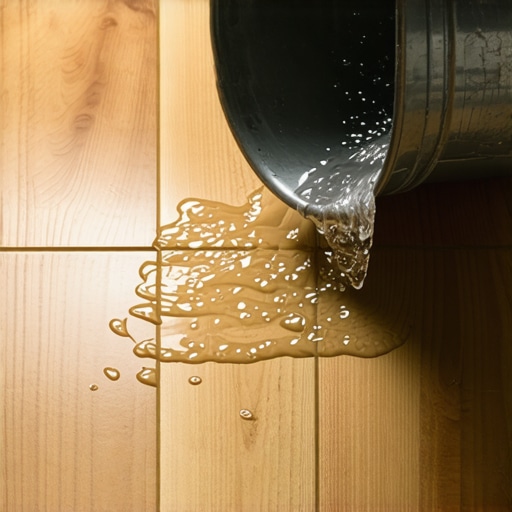
I once walked into a rental property in the middle of a humid July. The tenant thought they were doing the owner a favor by deep cleaning the laminate with a soaking wet string mop. By the time I got there, every single joint was peaked like a mountain range. They killed a five thousand dollar floor with a three dollar bucket of water. That is the reality of modern flooring. People see a shiny surface and assume it is impervious. They treat it like a sidewalk when they should be treating it like a precision engineered machine. As a master installer with twenty five years on my knees, I have seen more floors ruined by a wet mop than by flood or fire. Laminate is a fantastic product when used correctly, but the moment you introduce standing water, you are starting a chemical and physical countdown to failure.
The physical reality of fiberboard expansion
Laminate flooring uses a High-Density Fiberboard (HDF) core that reacts violently to standing water. While the decorative wear layer is composed of resins and plastic, the core is a compressed wood byproduct. Once water penetrates the clicking mechanism, the cellulose fibers swell and never return to their original shape. The chemistry here is simple. HDF is created by taking wood fibers, mixing them with wax and a resin binder, and then applying intense heat and pressure. This creates a dense, stable board. However, those fibers are still hygroscopic. They want to absorb moisture from the air and especially from the puddles left behind by a heavy mop. When you dump water on a laminate floor, the liquid finds the path of least resistance. That path is always the joint where two planks meet. Even the tightest click-lock system has microscopic gaps. Through capillary action, the water is sucked down into the HDF core. The fibers expand. The edges of the planks lift. This is called peaking, and there is no tool in my bag that can fix it once it happens. [IMAGE_PLACEHOLDER]
Why your subfloor is lying to you
Subfloor moisture levels must remain below twelve percent for a stable laminate installation. Even if the top of the floor seems dry, a wet mop adds hydrostatic pressure that pushes moisture into the locking grooves. This creates a pocket of humidity that rots the planks from the inside out. Many homeowners ignore the subfloor. They think the underlayment is a magic barrier. It is not. Underlayment is designed to provide a cushion and reduce sound, but it can also trap moisture against the bottom of your laminate. If you saturate the floor, that water can seep through the joints and sit on top of the underlayment. It has nowhere to go. It stays there, creating a micro-climate of rot. I have pulled up floors that looked okay on the surface but were covered in black mold underneath because the owner mopped with a wet bucket every Saturday. The smell of WD-40 and fresh oak dust is what a floor should be, not the musty stench of trapped water. Most guys skip the leveling compound. They think the underlayment will hide the dip. It will not. I spent three days grinding concrete on a job last month just so the floor would not click like a castanet because of a small dip that trapped moisture.
“A floor is only as good as the subfloor beneath it; deflection is the enemy of every joint.” – Master Flooring Axiom
The ghost in the expansion gap
Perimeter expansion gaps allow laminate to move as humidity fluctuates throughout the seasons. When you saturate a floor with a wet mop, the planks expand beyond the capacity of these gaps. This leads to buckling, peaking, and the eventual failure of the locking system. A floating floor is exactly what it sounds like. It is not attached to the subfloor. It needs to breathe. It needs to move. If you introduce a massive amount of water, the expansion is too rapid. The floor hits the wall and has nowhere to go but up. This creates a bouncy floor. It destroys the integrity of the locking mechanism. Once those tongues and grooves are stressed, they start to snap. You will hear a clicking sound when you walk. That is the sound of your floor dying. You cannot treat laminate like hardwood floors or tile grout. It is a different animal. Hardwood floors have their own issues with moisture, but they are often nailed down, which provides some resistance to movement. Laminate is free-floating, making it extremely sensitive to structural shifts caused by liquid ingress.
The chemistry of the wear layer and AC ratings
The AC rating of a laminate floor measures its resistance to abrasion but offers zero protection against water at the seams. A floor with an AC5 rating can withstand heavy commercial traffic, yet it will still fail if you mop it with a bucket of water. The top layer of laminate is typically a melamine resin mixed with aluminum oxide. This is what makes it scratch resistant. It is incredibly tough. You can drop a hammer on it and it might not dent. However, that layer does not wrap around the tongue and the groove. The edges are the Achilles heel. When you use a wet mop, the water sits on those edges. It bypasses the aluminum oxide defense. This is why we see so much failure in kitchen areas. People treat the area near the sink like a wet zone. It is not. If you want a floor you can drench, you need to look at tile or specific luxury vinyl planks that are engineered with a stone polymer core. But even then, the subfloor remains the master of the installation destiny.
| Floor Type | Core Material | Moisture Resistance | Acclimation Time |
|---|---|---|---|
| Solid Hardwood | Natural Timber | Low | 7 to 14 Days | Laminate | HDF (Fiberboard) | Moderate | 48 Hours | Engineered Wood | Plywood Layers | High | 72 Hours | LVP (SPC) | Stone Plastic | Excellent | 0 to 24 Hours |
The 1/8 inch that ruins everything
Precision is the only thing that separates a master installation from a DIY disaster. If a subfloor has a deviation of more than one eighth of an inch over ten feet, the laminate joints will eventually fail. When you add water to that equation, the failure is accelerated. A dip in the floor becomes a pool for the water you are mopping. While you think the floor is dry, that dip is holding liquid. It is slowly feeding the HDF core. This is why I am a stickler for the NWFA and TCNA standards. I use a moisture meter on every job. I check the concrete. I check the wood. If the moisture is too high, the floor does not go down. It is that simple. Homeowners hate hearing that they have to wait another week for the slab to dry, but they hate a buckled floor even more. You have to respect the physics of the materials. You cannot force a floor to behave against its nature. A wet mop is an act of aggression against a wood-based product.
“Moisture vapor emission rate must not exceed three pounds per one thousand square feet over twenty-four hours.” – NWFA Technical Guidelines
Proper maintenance protocols for longevity
The only way to clean laminate safely is with a damp micro-fiber cloth and a pH-neutral cleaner. You should never see standing water on the surface. If you see a puddle, you have failed. The goal is to suspend the dirt in the cleaning solution and whisk it away before the liquid can find a joint. I tell my clients to throw away their traditional mops. They are relics of a time when every floor was stone or waxed wood. Modern flooring requires modern care. Using a spray bottle and a flat mop is the industry standard. This controls the amount of moisture. It ensures that the floor is dry within thirty seconds of cleaning. This prevents the capillary action from starting. It keeps the HDF core stable. It keeps the warranty intact. Most manufacturers will void your warranty the moment they see evidence of wet mopping. They can tell. The swelling patterns are distinct. It looks like the floor is frowning at you.
- Always use a dedicated laminate cleaner that does not leave a waxy residue.
- Vacuum with a hard-surface setting to remove grit that can scratch the wear layer.
- Never use steam mops as the heat forces moisture deeper into the core.
- Wipe up spills immediately with an absorbent cloth.
- Maintain a consistent humidity level between thirty and fifty percent in the home.
Comparing laminate to showers and grout
In showers, we use membranes and specialized grout to manage water, but laminate lacks these structural defenses. You would never install laminate in a shower because it is not a waterproof system. People get confused because some brands market themselves as waterproof. What they mean is that the surface is waterproof for a specific number of hours. They do not mean you can submerge it. Even tile grout is porous. Grout needs to be sealed to prevent water from reaching the thin-set. Laminate cannot be sealed in the same way. There are joint sealants you can apply during installation, but they are difficult to use and often interfere with the locking mechanism. The best defense is simply keeping the floor dry. If you want the look of wood in a bathroom, engineered products or wood-look tile are the only professional choices. Do not let a salesperson convince you that a premium laminate can handle a soaking. They are not the ones who have to come out and rip it up when it fails. They are not the ones with the sawdust under their nails.
The information gain on underlayment cushion
While most people want the thickest underlayment possible for comfort, too much cushion actually causes the locking mechanisms to snap. This is a contrarian truth in the flooring world. A thick, squishy underlayment allows for too much vertical movement. When you walk, the planks deflect. This puts immense pressure on the thin plastic tongues. Over time, they fatigue and break. This creates gaps. These gaps are then even more vulnerable to the water from your wet mop. You want a high-density, thin underlayment. It should feel firm. It should provide a solid base for the floor to float on. This reduces the mechanical stress on the joints and keeps the seams tight. A tight seam is your best defense against moisture. It is a system. Every part must work together. From the concrete slab to the aluminum oxide top coat, it is a structural engineering challenge. If you treat it with respect, it will last twenty years. If you treat it with a wet bucket, it will not last two. It will buckle. It will rot. It will fail. Stick to the dry methods and keep your investment safe.