
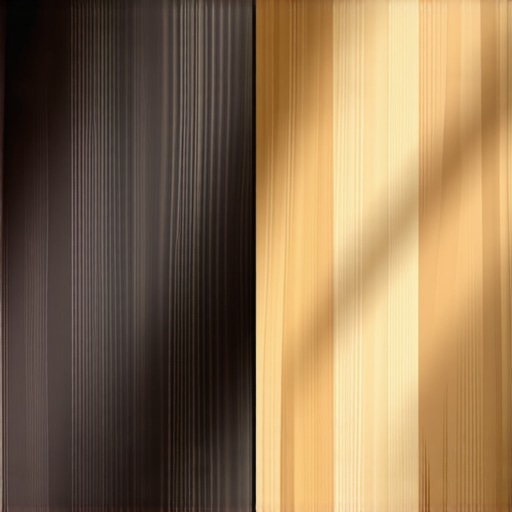
I once walked into a house where a $15,000 wide-plank walnut floor was cupping so bad it looked like a potato chip because the installer didn’t check the crawlspace humidity. The homeowner was devastated, not just by the structural failure, but by the fact that every single speck of dust looked like a glowing beacon on that dark, expensive surface. It smelled like damp earth and rotting timber in that crawlspace, a sharp contrast to the smell of sawdust and WD-40 I usually carry on my jeans. People buy dark floors for the drama, but they rarely understand the physics of light and the chemistry of the finish that they are signing up for. If you think a darker stain is going to hide the mess of a busy household, you are fundamentally mistaken about the nature of optics.
The cruel physics of high contrast
Dark hardwood floors show more dust because of the extreme contrast between the dark wood fibers and the light colored particles of common household debris. Most household dust consists of skin cells, fabric fibers, and microscopic silica, which tend to be off-white or gray. Against a midnight espresso or walnut stain, these light particles reflect maximum light against a non-reflective background.
When we look at the physics of a floor, we are looking at light absorption. A dark stained floor, especially one finished with a high-build polyurethane, acts as a visual sink for light. It absorbs most of the visible spectrum. When a dust particle sits on top of that dark surface, it remains highly reflective. This creates a high-contrast environment where the human eye can detect particles as small as 50 microns. In contrast, a light oak floor with its natural honey or straw tones has a similar color value to the dust itself. The dust effectively camouflages because the background and the foreground share a similar luminance. This is not about the floor being cleaner. It is about the optical trickery of color values.
The microscopic profile of a dust particle
Dust particles are complex structures of organic and inorganic matter that scatter light in every direction once they land on a flat surface. These particles often include pet dander, pollen, and fine minerals tracked in from the driveway, all of which possess a high refractive index compared to the dark pigments used in wood stains. This creates a scattering effect known as diffuse reflection.
If you examine a floor under a magnifying glass, you see that it is not a perfectly smooth plane. Even the best site-finished floor has a microscopic texture. Dark stains fill the pores of the wood, creating a uniform backdrop. When dust falls into the grain of a light oak board, the variegated patterns of the earlywood and latewood growth rings break up the visual field. Oak has a heavy grain, often referred to as open-pore structure. These pores provide tiny valleys where dust can settle without catching the light. On a dark, smooth-grained wood like maple or walnut, there is no place for the dust to hide. It sits on the peaks of the finish and reflects the overhead LED lighting directly into your retina.
Gloss levels and the mirror effect
The sheen level of your hardwood finish determines how much the dust particles are magnified by reflected light sources from windows and lamps. High-gloss finishes create a specular reflection, essentially turning your floor into a dark mirror that highlights every imperfection and every stray hair. This is why many installers now recommend matte or satin finishes for darker species.
In my 25 years of kneeling on subfloors, I have seen the trend move away from the high-shine look of the nineties for this very reason. A semi-gloss finish on a dark ebony floor is a maintenance nightmare. The light hits the floor at a low angle from a sliding glass door and illuminates every footprint and dust mote. If you reduce the sheen to a matte level, you are essentially diffusing the light before it even hits the dust. The molecular structure of a matte finish contains flattening agents, often silica-based, that roughen the surface on a microscopic scale to scatter light. This won’t make the dust disappear, but it stops the floor from acting like a searchlight for grime.
“Wood flooring is a hygroscopic material that expands and contracts with the relative humidity of the surrounding environment.” – NWFA Technical Manual
The chemistry of the finish bond
The chemical composition of your topcoat can influence how dust adheres to the surface through static electricity and molecular tension. Water-based polyurethanes and oil-modified resins have different electrostatic properties that can either attract or repel the fine particulate matter that makes up household dust.
Oil-based finishes tend to have a higher ambering effect and a different surface tension. Over time, they can become slightly more brittle. Water-based finishes, while more durable in terms of VOC emissions and drying time, can sometimes hold a static charge that acts like a magnet for pet hair. When you are choosing a floor, you aren’t just choosing a color; you are choosing a chemical interface. If you live in a dry climate like Phoenix, the static buildup on a synthetic finish will pull dust out of the air and lock it onto your dark walnut planks. You end up with a layer of gray haze that no vacuum can fully clear because the ionic bond is too strong.
Why grain pattern hides your sins
Natural oak varieties possess a complex grain structure that provides visual noise, which effectively masks the presence of small debris and scratches. The alternating densities of the summerwood and springwood create a striped or cathedrallike pattern that confuses the eye, making it difficult to distinguish a speck of dust from a natural wood feature.
| Wood Species | Janka Hardness | Grain Type | Dust Visibility Score |
|---|---|---|---|
| White Oak | 1360 | Strong/Open | Low |
| Red Oak | 1290 | Strong/Open | Low |
| Black Walnut | 1010 | Moderate/Closed | Very High |
| Hard Maple | 1450 | Fine/Closed | High |
| Brazilian Cherry | 2350 | Interlocking | Medium |
As shown in the data, the Janka hardness isn’t the only factor. The grain type is the secret. White oak is the gold standard for a low-maintenance look. Its open pores and heavy graining act as a natural camouflage. When you stain that same oak a deep charcoal, you are essentially painting over the camouflage. You lose the visual noise and gain a monolithic surface. Every bit of salt from the winter boots or fluff from the dryer will stand out like a sore thumb.
The structural reality of the walnut heartbreak
Structural integrity and aesthetics are often at odds when homeowners choose wide-plank dark hardwoods without considering the subfloor conditions. A dark floor shows structural stress more clearly than a light one because the shadows cast by cupping or crowning are amplified by the dark pigment in the wood grain.
If your subfloor has a high moisture vapor emission rate, your wood will move. When a light oak floor cups slightly, the color of the wood hides the shadow line at the edge of the board. When a dark floor cups, that 1/8 inch lift creates a shadow that looks like a canyon. I have spent days grinding concrete slabs to ensure they are flat within 3/16 of an inch over a 10 foot radius just to prevent this. Most guys skip the leveling compound. They think the underlayment will hide the dip. It won’t. The floor will click like a castanet and the dark finish will highlight every uneven joint as the light hits the raised edges. You cannot separate the visual performance of the color from the engineering of the substrate.
“A floor is only as good as the subfloor beneath it; deflection is the enemy of every joint.” – Master Flooring Axiom
Regional humidity and the dark wood gamble
Your local climate plays a massive role in how a dark hardwood floor performs and how much dust it accumulates through environmental filtration. In the swampy humidity of Houston, wood expands aggressively, while in the dry heat of Denver, it shrinks, opening gaps between boards that become dust traps.
When these gaps open up in a dark floor, the light-colored subfloor or the tongue of the board might show through. This creates a pinstripe effect of white lines across your dark floor. It looks terrible. If you are determined to go dark in a climate with wide humidity swings, you must use engineered hardwood. The cross-ply construction of an engineered core provides dimensional stability that solid wood lacks. This limits the seasonal gapping that turns into a repository for dust and skin cells. You also need to maintain a consistent relative humidity between 30 and 50 percent to prevent the finish from checking or the wood from splintering at the edges.
The maintenance checklist for dark surfaces
Maintaining a dark hardwood floor requires a specific protocol to manage the visibility of dust and to protect the delicate finish from abrasive micro-scratches. Traditional sweeping often just moves the dust around or pushes it into the bevels of the planks.
- Use a vacuum with a soft brush attachment specifically designed for hard surfaces to lift dust rather than drag it.
- Avoid microfiber mops that use oil-based cleaners which leave a residue. These residues create a sticky film that traps more dust.
- Implement a strict shoes-off policy to prevent silica and small stones from scratching the dark stain and revealing the light natural wood beneath.
- Use felt pads on every piece of furniture and replace them every six months as they collect grit and turn into sandpaper.
- Maintain indoor humidity with a whole-house humidifier to reduce static electricity that attracts airborne particles.
The ghost in the expansion gap
Expansion gaps at the perimeter of a room are vital for the health of the floor but often become the primary source of dust migration from the wall cavities. If these gaps are not properly covered by baseboards and shoe molding, they act as small vents that pull dust from the framing of the house onto the surface of your floor.
Many homeowners want the minimalist look of a zero-threshold transition or a gapless baseboard. I tell them they are asking for trouble. Wood needs to breathe. It needs that 1/2 inch of space at the walls to grow when the summer humidity hits. If you tight-fit a dark floor against a wall, it will eventually buckle. When it buckles, the finish cracks. Those cracks then fill with white dust that you can never quite get out. The ghost in the expansion gap is the air movement that brings debris from behind the drywall out onto your pristine dark surface. Proper installation requires a balance between mechanical necessity and the reality of household cleanliness.
A hard truth about humidity and dark stains
While most people want the thickest underlayment to make the floor feel soft, too much cushion actually causes the locking mechanisms on dark planks to snap under pressure. This leads to micro-movement which generates its own dust through the friction of the wood fibers rubbing together.
This is the contrarian data point that many big-box retailers won’t tell you. They want to sell you the premium 6mm foam. But if you put that under a dark engineered floor, every time you walk, the boards deflect. That deflection grinds the tongue and groove together. This creates a fine wood flour that works its way up to the surface. On a dark floor, this looks like a white powder bleeding out of the seams. You think it is dust from the room, but it is actually the floor eating itself from the bottom up. Use a high-density, low-compression underlayment. It protects the joints and keeps the dust inside the wood where it belongs. Flooring is an engineering challenge, and if you treat it like a cosmetic choice, you will be disappointed every time you look down at a dusty, dark plank.