
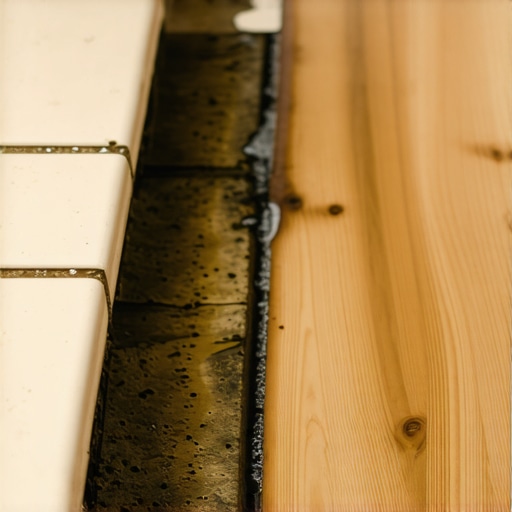
I spent three days grinding concrete on a job last month just so the floor wouldn’t click like a castanet. Most guys skip the leveling compound. They think the underlayment will hide the dip. It won’t. While I was there, the homeowner asked me to look at their master bath. The moment I stepped on the shower curb, I felt that sickening soft give. I knew exactly what was underneath. It was a swamp of black mold and disintegrating 2x4s. The shower looked beautiful from the outside, but the subfloor was rotting out from the inside because the installer didn’t understand the physics of water migration. This is the reality of many modern bathrooms. We spend thousands on high-end tiles but ignore the structural engineering of the curb. A shower is a containment system, and the curb is the most vulnerable dam in your house. When it fails, it doesn’t just ruin the tile. It destroys the floor joists and the hardwood floors in the adjacent room.
The anatomy of the moisture trap
The shower curb acts as the primary dam for thousands of gallons of water annually. When moisture bypasses the topical membrane via capillary action or fastener penetration, it saturates the wooden subfloor. This leads to structural rot, fungal growth, and the eventual collapse of the tile assembly. Most curbs are built by stacking three 2x4s and wrapping them in cement board. This creates a massive amount of wood that can expand and contract. When you nail a mesh or a liner into the top or sides of that wood, you create hundreds of tiny holes. Water finds those holes. Once the wood gets wet, it swells. That swelling puts pressure on the grout lines and the tile. The grout cracks, more water enters, and the cycle of destruction begins. You are not just dealing with a leak. You are dealing with a structural failure of the transition point between the wet zone and the dry zone of the home.
The physics of capillary action and wood rot
Capillary action occurs when water moves through narrow spaces without the assistance of gravity. In a shower curb, this means moisture travels through grout pores and micro-cracks in the thin-set to reach the wooden framing. Once the wood exceeds a twenty percent moisture content, wood-decay fungi begin to thrive. This movement happens on a molecular level. Think of the grout as a series of straws. Even if the shower is off, the moisture held in the mortar bed continues to travel. If the curb is not sloped correctly, the water sits on the flat surface and waits. It eventually finds a way through the waterproofing layer, especially if the installer used a staple gun to secure the liner. Wood is a cellulose-based material that loves water. It will pull moisture from the surrounding environment until it reaches equilibrium. In a bathroom, that equilibrium is often far above the threshold for rot. The subfloor underneath the curb becomes the collection point for all this gravity-fed and capillary-driven water.
“A floor is only as good as the subfloor beneath it; deflection is the enemy of every joint.” – Master Flooring Axiom
The myth of the waterproof tile installation
Tile and grout are not waterproof barriers. They are aesthetic finishes that allow water to pass through them via absorption and hydrostatic pressure. The actual waterproofing happens at the membrane level, which must be continuous and free of any mechanical penetrations like nails or screws. Many people believe that because tile is hard and glazed, it stays dry. That is false. Every time you shower, the mortar bed underneath the tile becomes saturated. This is why the TCNA standards emphasize the use of a pre-slope and a high-quality membrane. If the curb was built using a traditional mud bed and a PVC liner, the liner is often folded at the corners. These folds create bulk. To get the curb to look square, installers often nail the liner to the wood. This is a fatal error. Those nails are below the water line. You are effectively putting a hole in the bottom of a bucket and wondering why it leaks. The water follows the nail shaft directly into the heart of the curb framing.
| Property | Cement Board Curb | Pre-fabricated Foam | Traditional Mud Bed |
|---|---|---|---|
| Permeability | High | Zero | High |
| Structural Weight | Heavy | Light | Extreme |
| Risk of Rot | High | Very Low | Medium |
| Install Speed | Slow | Fast | Very Slow |
The relationship between grout and gravity
Gravity pulls moisture downward through the grout lines until it hits a solid barrier. If that barrier is a flat shower curb without a proper inward slope, the water pools and seeks the path of least resistance, which is usually the wooden framing. I have seen curbs where the tile was installed perfectly flat. To the eye, it looks great. To a drop of water, it is a dead end. Every curb should have a minimum of a one quarter inch per foot slope toward the drain. Without this slope, the water stays in the grout and the thin-set. Over time, the chemicals in the water break down the bond of the adhesive. This is why you see grout falling out of the bottom of the curb first. It is the sign that the subfloor is already saturated and the wood is beginning to swell. The movement of the wood under the tile is what actually cracks the grout, not the water itself. The water is just the catalyst for the structural shift.
The failure of laminate and hardwood floors near showers
Laminate and hardwood floors are extremely sensitive to the moisture vapor that radiates from a rotting shower curb. Even if the water does not touch the wood directly, the high humidity levels cause the planks to cup, buckle, and fail. I have been called to jobs where the homeowner thought their dishwasher was leaking because the hardwood in the hallway was cupping. After an hour with a moisture meter, I traced the readings back to the bathroom wall. The shower curb was leaking into the subfloor, and the water was traveling along the plywood layers like a highway. By the time you see the damage on your expensive oak floors, the subfloor under the shower is already gone. Hardwood cannot handle the constant cycle of wetting and drying that occurs near a failed curb. The tannins in the wood will react with the moisture, causing dark black stains that no amount of sanding can remove. It is a total loss situation.
The chemistry of adhesive failure in wet environments
Thin-set mortar is a cement-based product that requires a specific hydration process to reach its maximum strength. Constant moisture from a leaking curb interrupts this process, leading to a phenomenon known as soft mortar where the adhesive turns back into a paste. High-performance, polymer-modified thin-sets are designed to be water-resistant, but they are not intended to be submerged indefinitely. When a curb is saturated, the polymers begin to emulsify. The bond between the tile and the substrate fails. This is why you can sometimes pop a tile off a leaky curb and find the back of it is wet and slimy. The structural integrity of the entire assembly depends on the mortar staying dry most of the time. When the subfloor is rotting, it releases gases and moisture that push against the tile from the bottom up. This vapor pressure is enough to de-bond even the best adhesives on the market.
“The presence of moisture in the subfloor is the single most common cause of flooring failure in residential construction.” – Master Flooring Axiom
The construction of a rot-proof shower curb
A rot-proof shower curb is built using non-organic materials like high-density foam or solid concrete, eliminating the possibility of fungal growth and structural decay. These materials do not expand when wet, ensuring the tile and grout remain stable for decades. If I am building a curb today, I am not using 2x4s. I am using a pre-fabricated waterproof foam curb. These are made of closed-cell polystyrene and are coated in a waterproof membrane. There is no wood to rot. There are no nails needed. You bond the curb to the subfloor using a modified thin-set. This creates a solid, monolithic structure that is part of the shower tray. If you must use wood, it needs to be wrapped in a liquid-applied membrane that creates a rubberized skin over the entire surface. This skin must be continuous from the shower floor, over the curb, and down the outside face to protect the subfloor in the rest of the bathroom.
- Verify the slope of the curb top toward the drain using a level.
- Inspect the corner seals for pinholes before the tile installation.
- Measure moisture levels in the surrounding subfloor with a pin-meter.
- Check the deflection of the floor joists to ensure they meet L/360 standards.
- Ensure the waterproofing membrane extends at least six inches up the walls.
- Use a solid piece of stone or quartz for the curb cap to minimize grout lines.
The solution for a damaged subfloor
The repair of a rotting subfloor requires the complete removal of the shower curb, the surrounding tile, and the compromised wooden panels. New structural blocking must be installed to restore the integrity of the floor system before a new shower is built. You cannot just patch a rotting subfloor. The mold spores are already deep in the wood fibers. I tell people all the time that if they try to save a few bucks by not replacing the plywood, they will be doing the whole job again in two years. You have to cut back to the center of the nearest healthy joist. You need to treat the remaining wood with a borate-based fungicide. Only then can you install new underlayment. This is a labor-intensive process that requires precision. The new subfloor must be perfectly level with the old one to prevent a lip-tip that will crack your new tile. This is where I spend my time. I don’t care about the color of the grout until I know the ground under my feet is solid and dry. A master installer knows that the beauty of the floor is just a distraction from the engineering that keeps it from falling into the basement.
{“@context”:”https://schema.org”,”@type”:”Article”,”headline”:”Why Your Shower Curb is the Most Likely Place for a Rotting Subfloor”,”author”:{“@type”:”Person”,”name”:”Master Floor Installer”},”description”:”An in-depth look at the physics of shower curb failure, capillary action in subfloors, and how to prevent rot in bathroom flooring.”,”articleSection”:”Flooring Engineering”}{“@context”:”https://schema.org”,”@type”:”HowTo”,”name”:”How to Verify a Shower Curb is Waterproof”,”step”:[{“@type”:”HowToStep”,”text”:”Measure the inward slope toward the drain.”},{“@type”:”HowToStep”,”text”:”Perform a 24-hour flood test of the shower pan.”},{“@type”:”HowToStep”,”text”:”Check for moisture at the base of the curb using a non-invasive meter.”}]}