
The 1/8 inch that ruins everything
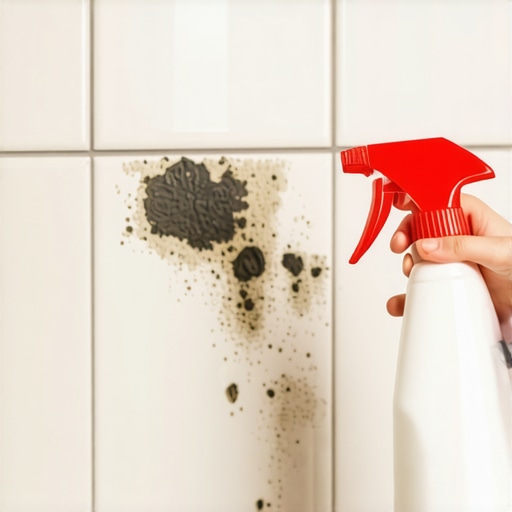
Vinegar is a diluted form of acetic acid that chemically reacts with the alkaline components of cement-based grout, leading to the erosion of the structural binder and permanent surface damage. This chemical reaction dissolves the calcium carbonate that holds the grout together. Most guys skip the leveling compound. They think the underlayment will hide the dip. It won’t. I spent three days grinding concrete on a job last month just so the floor wouldn’t click like a castanet. That same level of precision is required when you look at the grout in your shower. When you use vinegar, you are essentially performing a slow-motion demolition of your tile system. The acid eats away at the microscopic lattice of the grout, creating voids where mold hyphae can take root and thrive deep within the substrate. Once the mold is inside the grout, no amount of surface scrubbing will remove it. You are effectively feeding the problem by creating a more porous environment for biological growth. This moisture then migrates. It moves through the subfloor and finds its way to your laminate or hardwood floors in the adjacent rooms. I have seen fifteen thousand dollar wide-plank walnut floors cup and crown because a shower three rooms away was leaking moisture through eroded grout lines. The subfloor acts like a wick. If your grout is failing, your entire flooring system is at risk. Stop thinking about cleaning as a surface level chore and start thinking about it as structural maintenance.
The chemistry of grout erosion
The chemical interaction between acetic acid and Portland cement results in the formation of calcium acetate, a salt that is easily washed away by water. This process is known as acid etching. When you spray vinegar on a grout line, you are initiating a reaction that breaks down the solid calcium silicate hydrate crystals that give grout its strength. Grout is naturally porous, but when it is etched, those pores become wide enough to hold standing water. This water sits against the thin-set and the waterproofing membrane. If that membrane has even the slightest pinhole, the water will reach the plywood or OSB subfloor. Once the subfloor is saturated, the moisture vapor transmission rate (MVTR) increases significantly. This vapor rises through the underlayment of your laminate floors, causing the edges to swell and peel. This is why you see peaking in your laminate planks. It is not always a spill on top of the floor. Often, it is the moisture from a failing shower grout moving through the house structure. You need a cleaner with a neutral pH of 7.0 to maintain the integrity of the cementitious bond. Anything lower than a pH of 5.0 is actively damaging the installation. I have spent twenty-five years looking at these failures under a magnifying glass. The science does not lie. Acid and cement are enemies.
“A floor is only as good as the subfloor beneath it; deflection is the enemy of every joint.” – Master Flooring Axiom
The ghost in the expansion gap
Proper expansion gaps are necessary for the thermal and hygroscopic movement of hardwood floors, but moisture from failing grout can overwhelm these spaces and cause structural buckling. When a shower fails due to improper maintenance, the humidity in the home rises. Wood is a hygroscopic material, meaning it absorbs water from the air. If the relative humidity in your home jumps from 30 percent to 60 percent because of a damp bathroom, your oak floors will expand. Without a sufficient gap at the perimeter, the wood has nowhere to go but up. This results in buckling or crowning. You might think your hardwood floors are fine because they are not in the bathroom, but the air carries that moisture. I have walked into jobs where the moisture meter was pinning at 18 percent in the hallway while the homeowner was still using vinegar to clean their shower tiles. They were killing their house one spray bottle at a time. The smell of floor wax and sawdust is a constant in my life, and I can tell you that a dry home is a healthy home. The transition between tile and wood is a high-stress area. If the grout at that threshold is crumbling, it acts as a gateway for water to reach the end-grain of your wood planks. End-grain is the most absorbent part of the wood. It will suck up water like a straw, leading to permanent discoloration and rot.
Why your subfloor is lying to you
Subfloors often appear dry on the surface while holding significant moisture deep within the layers of the plywood or concrete slab. Just because you do not see a puddle does not mean your subfloor is safe. On a concrete slab, moisture moves via capillary action. If the grout in your shower is etched and porous, water seeps into the slab. This moisture then travels laterally. It can pop the adhesive on your luxury vinyl planks or cause the glue-down hardwood to release. I have seen guys try to save money by using a cheap moisture barrier, but that is a fool’s errand. You need to understand the physics of the site. Concrete is a sponge. It never stops absorbing and releasing moisture. When you use vinegar on your grout, you are removing the first line of defense against this moisture cycle. The NWFA has strict guidelines about moisture levels before any wood floor is installed. If you are introducing moisture through a poorly maintained shower, you are violating those engineering principles. You need to treat your grout with the same respect you treat your structural beams. It is part of the envelope of the home.
| Cleaning Agent | pH Level | Effect on Cement Grout |
|---|---|---|
| White Vinegar | 2.5 | Dissolves cement binder and etches surface |
| Commercial Acidic Cleaner | 1.0 – 3.0 | High risk of rapid structural erosion |
| Dish Soap (Mild) | 7.0 – 8.0 | Safe for occasional use if rinsed well |
| pH Neutral Stone Cleaner | 7.0 | Optimal for preserving grout and sealers |
| Bleach (Sodium Hypochlorite) | 11.0 – 13.0 | Discolors grout and can weaken bond over time |
The microscopic reality of mold in porous surfaces
Mold spores utilize the microscopic pits created by acid etching in grout as a sheltered environment for colony establishment and reproduction. When you see black spots on your grout, that is just the fruiting body of the mold. The actual roots, or mycelium, are deep inside the pores. Vinegar does not penetrate deep enough to kill the roots of most mold species. Instead, the acid creates more pits, which hold more water, which feeds more mold. It is a vicious cycle of decay. For a professional installer, seeing a homeowner with a bottle of vinegar is like seeing a mechanic with a sledgehammer. It is the wrong tool for the job. You need an antimicrobial cleaner that is specifically formulated for masonry. This protects the grout and, by extension, the hardwood floors in the rest of your house. I always tell my clients that a clean bathroom is the best insurance policy for their expensive flooring. If you keep the water in the pipes and on the surface of the tile, your subfloor stays dry. A dry subfloor means your laminate will not swell and your hardwood will not cup. It is all connected.
“Cementitious grout must meet ASTM C1107 standards for non-shrink performance, but no standard can protect against chemical dissolution by household acids.” – TCNA Technical Bulletin
- Inspect grout lines every month for signs of powdering or cracking.
- Apply a high-quality solvent-based penetrative sealer every six to twelve months.
- Maintain bathroom humidity below fifty percent using high-cfm exhaust fans.
- Use a moisture meter to check the subfloor if you suspect a leak.
- Avoid all acidic cleaners including lemon juice and vinegar on any masonry surface.
- Check the transition strips between tile and wood for any signs of dark staining.
Professional maintenance for long term structural integrity
Maintaining grout integrity requires the use of alkaline or neutral cleaners combined with regular application of fluorinated sealing agents to prevent moisture ingress. You have to be proactive. Once the grout starts to crumble, the repair becomes much more expensive. You are looking at a full regrout, which involves a diamond blade and a lot of dust. I hate that job. It is messy and it is unnecessary if you just use the right chemicals from day one. When we talk about the chemistry of adhesives and grout, we are talking about long-chain polymers and crystalline structures. These are engineered to last decades. But they are not engineered to withstand a constant bath of acetic acid. If you want to keep your home in top shape, you have to think like an engineer. Check your expansion gaps. Ensure your subfloor is level. And for the love of everything, throw away the vinegar. Your hardwood floors will thank you when they are still flat and beautiful twenty years from now. The moisture cycle is the biggest threat to any flooring installation. By keeping your shower grout sealed and chemically sound, you are protecting the very foundation of your home. It is about the chemistry. It is about the physics. It is about doing the job right the first time and keeping it that way.