
How to Select the Best Vacuum for Hardwood Floors That Wont Scratch the Finish
I once walked into a house where a $15,000 wide-plank walnut floor was cupping so bad it looked like a potato chip because the installer didn’t check the crawlspace humidity. It was a tragedy that cost the homeowner their entire renovation budget to fix. But while moisture is a silent killer, the daily maintenance of a floor is what determines its lifespan. Most people spend thousands on high-end oak or cherry and then proceed to drag a twenty-pound plastic upright vacuum across the surface every morning. They are effectively sandpapering their investment. I have spent twenty-five years on my knees installing these surfaces, and I can tell you that the finish is only as durable as the tool you use to clean it. If you are using a vacuum with a rotating beater bar designed for carpet, you are slowly stripping away the protective layers of your floor.
The physics of the abrasive scratch
To prevent scratches on hardwood floors you must use a vacuum with a soft brush roll or a dedicated hard floor tool that lacks a rotating beater bar. These machines rely on pure suction rather than mechanical agitation to lift debris. Hardwood finishes, whether they are oil-based polyurethane or water-based alternatives, have a specific hardness rating on the Mohs scale. Household dust is not just lint, it consists of silica, quartz, and microscopic outdoor grit. When a vacuum with stiff nylon bristles strikes these particles against the wood, it creates micro-scratches. Over time, these scratches dull the sheen and expose the raw wood to moisture from nearby showers or spills. Once the finish is compromised, the wood begins to gray and rot from the inside out.
The danger of the beater bar
A beater bar is a rotating cylinder with stiff bristles designed to agitate carpet fibers. On a hard surface, this bar acts like a high-speed orbital sander. It hits the wood floor thousands of times per minute. Even if the bristles are synthetic, the sheer speed of the rotation generates heat. This heat can soften the top layer of the finish, making it more susceptible to gouging. I always tell my clients to look for a vacuum where the brush roll can be completely deactivated. If the brush is spinning, it is damaging the wood. It will buckle. The mechanical impact is simply too high for a natural material like white oak or maple.
“A floor is only as good as the subfloor beneath it; deflection is the enemy of every joint.” – Master Flooring Axiom
The 1/8 inch that ruins everything
Precision matters in flooring and in cleaning. When I install a floor, I leave a 1/4 inch expansion gap at the perimeter. This allows the wood to breathe as humidity changes. However, these gaps and the transitions between rooms are where dust collects. If your vacuum has hard plastic wheels, those wheels often drop into the small 1/8 inch dips between boards or the grout lines of adjacent tile. When the wheel drops, the underside of the vacuum scrapes the floor. You need a machine with rubberized wheels or felt padding to ensure that no part of the heavy motor housing ever touches the wood. This is especially true if you have transitioned from hardwood floors to tile near showers, where the grout might be slightly recessed.
Structural zooming into finish chemistry
To understand why your vacuum matters, you have to understand the molecular level of your floor finish. Most modern floors use an aluminum oxide finish. This is one of the hardest substances known to man, but it is brittle. While it resists foot traffic well, high-velocity impact from a vacuum’s mechanical parts can cause the finish to flake. Once a flake occurs, moisture from the air or from nearby bathrooms and showers will penetrate the wood fibers. This causes the wood to expand at a different rate than the surrounding boards, leading to the dreaded cupping I mentioned earlier. A vacuum with high CFM (Cubic Feet per Minute) airflow is better than one with high mechanical agitation because it lifts the grit away without touching the chemical bond of the finish.
Why laminate and wood require different care
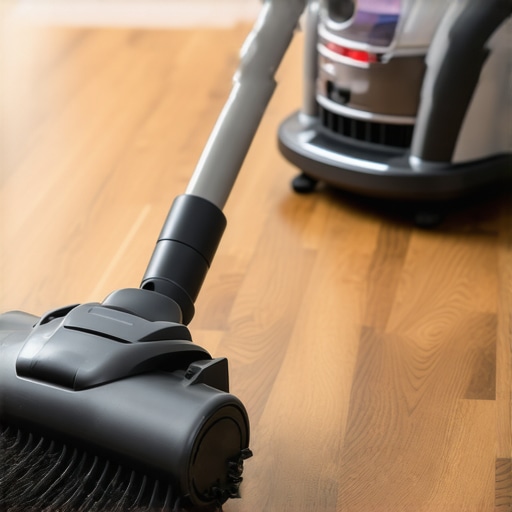
Laminate is often sold as a indestructible alternative to wood, but it has its own vulnerabilities. The wear layer on laminate is a resin-infused paper. While it is hard, it is very thin. A vacuum that scratches a hardwood floor will absolutely destroy a laminate floor because once you through that wear layer, the decorative paper is exposed. Unlike solid wood, you cannot sand and refinish laminate. If you ruin it with a cheap vacuum, the floor is dead. You have to rip it out and start over. This is why I advocate for canister vacuums with parquetry heads. These heads are flat, wide, and lined with natural horsehair bristles that glide across the surface without any risk of abrasion.
“Hardwood flooring is a living product that reacts to its environment; treat the finish as a shield that must be preserved at all costs.” – NWFA Technical Manual
The hierarchy of vacuum performance
The following table breaks down the technical requirements for different flooring types to ensure structural longevity and finish preservation. Use this as a guide when shopping for your next maintenance tool.
| Floor Type | Recommended Vacuum Head | Suction Requirement | Bristle Type |
|---|---|---|---|
| Solid Hardwood | Fixed Floor Tool | High CFM | Natural Horsehair |
| Engineered Wood | Soft Roller | Medium | Microfiber |
| Laminate | Suction Only | High | None or Soft |
| Tile and Grout | Adjustable Height | High | Stiff Synthetic |
The maintenance checklist for the obsessed homeowner
Maintaining a floor is a structural engineering challenge. Follow this checklist to ensure your finish lasts for thirty years instead of five.
- Inspect vacuum wheels for stuck pebbles or grit before every use.
- Deactivate the brush roll before transitioning from carpet to hardwood.
- Replace HEPA filters regularly to maintain maximum airflow and suction.
- Use a dedicated microfiber dust mop for daily cleaning to reduce vacuum frequency.
- Check the felt pads on the bottom of the vacuum head for wear and tear.
- Ensure the vacuum hose is not dragging across the floor behind you.
The microscopic reality of suction and airflow
Suction is not just about the motor; it is about the seal. A good hardwood vacuum creates a localized low-pressure zone that pulls dirt out of the cracks between boards. This is vital for the health of the floor. If dirt remains in those cracks, it acts like a wedge. As the wood expands and contracts with the seasons, the dirt is forced deeper into the tongue and groove joint. This can cause the boards to squeak or eventually split. While most people want the thickest underlayment, too much cushion actually causes the locking mechanisms on LVP to snap under pressure, and the same principle applies to cleaning. You don’t want a heavy, cushioned vacuum head that masks the floor; you want a light, agile tool that focuses on airflow. Airflow is the only safe way to clean a floor without risking the integrity of the surface.
The final verdict on equipment selection
Do not be fooled by marketing terms like multi-surface or all-in-one. A vacuum that is great for high-pile carpet is almost certainly bad for hardwood floors. Look for brands that specialize in hard floor care, particularly those from Europe where hardwood is the standard. These machines are designed with the understanding that wood is a premium material. They use soft-start motors that don’t jolt the machine and rubber wheels that won’t mar the finish. Your floor is the foundation of your home. Treat it with the respect it deserves, or you will find yourself calling someone like me to sand it all down and start over. And trust me, that is an expensive phone call you do not want to make.