
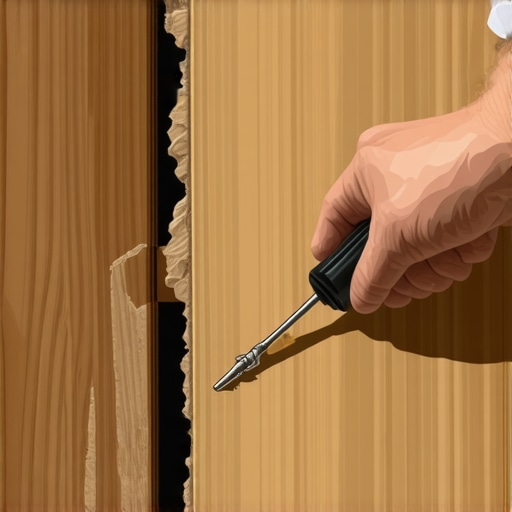
The ghost in the expansion gap
Fixing a single laminate plank requires a surgical approach using an oscillating multi-tool and high-strength wood adhesive to bypass the click-lock system. This method preserves the integrity of the surrounding floor by removing the damaged unit in sections and modifying the replacement plank to drop into the existing void without requiring a total teardown of the room. You must maintain a precise 1/8 inch gap at the subfloor level to ensure the new plank does not bind against its neighbors during humidity shifts.
I once saw a guy try to replace a laminate plank in the middle of a kitchen where they had installed a massive marble island right on top of the floating floor. The floor was trapped. When he cut the damaged plank out, the tension was so high that the surrounding planks jumped half an inch. It sounded like a gunshot. This happened because the installer ignored the basic physics of kinetic movement. A floating floor is a living, breathing entity. It expands and contracts based on the moisture content of the air. When you lock it down with heavy cabinetry or try to glue a single piece incorrectly, you are inviting disaster. My job today is to keep you from making that mistake. We are going to treat this floor like a structural engineering project. We are not just swapping a piece of wood. We are recalibrating a mechanical system.
“A floor is only as good as the subfloor beneath it; deflection is the enemy of every joint.” – Master Flooring Axiom
The molecular reality of high density fiberboard
Laminate flooring consists of a high-density fiberboard core topped with a photographic layer and a protective aluminum oxide wear layer. These layers are fused under extreme pressure, creating a dense material that resists impact but remains vulnerable to edge damage and moisture infiltration at the seams. Understanding the specific gravity of your floor core is the first step in selecting the right adhesive for a mid-floor repair. The core density determines how much glue the material will soak up and how strong the final bond will be.
Most people look at a laminate floor and see a pretty pattern. I see a stack of compressed cellulose fibers held together by resins. When you drop a heavy pot or drag a chair with a missing felt pad, you break the aluminum oxide barrier. Once that barrier is gone, the HDF core is exposed. It will soak up water like a sponge. This leads to edge swelling, also known as peaking. You cannot sand this out. You cannot hide it with wax. The only way to fix it is to cut it out. We have to look at the AC rating of the floor. An AC3 rating is fine for bedrooms, but in a kitchen, you want AC4 or AC5. The higher the rating, the harder it is to cut through that wear layer without burning your saw blade.
| AC Rating | Usage Class | Durability Level | Core Density (kg/m3) |
|---|---|---|---|
| AC3 | Residential Heavy | Moderate | 800-850 |
| AC4 | Commercial Light | High | 850-900 |
| AC5 | Commercial Heavy | Extreme | 900+ |
Tools that actually work for precision repair
A successful plank replacement requires an oscillating multi-tool with a carbide blade, a wood chisel, and a high-quality PVA wood glue. You also need a vacuum to remove every microscopic bit of sawdust from the tongue and groove channels of the surrounding planks. Even a tiny sliver of debris will prevent the new plank from sitting flush, creating a lip that will catch socks and eventually chip off under foot traffic. Precision is the only thing that separates a professional repair from a DIY mess.
- Oscillating multi-tool for plunge cuts
- 1/2 inch sharp wood chisel for corner cleanup
- High-strength PVA glue or specialized flooring adhesive
- Power vacuum with a HEPA filter
- Heavy weights or Five-gallon buckets for pressure during curing
- Blue painter tape to protect surrounding edges
The surgical removal of a center plank
Plunge your oscillating saw into the center of the damaged plank to create an entry point for the removal process. You must avoid cutting into the subfloor or the underlayment, as damaging the moisture barrier can lead to long term mold issues or subfloor rot. Work from the center outward toward the corners, stopping approximately half an inch from the edges to ensure you do not nick the surrounding planks that you intend to keep. This is where most installers fail. They get impatient and blow through the joint.
Once you have the center removed, you will have a hole in your floor. Now comes the delicate work. You need to use your chisel to gently pry the remaining edges of the damaged plank out of the locking mechanism. If you are working with a Uniclic or Valinge system, the pieces might be tucked tight. You have to understand the geometry of the click. You aren’t just pulling up. You are vibrating the piece out. I often use the chisel to split the remaining tongue of the damaged piece. This weakens its grip. Once the old piece is out, the void must be cleaned. I mean hospital clean. Any grit left in that groove will act like a shim, pushing your new plank up and creating a trip hazard. Use a flashlight. Look for the tiny plastic or wood shards that hide in the dark corners of the groove.
Why the locking mechanism is your biggest enemy
You cannot click a new plank into a hole because the surrounding floor provides no room for the required installation angle. To make the new plank fit, you must surgically remove the bottom lip of the groove and the tongue on the short end of the replacement board. This transforms the mechanical lock into a slip-joint that can be dropped vertically into place. This modification is the secret to mid-room repairs, but it places the entire structural burden on the adhesive you choose.
When you shave off that locking lip, you are removing the floor’s ability to stay together on its own. You are now relying on chemistry. I see guys use hot glue or cheap construction adhesive. Don’t do that. You need a glue with a high solids content that stays slightly flexible when cured. If the glue is too brittle, the natural movement of the floor will snap the bond within six months. If it is too soft, the plank will shift and create a gap. I prefer a professional-grade PVA glue specifically formulated for tongue and groove applications. It has the right viscosity to flow into the joint but enough body to hold the plank steady while it sets.
“Every floating floor requires room to move; if you pin it down, you break it.” – Master Flooring Axiom
The molecular bond of flooring adhesives
Adhesive chemistry determines the longevity of a repair in environments with fluctuating temperature and humidity. A cross-linking PVA glue creates a chemical bond between the cellulose fibers of the HDF core, effectively welding the new plank to its neighbors. This bond must resist the shear forces generated when someone walks across the floor or when the house settles. Without this specific chemical interaction, the repair will eventually fail under the stress of daily life.
Think about the physics of a footstep. When you step on a floor, you are applying hundreds of pounds of pressure per square inch. That pressure is transferred through the plank to the joints. In a normal floor, the mechanical lock handles this. In our repair, the glue line is doing all the work. This is why you must weight the plank down for at least 24 hours. I tell my clients to stay off it for two days. I use five-gallon buckets filled with water or heavy toolboxes. You need consistent, even pressure across the entire surface of the plank to ensure the glue spreads evenly and makes contact with both sides of the joint. If you have a void in the glue, you have a weak point. That weak point will eventually become a squeak.
The 1/8 inch that ruins everything
Maintaining a consistent expansion gap at the perimeter of the room is essential even when replacing a single plank in the center. If the overall floor is already tight against the walls, the pressure will be focused on your newly glued joint, causing it to fail or the plank to tent. Before you start your repair, check the baseboards. If you can’t see a gap, your floor is a ticking time bomb. The single plank repair is just the first thing to break in a system that is under too much tension.
I’ve worked in places like Phoenix where the air is so dry the wood shrinks until you can see the subfloor. I’ve worked in the humidity of New Orleans where the floor expands so much it starts to climb the walls. Your repair has to account for these extremes. If you are doing this repair in the middle of a humid summer, the floor is at its maximum size. If you do it in the dead of winter, it is at its smallest. If you glue a plank in tight during the winter, come summer, it will have nowhere to go. It will buckle. I always leave a hair of breathing room. It is better to have a microscopic gap that you can fill with a color-matched sealant than to have a floor that peaks and ruins the whole room.
Preparation of the replacement plank
Measure the replacement plank against the opening three times before you apply a single drop of adhesive. Even if the planks came from the same box, manufacturing tolerances can vary by a fraction of a millimeter. You may need to sand the edges of the replacement piece to get a perfect fit. If the plank is even slightly too long, it will put end-pressure on the entire row, leading to gaps opening up elsewhere in the room. This is the butterfly effect of flooring installation.
Use a block plane or a sharp utility knife to remove the protruding parts of the locking system. You want the new plank to dry-fit perfectly. It should drop in with almost no resistance. If you have to hammer it in, it is too tight. Once the fit is confirmed, apply a bead of glue to the top of the tongue on the existing floor and to the modified groove of your new plank. Do not over-apply. Excess glue will squeeze out onto the surface and can ruin the finish if not cleaned immediately. I keep a damp microfiber cloth and a bucket of clean water right next to me. Clean as you go. Once that glue dries on the aluminum oxide surface, it is a nightmare to remove without scratching the floor.
Final setting and cure times
Applying weight to the repaired area is the final step in ensuring the plank remains flush with the surrounding floor. Place a heavy object that covers the seams to prevent one side of the plank from tilting up while the glue is wet. The goal is a flat, even surface that is indistinguishable from the rest of the floor. If you skip this, you will end up with a lippage issue that will eventually lead to the edges of the new plank chipping off.
Check the area after one hour. If any glue has squeezed out due to the weight, wipe it away. Then, leave it alone. Do not let children or pets near the area. The bond is forming at a molecular level. Any movement during this period will break the developing polymer chains in the adhesive, resulting in a weak joint. After 24 hours, you can remove the weights. The floor is now a single, functional unit again. This surgical approach saves you the thousands of dollars and the massive headache of moving furniture and ripping up baseboards. It is the mark of a master installer who understands that sometimes, the best way to fix a big problem is with a very small, precise solution.