
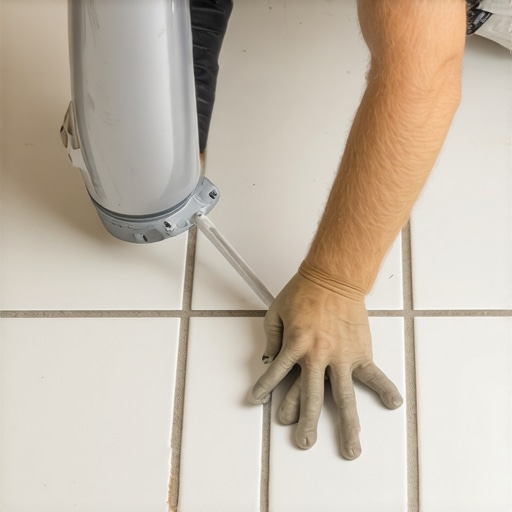
I spent three days grinding concrete on a job last month just so the floor wouldn’t click like a castanet. Most guys skip the leveling compound. They think the underlayment or the tile will hide the dip. It won’t. I walked onto a job site where the previous installer had left a haze so thick on a black slate floor it looked like it had been dusted with flour. The homeowner was in tears because the stone looked dead. I had to explain that a floor is an engineered system, not just a pretty surface. If you don’t respect the chemistry of the grout and the physics of the subfloor, you are just throwing money into a dumpster. You smell the wet concrete and the polymer modified thin-set every morning and you realize that every sixteenth of an inch matters. A floor is only as good as the subfloor beneath it. If that subfloor has deflection, your grout will crack, and your haze will be the least of your problems. We are talking about structural integrity here. You can’t just slap tile down on a bouncy plywood deck and expect the grout to stay put. It will crumble. It will fail. You have to understand the bond between the substrate and the tile. This isn’t about aesthetics. This is about engineering a performance surface that will outlast the house it is installed in.
The white ghost on your ceramic surface
Grout haze is a mineral residue left on tile surfaces after the grouting process where cementitious particles and polymer additives dry before they are properly removed. Preventing this requires precise timing, a low-moisture cleaning technique, and the use of neutralizers to break the chemical bond between the film and the tile. Every installer has faced the nightmare of the secondary haze. You think you finished the job, you pack up your tools, and you come back the next morning only to see a milky white film covering your hard work. This is not just dust. This is a microscopic layer of Portland cement and latex modifiers that have bonded to the microscopic pores of the tile. If you are working with natural stone or textured porcelain, this haze is even more aggressive. It clings to the peaks and valleys of the tile surface like a parasite. You have to approach grout cleanup with the same precision as a surgeon. If you wait too long, the grout sets. If you use too much water, you wash out the pigment and weaken the joint. It is a delicate balance that separates the professionals from the weekend warriors who buy their supplies at big box discount retailers. Those guys sell you the dream of a fast floor, but they don’t tell you about the chemical reality of hydration and carbonation.
“A floor is only as good as the subfloor beneath it; deflection is the enemy of every joint.” – Master Flooring Axiom
Why your subfloor is lying to you
Subfloor preparation determines the success of your grout job because any movement in the substrate leads to micro-cracking in the grout joints which releases more dust and residue over time. A stable subfloor meets the L/360 standard for ceramic tile to ensure that the grout stays within the joints rather than migrating onto the tile face. You might think the subfloor is flat, but your level doesn’t lie. I have seen floors that looked perfect to the naked eye but had a quarter-inch dip over ten feet. When you spread your thin-set over a dip, you create a pocket of air or an uneven bed of mortar. This causes the tile to sit at different heights. When you go to wipe your grout, your sponge hits the high edges and skips the low spots. This is how haze starts. You end up leaving excess grout in the depressions because your cleaning tool can’t make flat contact with the surface. You have to grind the high spots and fill the low spots with a high-quality self-leveling underlayment. Don’t trust the builder-grade subfloor that came with the house. It is usually thin plywood that will flex the moment a heavy refrigerator or a kitchen island is placed on it. That flex is the silent killer of grout. It breaks the bond and turns your grout into a fine powder that creates a perpetual haze every time you mop. You must ensure the stiffness of the floor is sufficient to support the weight of the tile and the grout without any vertical movement.
The microscopic chemistry of polymer residue
The chemistry of modern grout is far more complex than the simple sand and cement mixtures of the past. Today we use polymer-modified grouts that contain latex and other resins designed to increase strength and reduce permeability. These additives are great for the longevity of the floor, but they are a nightmare for cleanup. When the water evaporates from the grout mixture, these polymers migrate to the surface. They form a plastic-like film that is incredibly difficult to remove once it has fully cured. This is why you see that rainbow sheen on some tile jobs. It is literally a layer of plastic bonded to the tile. You also have to consider the hydration process of Portland cement. As the cement cures, it forms crystals that lock the sand particles together. If these crystals form on the surface of the tile instead of just in the joint, you have a physical bond that requires mechanical or chemical force to break. In humid environments like Florida or Houston, this process happens slower, giving you more time to clean. In the dry heat of Phoenix or Las Vegas, the grout can flash-dry in minutes. You have to adapt your speed to the local climate. If you are working in a dry zone, you might need to pre-dampen the tiles to prevent them from sucking the moisture out of the grout too quickly.
| Grout Type | Bond Strength | Porosity | Cleanup Difficulty |
|---|---|---|---|
| Cementitious Sanded | Moderate | High | Medium |
| Cementitious Unsanded | Low | High | High |
| Epoxy Grout | Extreme | Zero | Very High |
| High-Performance Cement | High | Low | Medium |
| Premixed Resin | Moderate | Low | Low |
The error of the over-saturated sponge
The biggest mistake I see is the guy who thinks more water means a cleaner floor. It is actually the opposite. When you use a soaking wet sponge, you are just moving the grout particles around in a slurry. You are also diluting the grout in the joints, which leads to color inconsistency and pinholes. You want a sponge that is damp, not dripping. I use a hydro-sponge with a high density because it holds the water inside the cells rather than letting it run all over the tile. You should be able to squeeze the sponge and get only a few drops of water out of it. When you wipe, you do it in a single, smooth stroke. Then you flip the sponge and wipe again. Then you rinse. If you are wiping with a dirty sponge, you are just painting the tile with grout haze. I have seen guys use the same bucket of water for an entire bathroom. That is insanity. You need to change your rinse water every fifty square feet. If the water in your bucket looks like chocolate milk, you aren’t cleaning anything. You are just spreading the film. Professional installers often use a two-bucket system. One bucket for the initial wash and a second bucket of clean water for the final pass. This ensures that the last bit of moisture touching the tile is pure and free of cement particles. It takes more time, but it saves you hours of scrubbing the next day.
The 10-step haze prevention protocol
- Check subfloor deflection to ensure it meets TCNA L/360 or L/720 standards before installation.
- Acclimate the tile and grout to the room temperature for at least 48 hours.
- Mix grout to a peanut butter consistency using a slow-speed drill to avoid introducing air bubbles.
- Apply grout at a 45-degree angle to the joints to ensure they are packed full from bottom to top.
- Wait for the grout to take a firm set which usually takes 10 to 20 minutes depending on humidity.
- Use a damp, high-density hydro-sponge to perform the initial wipe in a circular motion.
- Follow with a final diagonal wipe using a clean, well-wrung sponge to tool the joints.
- Avoid using acidic cleaners on the first day as they can leach pigment from the fresh grout.
- Buff the tile with a dry microfiber cloth or a piece of cheesecloth after about two hours.
- Perform a final check with a high-powered light at a low angle to catch any remaining residue.
“The final appearance of the tile is determined in the first thirty minutes of the grout’s life; patience and clean water are the only tools that matter.” – TCNA Installation Guide
The ghost in the expansion gap
One thing people forget is the expansion gap at the perimeter of the room. You never grout the joint where the tile meets the wall or a different flooring material like hardwood floors or laminate. You leave that open for a color-matched caulk. If you stuff that gap with grout, the floor has no room to breathe. When the house shifts or the temperature changes, the tile will expand. If the grout is packed tight against the wall, the pressure has nowhere to go but up. This causes the tile to tent or the grout joints to explode. This movement also creates micro-fine grout dust that contributes to a hazy look every time the floor is walked on. You need to maintain that structural break. I have seen beautiful showers ruined because the installer grouted the inside corners instead of using 100 percent silicone. The grout in those corners will crack within six months every single time. It is a physical certainty. You have to respect the movement of the building. In regions with high seismic activity or extreme temperature swings, this is even more vital. The floor is a living thing. It moves, it expands, and it contracts. If you treat it like a static object, it will break your heart and your bank account. Use the right expansion materials and you will keep the haze and the cracks at bay.
Specific solutions for textured porcelain
Textured porcelain is a nightmare for grout haze because it is designed to mimic the look of natural stone or wood grain. Those tiny crevices are the perfect hiding place for cement residue. If you are installing a wood-look plank, the texture can trap grout so deeply that a standard sponge won’t touch it. In these cases, I use a grout release agent before I even start grouting. A grout release is a temporary coating that fills the pores of the tile and prevents the grout from sticking. You apply it, let it dry, then grout as usual. The grout stays in the joints where it belongs and wipes off the surface with ease. It is a lifesaver for high-texture jobs. You also have to be careful with the color of your grout. If you use a dark charcoal grout on a light, textured tile, any haze will be magnified ten times. You are essentially staining the tile. Always do a test area first. If the grout doesn’t wipe clean easily, stop. Don’t do the whole floor and hope for the best. Use a release agent or change your cleaning strategy. Sometimes a stiff-bristled nylon brush is needed to get the grout out of the deeper textures, but you have to be careful not to gouge the joints. It is a game of finesse. You are fighting against the physical grip of the tile surface.
Chemical warfare against cementitious films
If you find yourself with a haze the next day, don’t panic. But don’t reach for the strongest acid you can find either. You want to start with the mildest solution possible. A mixture of white vinegar and water can work for very light haze, but the acidity can sometimes etch the surface of sensitive stones or damage the grout itself if it is too strong. I prefer professional grout haze removers that are pH-balanced. These are designed to break down the specific polymers used in modern grouts without hurting the tile. For epoxy grout, you need a specialized epoxy stripper. Epoxy haze is not a mineral deposit; it is a plastic coating. Water and vinegar won’t touch it. You need a chemical that can break the resin bond. Always wear gloves and ensure proper ventilation. This is serious chemistry. I once saw a guy try to clean epoxy haze with a generic floor cleaner. He ended up just smearing the resin and making a permanent mess. You have to use the right tool for the job. Once you apply the remover, let it sit for the recommended dwell time. This allows the chemicals to penetrate the film. Then use a white nylon scrub pad to gently agitate the surface. Rinse with clean water and dry immediately. The goal is to lift the residue off the tile and lock it into your cleaning cloth, not just move it around.
The science of the secondary haze
While most people want the thickest underlayment, too much cushion actually causes the locking mechanisms on LVP or the grout joints in tile to snap under pressure. This same logic applies to grout haze. You think you are cleaning, but the minerals are actually suspended in the water and redeposit themselves as the water evaporates. This is the secondary haze. It is a physical phenomenon where the smallest particles of cement stay behind after the water is gone. The way to beat this is with microfiber. Microfiber has a unique structure that traps particles rather than just pushing them. After you have done your wet wipes and the tile has started to dry, take a clean, dry microfiber mop or cloth and go over the whole floor. This mechanical action picks up the microscopic dust that the sponge left behind. You will see the shine return to the tile instantly. It is the most effective way to ensure a haze-free finish. I never leave a job without a final dry buff. It is the signature of a professional. If you skip this, you are leaving it to chance. And in the flooring world, chance usually means a callback and a grumpy homeowner. Do it right the first time and you won’t have to do it a second time. That is the only way to make a profit in this business. Respect the chemistry, respect the physics, and respect the tile. Your knees will thank you when the job is done and the floor looks like a mirror.