
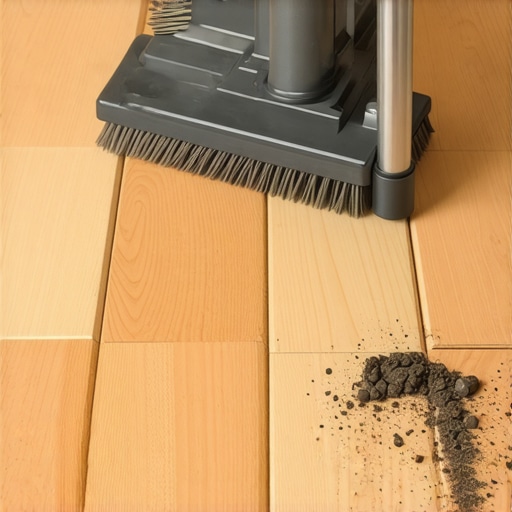
The vacuum can not reach the darkness
Dirt collects in laminate gaps because the floating floor system naturally expands and contracts through seasonal humidity cycles, creating microscopic canyons where static electricity and gravity pull in skin cells, pet dander, and silica. Standard suction fails because these particles wedge into the click-lock tongue and groove profile.
Most guys skip the leveling compound. They think the underlayment will hide the dip. It won’t. I spent three days grinding concrete on a job last month just so the floor wouldn’t click like a castanet. That job was a wake-up call for the homeowner. They had gaps big enough to lose a credit card in, and every single one was packed with grey, oily grit. I smell like oak dust and WD-40 most days, and I can tell you that dirt in those gaps isn’t just an eyesore. It is an abrasive. Every time you step on a plank that has grit in the joint, you are basically rubbing sandpaper against the core of the floor. Eventually, that locking mechanism is going to fail, and you will be looking at a full replacement. If you think a quick pass with a vacuum is going to save you, you are dreaming. You have to understand the physics of the joint to actually get it clean.
The ghost in the expansion gap
Gaps in laminate flooring occur when the environmental humidity drops below 35 percent or when the subfloor is uneven, leading to mechanical stress on the click-lock joints. These openings act as magnets for grit, skin cells, and microscopic silica that degrade the core material over time.
Laminate is a high-density fiberboard product, which is just a fancy way of saying compressed sawdust and resin. It reacts to the air. In the swampy humidity of Houston, your floor might be tight as a drum, but the minute that AC kicks on and dries out the air, those planks shrink. That is when the gaps appear. I have seen guys try to use a wet mop to clean these gaps. That is the worst thing you can do. You are literally pushing liquid into the raw core of the board. The moisture triggers capillary action, pulling water deep into the fiberboard. The edges swell, the gap gets smaller temporarily, and then when it dries, the fiberboard is permanently damaged and the gap returns even wider than before.
“A floor is only as good as the subfloor beneath it; deflection is the enemy of every joint.” – Master Flooring Axiom
Tools for the surgical extraction of debris
Cleaning between laminate gaps requires non-abrasive mechanical agitation combined with high-velocity air displacement. You should use a soft-bristled brush or a plastic toothpick to dislodge compacted grit before using a vacuum hose attachment without a beater bar to extract the loosened particles.
- Soft-bristled detail brush or old toothbrush
- Plastic dental picks or wooden toothpicks
- Vacuum with a crevice tool attachment
- Microfiber cloth dampened with Ph-neutral cleaner
- Blue painter tape for marking troublesome spots
Do not use metal scrapers. I have seen homeowners try to use a flathead screwdriver to dig out dirt. All you are doing is chipping the protective aluminum oxide wear layer. Once that layer is gone, the decorative paper underneath is exposed, and your floor is ruined. You want to work the bristles of the brush into the gap at a forty-five degree angle. This creates a vibration that breaks the static bond between the dust and the plastic locking mechanism.
Why your subfloor is lying to you
Subfloor irregularities are the primary cause of persistent gapping and dirt accumulation because they create vertical movement known as deflection. When a plank sinks into a low spot, the tongue pulls away from the groove, creating a void that serves as a reservoir for household debris.
If you have one specific spot where the dirt always comes back, it is probably a dip in the concrete or plywood underneath. I have spent decades on my knees with a moisture meter and a six-foot level. If that floor is out of flat by more than an eighth of an inch over six feet, those joints are going to open up. No amount of cleaning will fix a structural failure. While most people want the thickest underlayment to hide these issues, too much cushion actually causes the locking mechanisms on laminate to snap under pressure. You want a firm, flat base. If the floor is moving, it is breathing, and if it is breathing, it is sucking in dirt every time you walk across it.
| Material Type | Gap Tendency | Cleaning Approach | Sensitivity |
|---|---|---|---|
| Laminate | High (Floating) | Dry Brush / Vacuum | Extreme Moisture Risk |
| Solid Hardwood | Seasonal | Wood-safe Putty | Moderate Shrinkage |
| Engineered Wood | Low | Microfiber Damp | Low Deflection |
| Tile Grout | None | Stiff Brush / Sealant | Porous Absorption |
The chemical reality of cleaning agents
Using oil-based soaps or waxes on laminate gaps creates a sticky residue that binds dirt particles to the click-lock mechanism, making future removal nearly impossible. A Ph-neutral, surfactant-based cleaner is required to break surface tension without leaving a film that attracts more contaminants.
I despise those floor waxes they sell at big-box stores. They claim to restore shine, but all they do is create a gummy mess inside your gaps. Once that wax gets in there, it acts like glue for dog hair and skin cells. You end up with a black line that looks like a grout joint but is actually a disgusting mixture of old wax and filth. If you need to use a liquid, use something specifically rated for laminate that evaporates quickly. The dry heat of Phoenix or the high-altitude air of Denver will shrink your planks fast, so keeping them clean during the dry months is a constant battle. You have to be surgical about it. Spray the cleaner on the cloth, not the floor. We are looking for controlled moisture, not a flood.
“Laminate flooring must maintain an expansion gap of at least 1/4 inch at all vertical obstructions to prevent pressure-related gapping.” – Structural Installation Guide
The 1/8 inch that ruins everything
Expansion gaps at the perimeter of a room are vital for preventing the floor from peaking or gapping in the center. If a floor is pinned against a wall or a heavy kitchen island, it cannot move as a single unit, causing joints to pull apart and collect dirt.
I once saw a walnut laminate floor that was cupping so bad it looked like a potato chip. The installer had run the planks tight against the baseboards with no gap. When the humidity rose, the floor had nowhere to go, so it buckled. Then, when the humidity dropped, it didn’t settle back right, leaving massive gaps in the middle of the living room. It was a fifteen-thousand-dollar mistake. You have to leave that gap under the baseboards. If your floor is gapping in the middle of the room, check your perimeters. If the floor is pinched, the joints will never stay closed, and you will be cleaning those gaps until the day you tear the floor out. It is a performance surface, not a decoration. Treat it like a machine.
Repairing the structural void
Once the gaps are cleaned of all debris, they can often be closed using a floor gap fixer tool or a professional-grade suction cup to slide the planks back into their original locking position. This permanent fix eliminates the space where dirt collects but requires the removal of any grit that might block the joint.
If you clean the gap and it is still there, you might be able to pull it shut. You get a glass suction cup tool, stick it to the plank, and give it a firm tap with a rubber mallet toward the gap. But hear me on this. If there is even one grain of sand left in that joint, you will snap the tongue off when you try to close it. That is why the cleaning phase is so critical. You have to be meticulous. It is a structural engineering challenge. Once the gap is closed, you can use a tiny drop of wood glue in the groove if the locking tab is worn, but that is a last resort. Your best bet is maintaining the right humidity in your house. Keep it between thirty-five and fifty-five percent year-round, and your gaps will mostly take care of themselves. Stop treating your floor like a rug and start treating it like the engineered system it is. It will buckle if you don’t.