
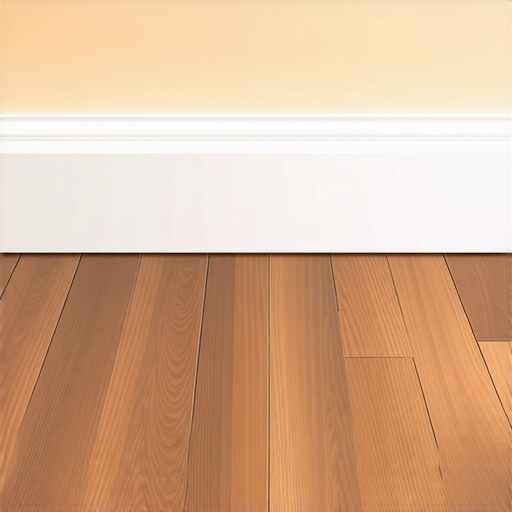
The hidden physics of wood expansion and wall gaps
I once walked into a house where a $15,000 wide-plank walnut floor was cupping so bad it looked like a potato chip because the installer didn’t check the crawlspace humidity. The homeowner was furious. The gaps at the perimeter were nearly an inch wide in some spots and completely crushed against the drywall in others. This is the reality of hardwood floors. They are living, breathing organisms that react to every percentage point of moisture in your home. When you see a wide gap between your flooring and the wall, you are looking at a failure of planning or a victim of extreme environmental shifts. Fixing it requires more than just shoving a piece of wood in the hole. You have to understand why the gap exists and use the right architectural trim to mask it without restricting the floor’s necessary movement. If you pin a floor down too tight, it will buckle. If you leave it too loose, it looks like a DIY disaster. Finding the middle ground is where the professional separates himself from the amateur. Most homeowners think a bit of caulk or grout will solve a gap. It won’t. Grout is for showers and tile, not for the dynamic movement of a solid oak plank. Wood moves, grout cracks. It is that simple.
The structural reason for expansion gaps
Wide gaps between hardwood and walls are usually intentional expansion spaces required by NWFA standards to allow for natural wood movement. To hide them, you must use tiered molding systems like baseboards combined with shoe molding or quarter round that provide coverage without nailing the floor to the subfloor. Wood is hygroscopic, meaning it absorbs and releases moisture from the air. In the summer, when humidity is high, the wood cells expand across the grain. In the winter, they shrink. This is why a floor that looked perfect in July might show gaps in January. If you do not leave a gap at the wall, the floor has nowhere to go but up. I have seen floors rip the nails right out of the subfloor because they lacked a measly half-inch of breathing room at the perimeter. The gap is not a mistake; it is a mechanical necessity. The trick is covering it with precision.
“A floor is only as good as the subfloor beneath it; deflection is the enemy of every joint.” – Master Flooring Axiom
Baseboard thickness and the layered approach
Hiding a wide gap effectively requires increasing the horizontal footprint of your trim by layering a thick baseboard with a flexible shoe molding. This creates a stepped architectural look that can cover up to one full inch of space while allowing the hardwood planks to slide freely underneath. Standard baseboards are often only 1/2 inch thick. If your gap is 3/4 of an inch, the baseboard will literally fall into the hole. You need to step up to a 3/4 inch base or add a secondary piece. This is where shoe molding becomes your best friend. Unlike quarter round, which is a perfect radius, shoe molding has a taller, thinner profile that looks more refined. It is flexible enough to follow the undulations of a floor that isn’t perfectly flat. When we talk about the physics of this, we are looking at the shear strength of the fasteners. You nail the shoe molding into the baseboard, never into the floor. This allows the floor to expand and contract beneath the trim without pulling the molding away from the wall.
The failure of filler and grout in wide voids
Using wood filler or grout to bridge a gap between hardwood and a wall is a guaranteed failure because these materials are rigid and cannot accommodate the floor’s movement. As the wood expands, it will crush the filler into powder or crack the grout, leaving an even messier gap. I see this in DIY jobs all the time. People think they can treat a floor like a countertop. But a floor is a moving system. The cellular structure of a 5-inch wide oak plank can expand by a significant fraction of an inch across a large room. If you fill that expansion space with something hard, you have created a structural bridge. Now, when the wood expands, it pushes against the wall. This can cause the drywall to crack or the floor to peak at the joints. In bathrooms, people try to use grout from the showers to fill the gap where the laminate or wood meets the tile. It never works. The vibration of footsteps alone is enough to shatter that bond within weeks. Stick to mechanical covers, not chemical fillers.
Advanced scribing for uneven walls and stone
Scribing is the professional technique of tracing the irregular contour of a wall or stone fireplace onto a piece of wood trim to create a perfect fit. This allows you to hide large gaps even when the wall is bowed or the surface is as jagged as a fieldstone hearth. You use a compass or a specialized scribing tool. You set the width to the largest part of the gap, then run the tool along the wall while the pencil marks the trim. Then you take it to the belt sander or use a jigsaw with a scrolling blade. It is tedious work. It is the kind of work that makes a floor look like it was grown into the house rather than just thrown on top of it. In older homes, walls are never straight. A 1/2 inch gap in the corner might turn into a 1 inch gap in the middle of the run. Scribing a wider piece of baseboard is the only way to maintain a clean line without huge globs of caulk that will eventually turn yellow and peel away.
Comparison of trim coverage options
| Molding Type | Standard Width | Max Gap Coverage | Best Use Case |
|---|---|---|---|
| Standard Baseboard | 1/2 inch | 3/8 inch | New construction with straight walls |
| Thick Plinth Base | 3/4 inch | 5/8 inch | High-end residential hardwood |
| Standard Shoe Molding | 1/2 inch | 7/16 inch | Hiding small gaps with existing base |
| Large Quarter Round | 3/4 inch | 11/16 inch | Covering major expansion errors |
| Cove Molding | 5/8 inch | 1/2 inch | Transitions to cabinetry or stairs |
The professional toolkit for gap management
- Digital moisture meter to verify subfloor and plank equilibrium
- Pneumatic 18-gauge brad nailer for securing shoe molding
- Professional grade scribing compass with locking nut
- Variable speed belt sander for fine-tuning scribed edges
- High-quality miter saw with a 60-tooth carbide finish blade
- Oscillating multi-tool for undercutting door jambs
When you are dealing with a climate like the dry heat of Phoenix, the wood will shrink to its absolute minimum. This is when your gaps will be at their widest. If you install a floor in the middle of a Phoenix summer without proper acclimation, the winter will reveal gaps you never thought possible. Conversely, in the swampy humidity of Houston, that same floor will swell. This is why acclimation is the most ignored step in flooring. You cannot just take wood from a warehouse and nail it down. It needs to sit in the room for at least 72 hours, sometimes a week, until its moisture content is within 2 percent of the subfloor. If you ignore this, no amount of molding will ever hide the structural movement that follows.
“Wood is not a static material; it is a bundle of straws that soak up water and swell until the structure fails.” – Master Flooring Axiom
The ghost in the expansion gap
The most common mistake is nailing the trim through the hardwood into the wall plate which locks the floor in place and causes catastrophic buckling. Professional installers always nail horizontally into the wall or vertically into the baseboard to ensure the floor remains a floating or independent system. If you drive a nail through that beautiful shoe molding and it catches the edge of a hardwood plank, you have essentially anchored that spot. When the rest of the floor tries to move, that one nail will act as a pivot point. The floor will spin or stress the tongue and groove joints until they snap. You will hear a loud pop in the middle of the night and wonder if your house is haunted. It isn’t a ghost. It is just the sound of a thousand pounds of pressure breaking a wood joint because you didn’t respect the expansion gap. Always use a 1.5 inch brad and aim high into the baseboard. This keeps the hardwood free to slide as the seasons change. It is about working with the physics of the material, not against it. Wood always wins the fight against a nail.