
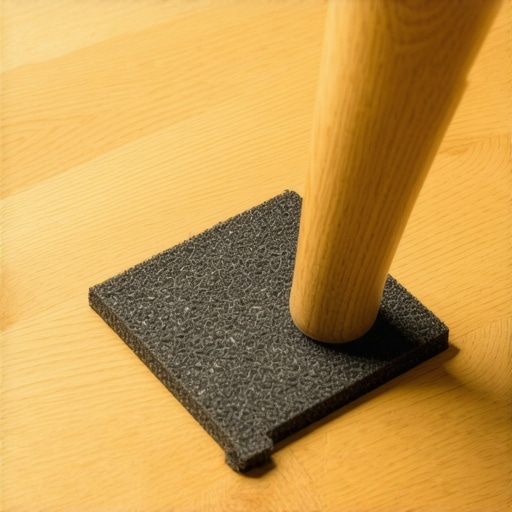
How to Protect Your Hardwood Floors from Heavy Furniture
I once walked into a house where a $15,000 wide-plank walnut floor was cupping so bad it looked like a potato chip because the installer didn’t check the crawlspace humidity, but the real tragedy was the grand piano in the corner. The owner had moved it without casters, and the three legs had literally crushed the wood fibers an eighth of an inch deep into the subfloor. It was a structural failure disguised as a scratch. I smell like oak dust and floor wax most days, and I can tell you that people treat their floors like granite when they should be treating them like a high-performance engine. Hardwood floors are biological materials. They are made of cellulose and lignin. They breathe, they move, and they suffer under the weight of your furniture if you do not understand the physics of point loads.
The heavy price of a beautiful sofa
Protecting hardwood floors from heavy furniture requires managing point load pressure, using high-density felt pads, and ensuring the subfloor has zero deflection. Preventing damage involves distributing the weight of heavy items across a larger surface area to avoid crushing the cellular structure of the wood fibers and damaging the finish.
When you place a three-hundred-pound mahogany cabinet on four tiny legs, you are not just placing weight. You are applying concentrated pressure measured in pounds per square inch. If those legs have a surface area of only one square inch each, you are putting seventy-five pounds of pressure on four specific spots. If the furniture is bumped or dragged, that pressure spikes. I have seen white oak, which has a Janka hardness rating of 1,360, get dented because a homeowner used cheap plastic glides. The plastic is harder than the wood. It does not give. It simply bites into the grain. Unlike laminate or the tile you might find in showers where the grout holds everything in a rigid matrix, hardwood floors are elastic to a point. Once you exceed that elastic limit, the wood cells collapse. This is called a compression set. You cannot sand out a compression set easily because the wood is physically denser in that spot now. It will take stain differently and look like a dark bruise for the rest of its life.
The physics of pressure and why it matters
Weight distribution is the primary defense against hardwood floor damage caused by heavy furniture and high-traffic loads. Utilizing wide-diameter floor protectors made of compressed wool felt allows the wood to support the weight without the finish cracking or the grain indenting under the vertical force.
Let us talk about the chemistry of the finish. Most modern floors use an aluminum oxide finish or a site-applied water-based polyurethane. These finishes are incredibly hard, but they are also brittle. When a heavy dresser sits on a small point, it creates a microscopic bowl in the wood. The finish cannot stretch that far. It develops micro-fractures. These cracks are where moisture enters. You might think your floor is safe, but every time you mop, a tiny amount of water gets into those cracks. Over five years, the wood around the furniture legs begins to turn black. This is not dirt. It is oxidation and fungal growth occurring beneath the finish. I tell my clients to look at the footprint of their furniture. If the leg is smaller than a silver dollar, it needs a protector. Not a cheap sticker from a big-box store, but a heavy-duty, screw-in felt glide that stays centered. I hate seeing those peel-and-stick pads that slide off after three months, leaving a sticky residue of adhesive that attracts grit. That grit then acts like 80-grit sandpaper every time someone sits on the chair.
| Wood Species | Janka Hardness (lbf) | Compression Strength (PSI) | Recommended Protection |
|---|---|---|---|
| White Oak | 1,360 | 7,440 | High-density felt |
| Brazilian Cherry | 2,350 | 11,780 | Heavy duty glides |
| Black Walnut | 1,010 | 7,580 | Wide-base protectors |
| American Cherry | 950 | 6,070 | Maximum surface area |
“A floor is only as good as the subfloor beneath it; deflection is the enemy of every joint.” – Master Flooring Axiom
The ghost in the expansion gap
Expansion gaps at the perimeter of a room allow hardwood floors to expand and contract with seasonal humidity changes without buckling. Heavy furniture placed directly against walls or over these gaps can pin the floor planks down, preventing natural movement and causing the wood to cup or gap.
People forget that a wood floor is a living system. In the summer, the humidity rises and the wood cells swell. In the winter, the heater kicks on and the wood shrinks. If you put a massive, heavy bookshelf filled with encyclopedias right against the wall, you might be pinning the floor. I have seen cases where the floor tried to expand but was held down by a heavy armoire. The wood had nowhere to go, so it buckled in the middle of the room. It looked like a speed bump. Homeowners blamed the installer, but the culprit was the furniture. You need to leave a bit of breathing room. Even a quarter-inch gap between the back of the furniture and the baseboard can save a floor from buckling. This is especially true with engineered floors that have a plywood core. They are more stable than solid wood, but they still have a breaking point. If you lock them down with thousands of pounds of furniture, they will fail at the tongue and groove joints.
Casters that act like pizza cutters
Furniture casters made of hard plastic or metal will destroy the surface of a hardwood floor by creating high-pressure channels in the wood. Replacing standard factory wheels with soft rubber or polyurethane casters is the only way to ensure rolling furniture does not leave permanent tracks.
I despise standard office chair wheels. They are usually made of a hard nylon that is unforgiving. Every time you roll back from your desk, those wheels are grinding any dust or pet hair into the finish. It is like a slow-motion car crash for your floor. You want a wheel that has some